
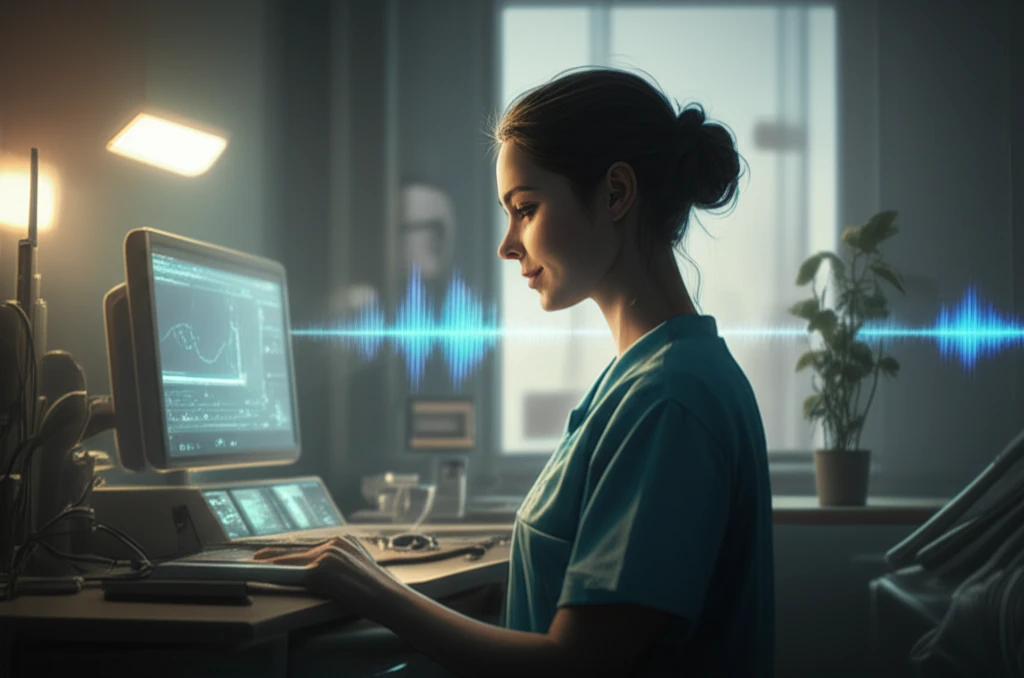
Snooze the Chaos: How Smart Alarms are Saving ICU Nurses from Alarm Fatigue

"Discover how physiologic monitor alarm customization software can reduce alarm rates and improve nurses' well-being in the intensive care unit."
Imagine being surrounded by a symphony of beeps and buzzes, each one demanding your immediate attention. This is the daily reality for nurses in intensive care units (ICUs), where a constant barrage of alarms from physiologic monitors creates a state of perpetual alert. While these alarms are intended to safeguard patients, many are false or clinically irrelevant, leading to a phenomenon known as "alarm fatigue."
Alarm fatigue occurs when clinicians become desensitized to the overwhelming number of alarms, causing them to ignore, silence, or even deactivate them. This can have dire consequences, potentially leading to missed critical events and compromised patient safety. The challenge lies in finding a balance between providing adequate monitoring and minimizing the noise that contributes to alarm fatigue.
Fortunately, innovative solutions are emerging to address this critical issue. Physiologic monitor alarm customization software offers a promising approach to reduce alarm rates and improve nurses' experience in the ICU. This article explores how this technology works, its potential benefits, and what the future holds for alarm management in critical care settings.
Taming the Alarm Tsunami: How Customization Software Works
The core idea behind alarm customization software is to tailor alarm settings to the specific needs of individual patients. Traditional monitor settings often rely on default values that may not be appropriate for everyone. This can lead to numerous non-actionable alarms that distract nurses from genuine emergencies.
- Adjust alarm limits: Modify the upper and lower thresholds for vital signs such as heart rate, blood pressure, and oxygen saturation to reflect a patient's baseline values and clinical status.
- Customize alarm delays: Extend the time before an alarm is triggered, reducing the frequency of transient, clinically insignificant alerts.
- Create patient-specific profiles: Develop alarm settings tailored to specific patient populations, such as postoperative patients or those with chronic conditions.
- Visualize alarm trends: Use data visualization tools to identify patterns and trends in a patient's alarms, allowing nurses to proactively adjust settings and prevent future alerts.
A Quieter, Safer ICU: The Future of Alarm Management
Physiologic monitor alarm customization software represents a significant step forward in addressing the pervasive problem of alarm fatigue in ICUs. By empowering nurses to tailor alarm settings to individual patient needs, this technology can reduce alarm rates, improve nurses' well-being, and ultimately create a safer and more effective environment for patient care. As research continues to explore the potential of alarm customization and other innovative solutions, the future of alarm management in critical care settings looks brighter than ever.