
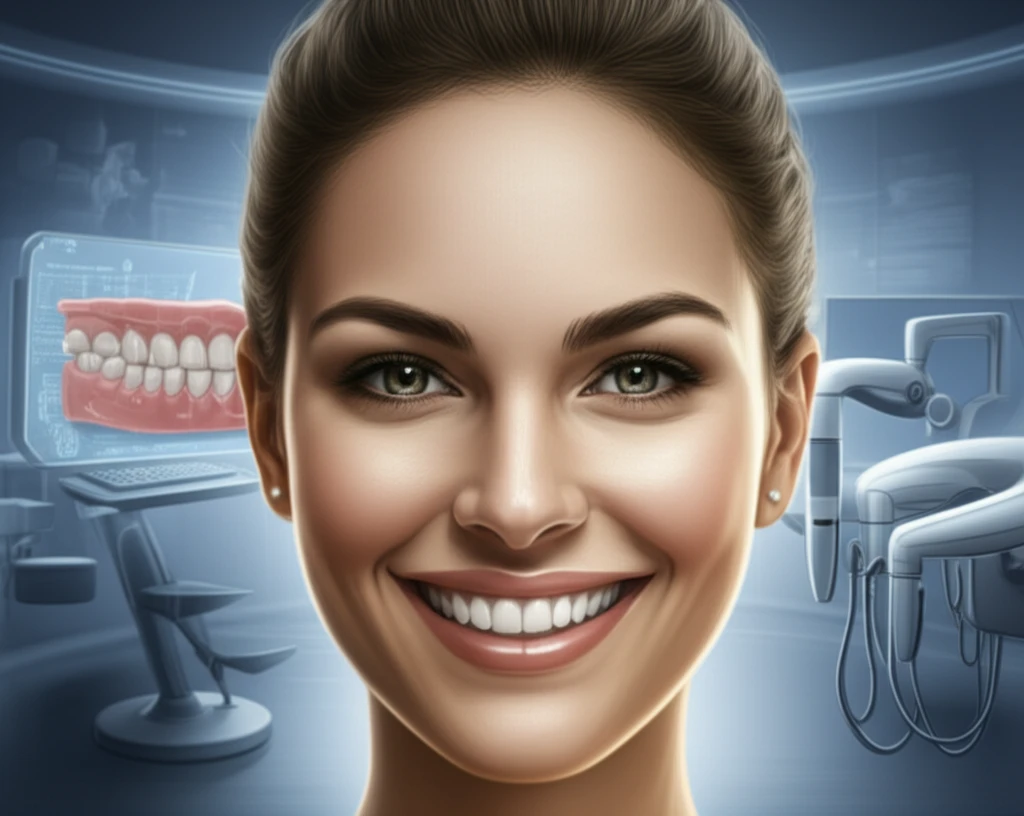
A woman's confident smile, highlighting the benefits of digital dental models in orthodontics.

Smile with Confidence: How Digital Dental Models Are Revolutionizing Orthodontics

"From precise measurements to faster treatments, discover how cutting-edge technology is transforming the way we achieve the perfect smile."


In the ever-evolving world of dentistry, a revolution is underway, reshaping the way we approach orthodontic treatments. Gone are the days of goopy impressions and lengthy waiting periods. Today, digital dental models are taking center stage, offering a glimpse into the future of orthodontics and promising a more efficient, accurate, and patient-friendly experience.

This transformation is fueled by the remarkable precision of 3D surface measurements along a curved line, enabling orthodontists to perform detailed assessments of a patient's dental structure with unprecedented accuracy. This technology not only enhances the diagnostic process but also streamlines treatment planning and execution, ultimately leading to better outcomes and a more satisfying experience for those seeking a perfect smile.

This article delves into the advancements in digital dental models, exploring how they compare to traditional methods and the impact they're having on modern orthodontic practices. We'll uncover the benefits of this technology, including enhanced precision, reduced treatment times, and improved patient comfort. Get ready to discover how digital dental models are revolutionizing orthodontics and ushering in a new era of smile perfection.

The Digital Revolution: Why Digital Dental Models Are a Game-Changer

A woman's confident smile, highlighting the benefits of digital dental models in orthodontics.

The transition to digital dental models marks a significant leap forward in orthodontic care. Unlike traditional methods that rely on physical impressions, digital models are created using advanced scanning technology. This allows orthodontists to generate highly detailed, three-dimensional representations of a patient's teeth and jaw structure, offering a wealth of benefits over conventional approaches.

The advantages of digital models are numerous, with one of the most significant being their enhanced accuracy. These models provide precise measurements along curved lines, surpassing the limitations of traditional methods, which often rely on less accurate estimations. This level of detail allows for more precise treatment planning, resulting in better outcomes and reduced need for adjustments during treatment.

  • Enhanced Accuracy: Digital models provide precise measurements.
  • Faster Treatment Times: Streamlined processes lead to quicker results.
  • Improved Patient Comfort: Digital scanning eliminates the need for messy impressions.
  • Better Treatment Planning: 3D models enable detailed analysis and planning.
  • Reduced Errors: Digital processes minimize human error.
The adoption of digital dental models also contributes to a more environmentally friendly practice. By reducing the need for physical materials like plaster and alginate, orthodontists can minimize waste and promote sustainability. As technology continues to advance, digital dental models are poised to play an increasingly important role in orthodontics, transforming the way we achieve and maintain healthy, beautiful smiles.

Embrace the Future of Smiles

Digital dental models represent a pivotal advancement in orthodontics, offering a pathway to more accurate, efficient, and patient-centered care. As this technology continues to evolve, its potential to transform orthodontic practices and enhance patient outcomes is undeniable. Embrace the future of smiles with the precision and innovation that digital dental models bring to the forefront of dental care.

About this Article -

This article was crafted using a human-AI hybrid and collaborative approach. AI assisted our team with initial drafting, research insights, identifying key questions, and image generation. Our human editors guided topic selection, defined the angle, structured the content, ensured factual accuracy and relevance, refined the tone, and conducted thorough editing to deliver helpful, high-quality information.See our About page for more information.

This article is based on research published under:

DOI-LINK: 10.1016/j.ajodo.2017.05.011, Alternate LINK

Title: Accuracy Of 3-Dimensional Curvilinear Measurements On Digital Models With Intraoral Scanners

Subject: Orthodontics

Journal: American Journal of Orthodontics and Dentofacial Orthopedics

Publisher: Elsevier BV

Authors: Spencer Mack, Tammy Bonilla, Jeryl D. English, Benjamin Cozad, Sercan Akyalcin

Published: 2017-09-01

Everything You Need To Know

1

How do digital dental models enhance accuracy compared to traditional orthodontic methods?

Digital dental models enhance accuracy through the use of advanced scanning technology which provides precise 3D surface measurements along curved lines. Traditional methods often rely on physical impressions and estimations which are less accurate. This precision in digital models allows orthodontists to perform detailed assessments of a patient's dental structure, leading to more precise treatment planning and better outcomes. This level of detail also reduces the need for adjustments during the treatment process, ensuring a more predictable and efficient experience for the patient.

2

What are the key benefits of using digital dental models in orthodontic treatment?

The key benefits of using digital dental models include enhanced accuracy due to precise 3D measurements, faster treatment times achieved through streamlined processes, improved patient comfort by eliminating the need for messy physical impressions, better treatment planning enabled by detailed analysis of the 3D models, and reduced errors through minimized human intervention in the modeling process. These advantages collectively contribute to a more efficient, comfortable, and effective orthodontic experience.

3

In what ways do digital dental models improve patient comfort during orthodontic treatment?

Digital dental models significantly improve patient comfort by eliminating the need for traditional goopy impressions. Instead of using physical materials like plaster or alginate, digital scanning technology creates a 3D representation of the patient's teeth and jaw structure. This non-invasive approach reduces discomfort and anxiety, making the overall orthodontic experience more pleasant for patients. The enhanced accuracy and streamlined processes also contribute to fewer adjustments and shorter treatment times, further improving patient comfort.

4

How do digital dental models contribute to more environmentally friendly orthodontic practices?

Digital dental models contribute to more environmentally friendly orthodontic practices by reducing the need for physical materials like plaster and alginate, which are essential in traditional methods. By minimizing the use of these materials, orthodontists can significantly reduce waste and promote sustainability within their practices. The shift to digital processes aligns with broader efforts to adopt eco-friendly solutions in healthcare, reflecting a commitment to environmental responsibility. The reduced reliance on disposable materials not only benefits the environment but can also lead to cost savings for the practice.

5

What is the clinical significance of using 3D surface measurements along a curved line in digital dental models, and how does it affect treatment outcomes?

The clinical significance of using 3D surface measurements along a curved line in digital dental models lies in the enhanced precision and detail it provides for assessing a patient's dental structure. This technology allows orthodontists to perform thorough evaluations of tooth alignment, jaw structure, and overall oral health with unprecedented accuracy. The ability to measure curved lines precisely enables more accurate diagnosis, treatment planning, and monitoring of progress. Ultimately, this leads to more predictable and successful treatment outcomes, as orthodontists can tailor interventions to the specific needs of each patient with a higher degree of confidence.

Newsletter Subscribe

Subscribe to get the latest articles and insights directly in your inbox.