
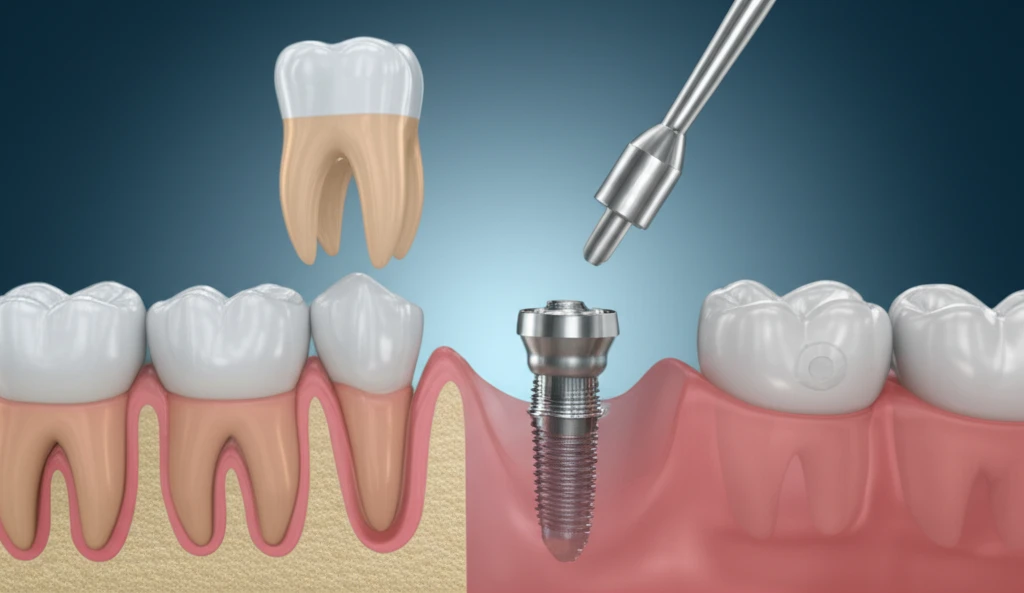
Illustration of the alveolar ridge preservation process, from tooth extraction to successful implant placement.

Smile Savers: Protecting Your Gums and Jaw After Tooth Extraction

"Understanding Alveolar Ridge Preservation: Why It Matters for Your Dental Health and Future Implants"


Tooth extraction is a common procedure, but what happens after the tooth is gone? The space left behind isn't just an empty hole; it's a dynamic area that undergoes significant changes. These changes can affect not only your smile's aesthetics but also the future possibilities of dental implants. This is where alveolar ridge preservation (ARP) comes into play, a proactive approach to maintain the health and structure of your jawbone after tooth removal.

Alveolar ridge preservation is a set of techniques aimed at minimizing bone loss after a tooth extraction. It's a critical step in ensuring the successful placement of dental implants, which rely on a strong and stable jawbone foundation. But even if you're not considering implants, ARP can still benefit your overall oral health by preserving the natural contours of your gums and jaw.

This article delves into the world of alveolar ridge preservation, exploring its importance, the techniques used, and the benefits it offers. We'll break down the science behind bone healing and discuss how ARP can help you maintain a healthy, beautiful smile for years to come. This article is for those seeking to understand the importance of preserving the alveolar ridge after tooth extraction and before implant placement.

The Science Behind Bone Healing: Understanding the Alveolar Ridge

Illustration of the alveolar ridge preservation process, from tooth extraction to successful implant placement.

To understand ARP, we first need to grasp how the jawbone, or alveolar ridge, heals after tooth extraction. The alveolar ridge is the part of your jaw that supports your teeth. When a tooth is removed, the body naturally begins a process of healing and remodeling the bone. This process, however, often leads to bone loss, as the body no longer needs to support a tooth in that area. This loss can affect the height and width of the alveolar ridge, making it less ideal for future dental work.

Several factors influence how your jawbone heals. The size and location of the extracted tooth, the health of the surrounding tissues, and the presence of any infection all play a role. Moreover, the type of extraction performed can impact the healing process. Traumatic extractions, where the tooth is forcefully removed, can cause more damage to the surrounding bone, leading to greater bone loss.

  • Resorption: The natural breakdown of bone tissue after tooth extraction.
  • Remodeling: The body's process of reshaping and rebuilding the bone.
  • Bone Loss: The reduction in the height and width of the alveolar ridge, which is a common consequence of healing.
  • Impact on Implants: Bone loss can compromise the success of dental implants, making it difficult to achieve proper placement and stability.
Understanding these processes is key to appreciating the importance of alveolar ridge preservation. By intervening in the healing process, dentists can help minimize bone loss and create a more favorable environment for future dental procedures. This is particularly important for those considering dental implants, as the success of these implants relies heavily on the quality and quantity of the jawbone.

Protecting Your Smile's Future

Alveolar ridge preservation is an investment in your long-term oral health. By preserving the jawbone after tooth extraction, you're setting the stage for successful dental implants, maintaining natural facial contours, and ensuring a healthy, confident smile for years to come. Talk to your dentist about ARP options and take control of your oral health journey.

About this Article -

This article was crafted using a human-AI hybrid and collaborative approach. AI assisted our team with initial drafting, research insights, identifying key questions, and image generation. Our human editors guided topic selection, defined the angle, structured the content, ensured factual accuracy and relevance, refined the tone, and conducted thorough editing to deliver helpful, high-quality information.See our About page for more information.

This article is based on research published under:

DOI-LINK: 10.1590/s1980-65232011000100017, Alternate LINK

Title: Alveolar Ridge Preservation After Dental Extraction And Before Implant Placement: A Literature Review

Subject: General Dentistry

Journal: Revista Odonto Ciência (Online)

Publisher: FapUNIFESP (SciELO)

Authors: Luis André Mezzomo, Rosemary Sadami Shinkai, Nikos Mardas, Nikolaos Donos

Published: 2011-01-01

Everything You Need To Know

1

What is Alveolar Ridge Preservation (ARP) and why is it important after a tooth extraction?

Alveolar Ridge Preservation (ARP) refers to techniques used to minimize bone loss in the jawbone, specifically the alveolar ridge, after a tooth is extracted. It's important because the alveolar ridge naturally undergoes resorption and remodeling after tooth removal, often leading to bone loss. This bone loss can compromise the success of future dental implants and affect the aesthetics of your smile. ARP helps maintain the natural contours of the gums and jaw, ensuring a strong foundation for potential implants.

2

How does bone loss after tooth extraction affect the possibility of getting dental implants?

Bone loss, which occurs due to resorption and remodeling of the alveolar ridge after tooth extraction, directly impacts the success of dental implants. Dental implants require a sufficient amount of healthy bone for proper placement and stability. When significant bone loss occurs, there may not be enough bone to support the implant, making it difficult to achieve a stable and long-lasting result. Alveolar Ridge Preservation (ARP) addresses this issue by preserving the bone volume, thus improving the chances of successful implant placement in the future.

3

Besides dental implants, are there other benefits to Alveolar Ridge Preservation?

Yes, even if dental implants aren't being considered, Alveolar Ridge Preservation (ARP) offers benefits. ARP helps maintain the natural contours of the gums and jaw, preventing the sunken-in appearance that can occur with bone loss. This preservation contributes to a more aesthetically pleasing smile and overall facial structure. By minimizing changes to the alveolar ridge, ARP can also simplify future dental procedures, such as bridges or dentures, if needed.

4

What factors influence how the alveolar ridge heals after tooth extraction, and how does that relate to Alveolar Ridge Preservation?

Several factors affect how the alveolar ridge heals post-extraction, including the size and location of the extracted tooth, the health of the surrounding tissues, and the type of extraction performed. Traumatic extractions, for instance, can cause more damage and lead to greater bone loss. Alveolar Ridge Preservation (ARP) proactively addresses these factors by intervening in the healing process to minimize bone loss, regardless of the specific circumstances of the extraction. ARP aims to create a more favorable environment for healing and future dental procedures by mitigating the negative impacts of these variables.

5

What is the natural process of bone remodeling after a tooth extraction, and why is Alveolar Ridge Preservation needed to manage it?

After a tooth extraction, the body initiates a natural process called remodeling, where the alveolar ridge undergoes resorption, a breakdown, and reshaping of the bone tissue. Since the tooth is no longer present to stimulate and support the bone, the alveolar ridge tends to diminish in height and width over time. Alveolar Ridge Preservation (ARP) is crucial because it intervenes in this natural remodeling process to minimize bone loss. Without ARP, significant bone loss can occur, compromising future dental implant placement, affecting facial aesthetics, and potentially complicating other restorative dental treatments. ARP essentially helps to guide and control the remodeling process to preserve the integrity of the alveolar ridge.

Newsletter Subscribe

Subscribe to get the latest articles and insights directly in your inbox.