
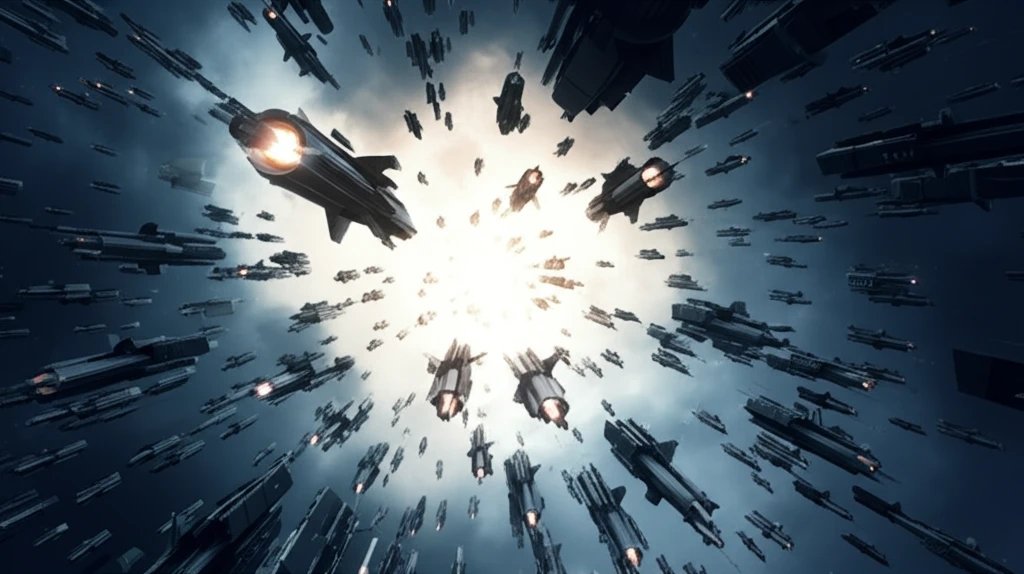
Futuristic missiles converging on a target, illustrating coordinated defense.

Smarter Missiles: How AI and Teamwork Are Changing Defense

"Coordinated missile attacks, powered by AI, are revolutionizing military strategy and defense systems."


Imagine a pack of wolves, each working together to take down a much larger prey. Their coordinated movements and shared strategy make them far more effective than a lone hunter. This same principle is now being applied to missile technology, transforming how we think about defense.

The idea of missiles working together isn't new, but recent advances in artificial intelligence (AI) are taking it to the next level. Instead of just launching a bunch of missiles and hoping for the best, these new systems allow missiles to communicate, share information, and adapt to changing conditions in real-time. This creates a far more formidable and adaptable defense system.

This article delves into the innovative research driving this revolution, exploring how AI and coordinated strategies are making missile defense smarter, more efficient, and ultimately, more secure.

The Power of Teamwork: How Coordinated Missile Attacks Work

Futuristic missiles converging on a target, illustrating coordinated defense.

The core idea behind coordinated missile attacks is simple: overwhelm the enemy's defenses. By launching multiple missiles simultaneously from different directions, it becomes much harder for the target to defend itself. This is particularly important when dealing with advanced adversaries who have sophisticated countermeasures.

But simply launching a bunch of missiles at once isn't enough. The real power comes from coordinating their movements and sharing information. This requires a sophisticated communication network that allows the missiles to:

  • Share their location and velocity.
  • Identify and track targets.
  • Coordinate their attack paths.
  • Adapt to changing conditions, such as enemy countermeasures.
This level of coordination requires advanced algorithms and AI, allowing the missiles to act as a single, unified force. Each missile contributes to the overall mission, increasing the chances of success.

The Future of Defense: Intelligent and Adaptive Systems

The research discussed in this article represents a significant step forward in missile defense technology. By combining the power of AI with coordinated attack strategies, we can create smarter, more effective defense systems that are better equipped to deal with the challenges of modern warfare. As AI continues to evolve, we can expect even more sophisticated and adaptive defense systems to emerge, further transforming the landscape of military strategy.

About this Article -

This article was crafted using a human-AI hybrid and collaborative approach. AI assisted our team with initial drafting, research insights, identifying key questions, and image generation. Our human editors guided topic selection, defined the angle, structured the content, ensured factual accuracy and relevance, refined the tone, and conducted thorough editing to deliver helpful, high-quality information.See our About page for more information.

Everything You Need To Know

1

How do coordinated missile attacks enhance defense strategies?

Coordinated missile attacks significantly enhance defense strategies by overwhelming enemy defenses. By launching multiple missiles simultaneously from various directions, they make it much harder for a target to defend itself. This approach is especially effective against advanced adversaries with sophisticated countermeasures. The power lies in coordinating movements and sharing information, requiring a sophisticated communication network that enables missiles to share location and velocity, identify and track targets, coordinate attack paths, and adapt to changing conditions. This coordination, driven by advanced algorithms and AI, allows the missiles to act as a unified force.

2

What role does artificial intelligence (AI) play in modern missile technology?

Artificial intelligence (AI) is revolutionizing missile technology by enabling missiles to communicate, share information, and adapt to changing conditions in real-time. This goes beyond simply launching multiple missiles; AI allows for the creation of intelligent and adaptive defense systems. The algorithms and AI facilitate coordinated missile attacks, allowing each missile to contribute to the overall mission by sharing its location, velocity, and target information. This ensures a more formidable and adaptable defense system than traditional methods.

3

What are the key requirements for missiles to effectively coordinate during an attack?

For missiles to effectively coordinate during an attack, several key requirements must be met. First, a sophisticated communication network is essential, allowing missiles to share their location and velocity data. Second, they need the capability to identify and track targets accurately. Third, the missiles must coordinate their attack paths to avoid redundancy and maximize impact. Finally, they must adapt to changing conditions, such as enemy countermeasures, in real-time. These functionalities are enabled by advanced algorithms and AI, ensuring the missiles operate as a unified force.

4

How are coordinated missile attacks superior to traditional missile launches?

Coordinated missile attacks are superior to traditional missile launches primarily because they leverage teamwork and shared intelligence. Instead of launching missiles independently and hoping for the best, coordinated systems enable missiles to communicate, share information, and adapt to changing conditions in real-time. This coordinated approach overwhelms the enemy's defenses more effectively, making it harder for the target to defend itself. The ability to share location, velocity, and target data, along with the ability to adapt to enemy countermeasures, allows the missiles to act as a single, unified force, increasing the chances of a successful mission.

5

What future advancements can we expect in missile defense technology, based on current research trends?

Based on current research trends, we can expect even more sophisticated and adaptive defense systems to emerge in the future. As AI continues to evolve, missile defense technology will likely incorporate advanced machine learning algorithms, allowing missiles to autonomously adapt to new threats and optimize their attack strategies in real-time. This could lead to the development of systems that can predict enemy movements, anticipate countermeasures, and coordinate attacks with unprecedented precision. These advancements will further transform military strategy and enhance the effectiveness of defense systems against advanced threats. However, the text does not specify specific AI algorithms to be used or the level of autonomous decision-making that can be achieved.

Newsletter Subscribe

Subscribe to get the latest articles and insights directly in your inbox.