
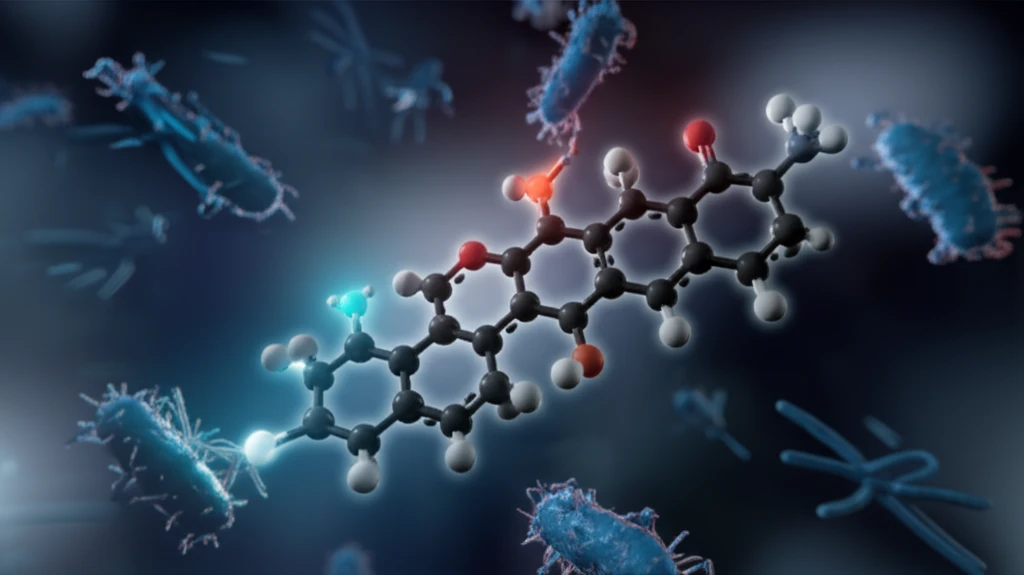
Ciprofloxacin molecule with enhanced carbon chain attracting antibodies to fight bacteria.

Smarter Antibiotics: How a Simple Carbon Chain Addition Could Revolutionize Drug Development

"Scientists have discovered that adding a carbon chain to ciprofloxacin can significantly improve the effectiveness of polyclonal antibodies, opening new doors for fighting resistant bacteria."


Antibiotics are essential for treating bacterial infections, but their overuse has led to a rise in antibiotic-resistant bacteria, posing a significant threat to global health. Fluoroquinolones (FQNs) like ciprofloxacin are powerful antibiotics, but their widespread use has raised concerns about adverse drug reactions and resistance. Developing new strategies to improve the effectiveness of these drugs is crucial.

One promising approach is to modify existing antibiotics to enhance their ability to stimulate an immune response. Antibodies play a vital role in the immune system, recognizing and neutralizing harmful bacteria. However, small molecules like FQNs often lack the ability to trigger a strong antibody response on their own.

A recent study explored a novel way to improve the antibody response to ciprofloxacin by adding a carbon chain to the molecule. This modification aimed to create a more effective antigen, which is a substance that triggers an immune response in the body. The results of this study offer a potential new avenue for developing more effective antibiotics and combating drug resistance.

The Carbon Chain Advantage: Boosting Antibody Power

Ciprofloxacin molecule with enhanced carbon chain attracting antibodies to fight bacteria.

The researchers synthesized amino propyl ciprofloxacin (CPLX-NH2), a modified version of ciprofloxacin with an added carbon chain. This seemingly small change had a significant impact on the drug's ability to generate a strong immune response.

To test the effectiveness of the modified antibiotic, the researchers created two types of antigens: CPLX-NH2-BSA and CPLX-NH2-OVA. These antigens were made by attaching CPLX-NH2 to bovine serum albumin (BSA) and ovalbumin (OVA), respectively. These protein carriers help to make the small drug molecule more visible to the immune system.

  • Enhanced Antibody Response: Mice immunized with the CPLX-NH2 antigen produced polyclonal antibodies with a significantly higher titer (concentration) compared to those immunized with unmodified ciprofloxacin.
  • Improved Detection: The CPLX-NH2 antibody showed a lower detection limit (20.09 ng/mL) and better sensitivity than the original ciprofloxacin antibody. This means it can detect even small amounts of the drug.
  • Cross-Reactivity: The modified antibody also demonstrated cross-reactivity to other fluoroquinolones, suggesting it could be used to detect a range of related antibiotics.
These findings suggest that adding a carbon chain to ciprofloxacin improves its ability to stimulate a strong and effective antibody response. This modification essentially bridges the gap between the drug and the carrier protein, allowing the immune system to recognize and respond more effectively.

A Promising Path Forward in the Fight Against Resistance

This research highlights the potential of modifying existing antibiotics to enhance their effectiveness and combat drug resistance. The simple addition of a carbon chain to ciprofloxacin significantly improved the antibody response, offering a promising strategy for developing new and improved treatments for bacterial infections.

By creating a more effective antigen, researchers were able to generate antibodies that were more sensitive, more broadly reactive, and better able to detect the drug. This approach could be applied to other antibiotics and small-molecule drugs to improve their immunogenicity and therapeutic potential.

While further research is needed, this study provides a valuable concept for the preparation of antibodies and opens new avenues for developing innovative strategies to combat the growing threat of antibiotic resistance.

About this Article -

This article was crafted using a human-AI hybrid and collaborative approach. AI assisted our team with initial drafting, research insights, identifying key questions, and image generation. Our human editors guided topic selection, defined the angle, structured the content, ensured factual accuracy and relevance, refined the tone, and conducted thorough editing to deliver helpful, high-quality information.See our About page for more information.

This article is based on research published under:

DOI-LINK: 10.1177/2058739218805645, Alternate LINK

Title: An Effective Strategy For Preparation Of A Polyclonal Antibody With An Addition Of Carbon Chain Of Ciprofloxacin

Subject: Immunology

Journal: European Journal of Inflammation

Publisher: SAGE Publications

Authors: Dong Wei, Guozhen Fang, Shuo Wang

Published: 2018-01-01

Everything You Need To Know

1

How does adding a carbon chain improve the effectiveness of ciprofloxacin?

The study found that adding a carbon chain to ciprofloxacin, creating amino propyl ciprofloxacin (CPLX-NH2), significantly enhances the immune response. By attaching CPLX-NH2 to bovine serum albumin (BSA) and ovalbumin (OVA) to create antigens, the researchers observed a much stronger antibody response in mice compared to using unmodified ciprofloxacin. This simple modification makes the drug more visible to the immune system.

2

What are polyclonal antibodies, and how did the study demonstrate their improvement?

Polyclonal antibodies are a mixture of antibodies produced by many different immune cells, each targeting slightly different parts of an antigen. The study demonstrated that mice immunized with the modified ciprofloxacin, specifically CPLX-NH2, produced polyclonal antibodies with a higher concentration and better sensitivity compared to those immunized with the original ciprofloxacin. This means the modified drug triggers a more robust and diverse immune response, capable of detecting even small amounts of the antibiotic.

3

Why does adding a carbon chain enhance the immune response to ciprofloxacin?

The addition of a carbon chain to ciprofloxacin to create amino propyl ciprofloxacin (CPLX-NH2) enhanced the immune response because it facilitated a stronger connection between the drug and carrier proteins like bovine serum albumin (BSA) and ovalbumin (OVA). These proteins act as carriers, making the small drug molecule more visible to the immune system. This modification essentially bridges the gap, allowing the immune system to recognize and respond more effectively, leading to an improved antibody response.

4

What does cross-reactivity mean in the context of this research, and why is it important?

Cross-reactivity, in the context of this study, refers to the ability of the antibodies generated against the modified ciprofloxacin (CPLX-NH2) to also recognize and bind to other fluoroquinolones (FQNs). The modified antibody demonstrated cross-reactivity to other fluoroquinolones, suggesting it could be used to detect a range of related antibiotics. This is significant because it implies that a single modified antibiotic could potentially be used to combat or detect a wider spectrum of bacterial infections.

5

What are the broader implications of this research for combating antibiotic resistance?

The research holds significant implications for combating antibiotic resistance. By modifying existing antibiotics like ciprofloxacin to enhance their ability to stimulate a strong immune response, specifically by adding a carbon chain to create amino propyl ciprofloxacin (CPLX-NH2), scientists can potentially develop more effective treatments for bacterial infections. This approach focuses on boosting the body's natural defenses, offering a promising strategy for overcoming drug resistance and reducing the reliance on new antibiotics. Furthermore, the improved detection limit and cross-reactivity of the modified antibody could aid in monitoring and managing antibiotic usage.

Newsletter Subscribe

Subscribe to get the latest articles and insights directly in your inbox.