
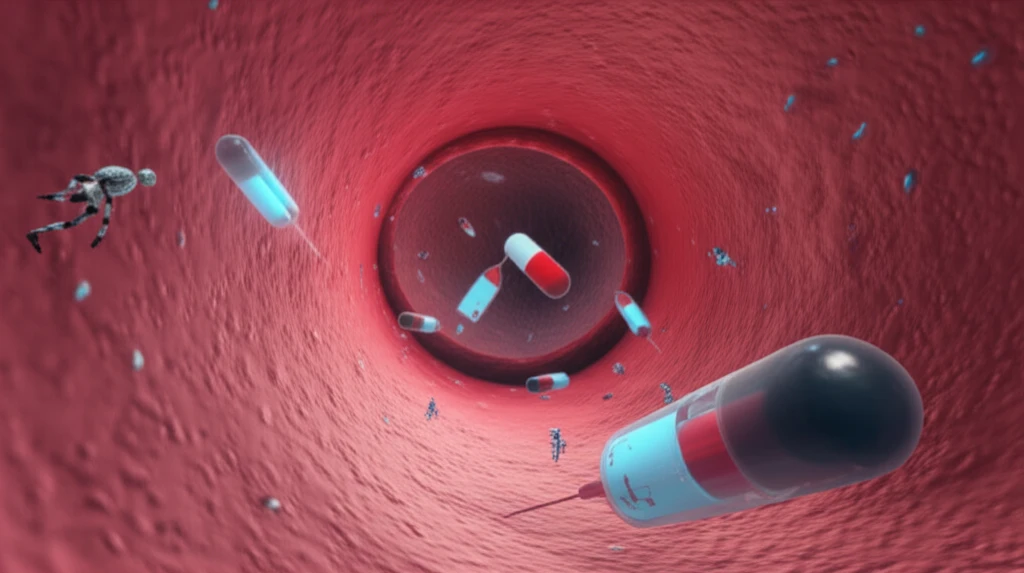
Nanobots delivering medicine in bloodstream

Smart Insulin: The Future of Diabetes Management?

"Explore how glucose oxidase-immobilized nanoparticles are revolutionizing insulin delivery for diabetics, offering a more responsive and reliable treatment option."


For millions living with diabetes, managing blood sugar levels is a daily challenge. Traditional insulin injections can be inconvenient and don't always respond quickly to changing glucose levels. But what if insulin delivery could be smarter, more responsive, and less invasive? Recent research is exploring just that, using cutting-edge nanotechnology to create a new generation of insulin treatments.

Scientists are developing innovative ways to deliver insulin using biopolymer-based nanoparticles. These tiny particles are designed to release insulin only when glucose levels rise, mimicking the natural function of a healthy pancreas. One promising approach involves glucose oxidase-immobilized dextran nanoparticles, which react to glucose levels in the blood to release insulin precisely when it's needed.

This article will delve into the fascinating world of smart insulin delivery, explaining how these nanoparticles work, their potential benefits, and what this could mean for the future of diabetes management. We'll explore the science behind this technology in an easy to understand format, highlighting the key innovations and potential impact on those living with diabetes.

How Do These Smart Nanoparticles Work?

Nanobots delivering medicine in bloodstream

The core of this technology lies in the creation of glucose-responsive nanoparticles. These particles are made from a biocompatible material called dextran, modified to respond to changes in glucose concentration. The process involves several key steps:

First, glucose oxidase is immobilized on acryloyl crosslinked dextran dialdehyde (ACDD) nanoparticles. Glucose oxidase is an enzyme that reacts with glucose, producing gluconic acid. This reaction is crucial because it lowers the pH in the immediate vicinity of the nanoparticle when glucose levels rise. This pH change then triggers the release of the insulin that the nanoparticle carries.

  • Acryloylation: Dextran is modified to attach acrylic groups, making it responsive to changes in its environment.
  • Immobilization: Glucose oxidase (GOX) is attached to the dextran nanoparticle, enabling it to react with glucose.
  • pH Trigger: The reaction between glucose and GOX lowers the pH, causing the nanoparticle to release insulin.
These nanoparticles are designed to be incredibly small, typically ranging from 48 to 74 nanometers. This tiny size allows them to be easily absorbed into the body. Studies have shown that these nanoparticles can effectively release insulin in response to glucose levels under artificial conditions, mimicking what would happen in the body.

The Future of Diabetes Care?

While still in the early stages of development, glucose oxidase-immobilized nanoparticles offer a promising avenue for more effective and patient-friendly diabetes management. By responding directly to glucose levels, these nanoparticles could provide a more precise and reliable way to deliver insulin, potentially reducing the risk of complications associated with traditional injection methods. As research continues, smart insulin delivery systems like these could transform the lives of millions living with diabetes, offering a new level of control and freedom.

About this Article -

This article was crafted using a human-AI hybrid and collaborative approach. AI assisted our team with initial drafting, research insights, identifying key questions, and image generation. Our human editors guided topic selection, defined the angle, structured the content, ensured factual accuracy and relevance, refined the tone, and conducted thorough editing to deliver helpful, high-quality information.See our About page for more information.

Everything You Need To Know

1

What exactly are smart insulin delivery systems and how do they work?

Smart insulin delivery systems use innovative approaches like biopolymer-based nanoparticles to release insulin in response to glucose levels in the blood. A notable method involves glucose oxidase-immobilized dextran nanoparticles. When glucose levels rise, the glucose oxidase reacts with the glucose, leading to the release of insulin precisely when needed. This system aims to mimic the natural function of a healthy pancreas, providing a more responsive and precise insulin delivery method than traditional injections. This approach is important as it improves the control of blood sugar levels, reducing the risk of complications associated with diabetes.

2

Can you explain the mechanism of glucose oxidase-immobilized dextran nanoparticles?

Glucose oxidase-immobilized dextran nanoparticles work through a series of steps. First, glucose oxidase is attached to acryloyl crosslinked dextran dialdehyde (ACDD) nanoparticles. When glucose levels increase, the glucose oxidase reacts with the glucose to produce gluconic acid, lowering the pH around the nanoparticle. This pH change triggers the release of the insulin carried by the nanoparticle. Acryloylation modifies the dextran to make it responsive to environmental changes, while immobilization ensures the glucose oxidase reacts with glucose. The pH trigger is critical for controlling insulin release based on glucose levels.

3

What are acryloyl crosslinked dextran dialdehyde (ACDD) nanoparticles, and why are they important?

Acryloyl crosslinked dextran dialdehyde (ACDD) nanoparticles are biocompatible materials used to construct glucose-responsive nanoparticles for insulin delivery. Dextran is modified through acryloylation to make it sensitive to changes in its environment, and then crosslinked to form a stable structure. The dialdehyde modification allows for the immobilization of glucose oxidase. ACDD nanoparticles are significant because they provide a stable and responsive platform for the glucose-triggered release of insulin. Without the dextran modification, the nanoparticles would not have the properties required to controllably release insulin in response to glucose levels.

4

What is the role of glucose oxidase in this new method, and why is it so important?

Glucose oxidase is an enzyme immobilized on dextran nanoparticles to react with glucose. When glucose levels rise, glucose oxidase reacts with the glucose, producing gluconic acid and lowering the pH in the vicinity of the nanoparticle. This pH change triggers the release of insulin. Glucose oxidase is significant as it is the primary component that allows the nanoparticle to sense and respond to changes in glucose concentration. This enzyme enables the entire smart insulin delivery system to function by providing a direct link between glucose levels and insulin release. Without the enzymatic reaction, the nanoparticles would not be able to release insulin in response to changing glucose levels.

5

Why are nanoparticles used and what is their importance to the delivery of insulin?

Nanoparticles are incredibly small particles, typically ranging from 48 to 74 nanometers, used in smart insulin delivery systems. Their tiny size allows for easy absorption into the body. In the context of smart insulin delivery, nanoparticles are engineered to carry insulin and release it in response to glucose levels. The use of nanoparticles is significant because their small size and biocompatibility allow for efficient delivery of insulin. They also enable precise control over insulin release, mimicking the natural function of a healthy pancreas. Without these tiny vehicles, the insulin wouldn't get where it needs to go.

Newsletter Subscribe

Subscribe to get the latest articles and insights directly in your inbox.