
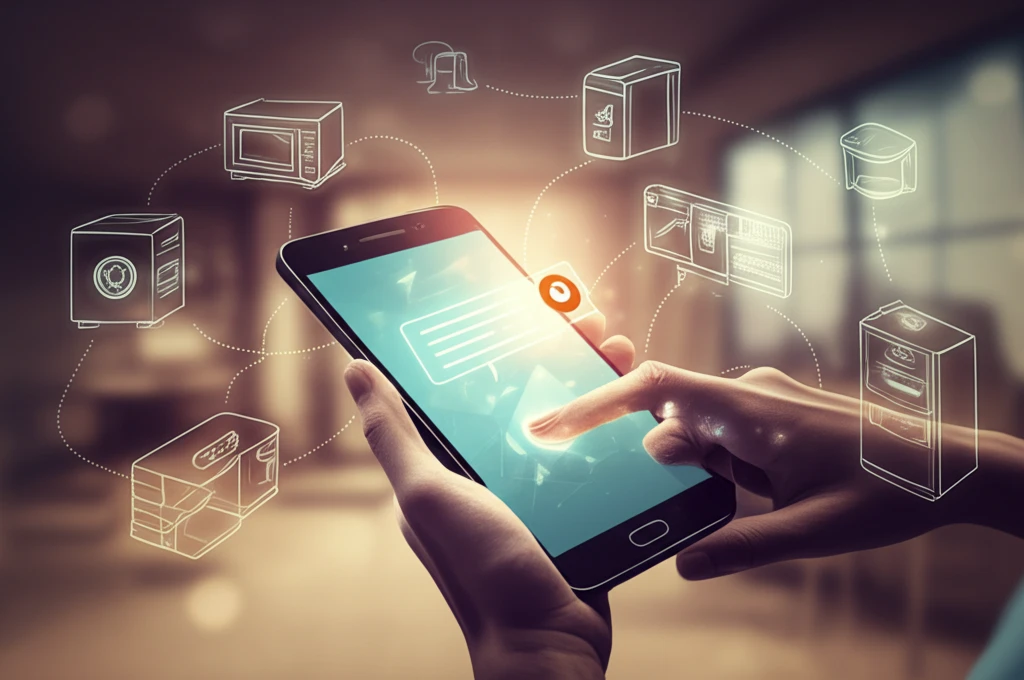
Smart Home Monitoring: How to Keep Tabs on Your Devices, Even Without the Internet

"Discover a clever SMS-based solution for monitoring your home electronics, ensuring you're always in the know, even when Wi-Fi fails."
In today's fast-paced world, electronic devices have become indispensable, enhancing our lives and streamlining daily tasks. From home appliances to critical industrial equipment, these devices play a pivotal role in our routines. Ensuring their operational status—knowing when they're on or off—is essential for efficient management and timely maintenance.
The Internet of Things (IoT) has revolutionized remote monitoring, enabling us to control and supervise devices from anywhere. However, relying solely on internet connectivity presents challenges, especially in areas with unreliable or non-existent networks. This is where alternative solutions come into play.
Imagine a system that keeps you informed about your devices' status via SMS messages, bypassing the need for a constant internet connection. This approach not only broadens accessibility but also provides a reliable backup when traditional networks fail. Let's delve into how this SMS-based monitoring system works and how it can benefit you.
Smart Home Adoption by the Numbers
In Australia, 91% of households were active smart home users as of 2022, demonstrating rapid mainstream penetration. The average cost savings from an installed smart home system is expected to reach $752.50, while the sector's revenue is projected to grow at an annual rate of 10.59% through 2026. These figures illustrate both the economic incentive and the scale of adoption driving the connected home movement.
The Matter Standard and Its Limits
The Matter smart home standard, backed by Amazon, Apple, Google, and Samsung, promises universal interoperability across devices from different manufacturers. A CNET reviewer noted that even inexpensive smart plugs, such as an $8 IKEA model, now support Matter via hubs like the HomePod. However, remote monitoring solutions still carry notable limitations, including device accuracy issues, data validation gaps, and the risk of incomplete data streams that can give users false reassurance.
From Smart Bulbs to Full Monitoring
IKEA expanded its smart home ecosystem beyond speakers and light bulbs into dedicated monitoring products, including air purifiers and roller shades. On the security front, Blink cameras offer HD day and night video with two-way audio and up to two years of battery life on wire-free devices. Meanwhile, wearable technology like the RingConn smart ring integrates sensors and AI algorithms to continuously monitor sleep, health metrics, and activity without requiring a cloud connection.
The SMS Monitoring Solution: A Detailed Overview
At its core, the SMS-based monitoring system is designed to detect the ON/OFF state of electronic devices and transmit this information to users via SMS. The system employs a current sensor to monitor the electrical current flowing through the device, which is then used to determine its state. This data is stored in a backup memory, ensuring no event goes unrecorded. When a change in state occurs, an SMS message is sent to a designated platform, which then relays the information to the user.
- Current Sensor: Monitors the electrical current of the device.
- Microcontroller: Processes the sensor data and controls SMS communication.
- GSM Module: Sends SMS messages containing the device status.
- Backup Memory: Stores the event log, including date and time stamps.
Power Monitoring and Perceived Safety
The Zemismart Zigbee SPM01 enables full-home power usage monitoring with both single-phase and three-phase versions, tracking energy consumption at the circuit level. A Nationwide insurance survey found that 60% of current smart home device owners in the United States report feeling safer in their homes. Insurance agents most frequently recommend smoke and carbon monoxide sensors, followed by smart locks and water leak-prevention sensors.
Accuracy Gaps in Consumer Monitors
Popular indoor air quality monitors have been criticized for significant flaws in sensor accuracy and data reliability, undermining their usefulness for health-conscious users. Fitness reviewers have similarly questioned the heart rate monitoring capabilities of consumer devices like the Powerbeats Pro 2, citing substantial limitations in measurement precision. Meanwhile, open-source alternatives such as Tasmota-based power monitors offer local-only control and Home Assistant integration, sidestepping cloud dependency but requiring more technical setup.
Home Monitoring vs. Institutional Care
For elderly users who are not ready for a nursing home, daily check-in apps and medical alert devices offer a dramatically more affordable alternative, with devices typically costing between $25 and $50 per month. Home security comparisons between systems like Ring and Nest highlight differences in camera quality, subscription costs, and ecosystem compatibility. The Versus platform provides side-by-side specification comparisons across more than 100 categories to help consumers evaluate smart home options.
The Future of Remote Monitoring
The SMS-based monitoring system represents a significant step forward in remote device management, offering a reliable and accessible solution for users who require constant updates on their electronic devices. As technology evolves, we can anticipate further refinements, such as smaller components, increased energy efficiency, and more integrated platforms.
Privacy, Frustration, and the Business Case
Data privacy expert Katharine Kemp has warned that the primary objective of smart devices is to collect more information and sell consumers more products, raising fundamental questions about the true cost of convenience. At the same time, user frustrations with smart home reliability and complexity remain widespread. Healthcare Dive reports that smart homes are increasingly positioned as self-care hubs, with a strong business case for continued investment despite the challenges.
AI, 5G, and Mesh Networking
The future of smart homes in Canada centers on deeper AI integration and 5G connectivity to transform everyday living with convenience, security, and efficiency. Thread, a low-power mesh networking protocol, is emerging as a foundational technology for connecting devices within the home more reliably. In Germany, the smart home monitoring system market is projected to grow at a compound annual growth rate of 10.8% from 2026 to 2033, reflecting strong consumer demand.
AI Evolution and System Integration
AI-powered smart home systems improve over time, creating natural opportunities for ongoing service, updates, and continuous optimization. Integrated security platforms like Ajax combine CCTV, fire alarms, and automation into a single unified system for comprehensive property protection. DIY approaches, such as combining Arduino microcontrollers with Alexa, demonstrate that accessible monitoring solutions remain within reach for technically inclined homeowners.
Real-Time Alerts and Remote Control
A case study on building a smart HVAC control system demonstrated that homeowners wanted remote monitoring, real-time dashboard data, and alerts for abnormal current draw or clogged filters. These practical requirements underscore the human need for actionable information rather than raw data streams. The project highlighted how IoT-enabled monitoring can deliver tangible benefits in comfort, energy efficiency, and preventive maintenance.