
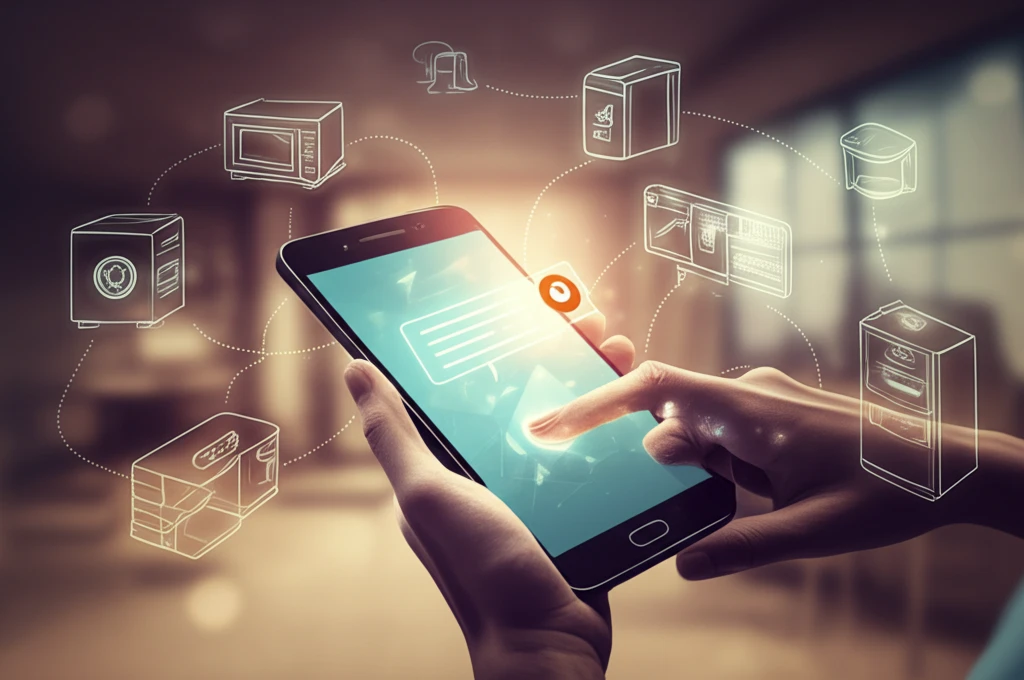
Home appliances connected to a smartphone via SMS notifications.

Smart Home Monitoring: How to Keep Tabs on Your Devices, Even Without the Internet

"Discover a clever SMS-based solution for monitoring your home electronics, ensuring you're always in the know, even when Wi-Fi fails."


In today's fast-paced world, electronic devices have become indispensable, enhancing our lives and streamlining daily tasks. From home appliances to critical industrial equipment, these devices play a pivotal role in our routines. Ensuring their operational status—knowing when they're on or off—is essential for efficient management and timely maintenance.

The Internet of Things (IoT) has revolutionized remote monitoring, enabling us to control and supervise devices from anywhere. However, relying solely on internet connectivity presents challenges, especially in areas with unreliable or non-existent networks. This is where alternative solutions come into play.

Imagine a system that keeps you informed about your devices' status via SMS messages, bypassing the need for a constant internet connection. This approach not only broadens accessibility but also provides a reliable backup when traditional networks fail. Let's delve into how this SMS-based monitoring system works and how it can benefit you.

The SMS Monitoring Solution: A Detailed Overview

Home appliances connected to a smartphone via SMS notifications.

At its core, the SMS-based monitoring system is designed to detect the ON/OFF state of electronic devices and transmit this information to users via SMS. The system employs a current sensor to monitor the electrical current flowing through the device, which is then used to determine its state. This data is stored in a backup memory, ensuring no event goes unrecorded. When a change in state occurs, an SMS message is sent to a designated platform, which then relays the information to the user.

The SMS system comprises several key components, each playing a crucial role in its operation:

  • Current Sensor: Monitors the electrical current of the device.
  • Microcontroller: Processes the sensor data and controls SMS communication.
  • GSM Module: Sends SMS messages containing the device status.
  • Backup Memory: Stores the event log, including date and time stamps.
One of the standout features of this system is its ability to operate even during power outages. Equipped with a battery backup, the monitoring system continues to function, sending an OFF-state SMS message to the user. This ensures that you are always informed, regardless of external power conditions.

The Future of Remote Monitoring

The SMS-based monitoring system represents a significant step forward in remote device management, offering a reliable and accessible solution for users who require constant updates on their electronic devices. As technology evolves, we can anticipate further refinements, such as smaller components, increased energy efficiency, and more integrated platforms.

About this Article -

This article was crafted using a human-AI hybrid and collaborative approach. AI assisted our team with initial drafting, research insights, identifying key questions, and image generation. Our human editors guided topic selection, defined the angle, structured the content, ensured factual accuracy and relevance, refined the tone, and conducted thorough editing to deliver helpful, high-quality information.See our About page for more information.

This article is based on research published under:

DOI-LINK: 10.1109/intercon.2018.8526394, Alternate LINK

Title: Sms-Based On/Off Monitor For Electronic Devices

Journal: 2018 IEEE XXV International Conference on Electronics, Electrical Engineering and Computing (INTERCON)

Publisher: IEEE

Authors: Adrian Hinostroza, Jose Perez, Joel Astuvilca, Pablo Silva, Jimmy Tarrillo

Published: 2018-08-01

Everything You Need To Know

1

How does the SMS-based monitoring system work to detect the status of my home electronics?

The SMS-based monitoring system uses a current sensor to monitor the electrical current flowing through a device. This data is processed by a microcontroller, which then uses a GSM module to send SMS messages indicating the device's ON or OFF status to the user. A backup memory stores the event log, including date and time stamps, ensuring no event is missed. This system provides a reliable way to monitor devices remotely without relying solely on an internet connection.

2

What are the key components of the SMS monitoring system, and what role does the GSM module play?

The SMS system uses a current sensor to detect the electrical current, a microcontroller to process the sensor data and manage SMS communication, a GSM module to send the actual SMS messages, and a backup memory to log events with date and time stamps. The GSM module is critical for sending the SMS messages, using cellular networks to transmit information about the device status to the user's designated platform.

3

Can the SMS monitoring system continue to function during a power outage?

Yes, the SMS-based monitoring system is designed to operate even during power outages. It includes a battery backup that allows it to continue functioning. When a power outage occurs, the system sends an OFF-state SMS message to the user, ensuring they are informed about the change in status regardless of external power conditions.

4

Does the SMS-based monitoring system allow me to remotely control my devices, or does it only provide status updates?

While the system provides reliable status updates via SMS, it primarily focuses on ON/OFF state detection. It does not directly support real-time control of devices. To control devices remotely, one would need to integrate additional components and functionalities that allow for sending commands to the device, which is beyond the scope of this SMS-based monitoring system.

5

What are the advantages of using an SMS-based monitoring system over an IoT system that relies on internet connectivity?

The SMS-based monitoring system offers significant advantages in areas with unreliable or non-existent internet connectivity. By using SMS messaging, it bypasses the need for a constant internet connection, ensuring accessibility and reliability. This is especially useful for critical applications where continuous monitoring is essential, and internet access cannot be guaranteed. It provides a dependable backup solution, reducing reliance on traditional networks and ensuring constant updates on device status.

Newsletter Subscribe

Subscribe to get the latest articles and insights directly in your inbox.