
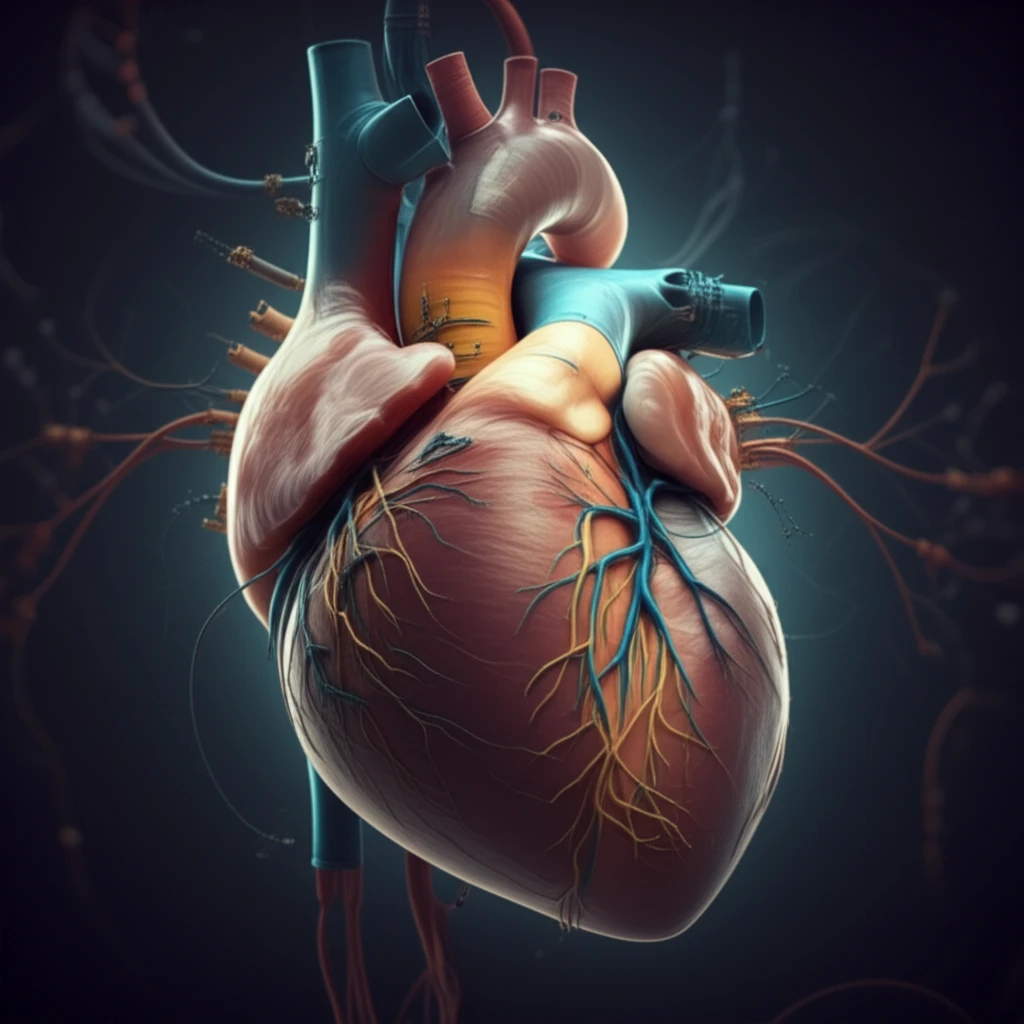
Personalized heart care through advanced technology

Smart Cardiovascular Care: How Personalized Engineering is Revolutionizing Heart Health

"Discover how patient-specific medical engineering is transforming cardiovascular therapy, offering new hope for tailored treatments and improved outcomes."


In an era where personalized medicine is increasingly becoming the standard, cardiovascular care is undergoing a significant transformation. While genetic, molecular, and pharmacological approaches have dominated the field, a new frontier is emerging: patient-customized engineering (PaCE). This innovative approach focuses on tailoring medical devices and therapies to the unique anatomical and physiological requirements of each patient, promising a more effective and targeted treatment strategy.

The "innovating medical technology in.nrw" network in Aachen, Germany, is at the forefront of this revolution. Guided by the principle of PaCE, the network is developing customized solutions and therapies designed to address the specific diseases and challenges faced by individual patients. This approach moves beyond the one-size-fits-all model, recognizing that each patient's cardiovascular system presents a unique set of characteristics that demand a personalized treatment plan.

Unlike pharmacological approaches, PaCE emphasizes the development of medical components, devices, and systems that are meticulously tailored to an individual's specific anatomical and physiological needs. This approach unlocks new avenues for enhancing the interaction between technological systems and the patient's body, leading to improved outcomes and a better quality of life.

Key Projects Revolutionizing Cardiovascular Care

Personalized heart care through advanced technology

The Aachen-based network is currently undertaking six research and development projects, along with a coordinating project, involving 40 partners, all dedicated to establishing a new generation of medical devices and systems. These projects are specifically focused on cardiovascular disease, which remains the leading cause of death in Germany. Here's a glimpse into some of the groundbreaking initiatives:

TemRas: Telemedical Rescue for Cardiac Emergencies. Cardiovascular emergencies account for a significant portion of emergency assistance operations, making rapid diagnosis and treatment crucial. As emergency admissions rise and the shortage of emergency doctors persists, telemedicine is becoming increasingly vital. TemRas, a telemedical rescue assistance system for Emergency Medical Services (EMS), aims to address this challenge.

  • Real-time Support: TemRas facilitates real-time transmission of vital signs, voice, and image communication from the scene to a remote "tele-emergency physician."
  • Expert Guidance: This remote expert can directly support the on-site emergency team, providing critical guidance and expertise.
  • Wide Implementation: The system is being implemented in five rescue service areas in Aachen, Cologne, Düren, Euskirchen, and Heinsberg for a year-long trial.
Individualized Tele-monitoring for Heart Failure. Heart failure, a chronic condition with a high mortality rate among the elderly, often requires treatments focused on preventing complications. Early detection of exacerbations and concomitant diseases is critical. Individualized nightly tele-monitoring for outpatient therapy in heart failure is being developed to address this need. External sensors are used to enable timely diagnosis of exacerbations and improve the early detection of conditions like hypertension, atrial fibrillation, and sleep apnea. Monitoring during sleep allows for more intensive and comfortable data collection.

The Future of Cardiovascular Care: A Personalized Approach

The preliminary results and achievements stemming from these collaborative efforts are encouraging, indicating that Patient Customized Engineering (PaCE) represents a significant optimization strategy with high levels of innovation, moving in the direction of improved patient care. The trend of personalization may have the potential to usher in a new era of medical engineering.

Many research collaborations are already established, and initial success stories are emerging. Now it is important to secure the foreseeable progress and to firmly and sustainably maintain the implementation of innovative products and treatments.

As we move forward, continued efforts in research, policy, and clinical practice are essential to ensure that the benefits of patient-customized engineering are fully realized. By embracing this personalized approach, we can pave the way for a future where cardiovascular care is more effective, efficient, and tailored to the unique needs of each individual.

About this Article -

This article was crafted using a human-AI hybrid and collaborative approach. AI assisted our team with initial drafting, research insights, identifying key questions, and image generation. Our human editors guided topic selection, defined the angle, structured the content, ensured factual accuracy and relevance, refined the tone, and conducted thorough editing to deliver helpful, high-quality information.See our About page for more information.

This article is based on research published under:

DOI-LINK: 10.1515/bmt-2013-0068, Alternate LINK

Title: Patient Customized Engineering For Smart Cardiovascular Therapy

Subject: Biomedical Engineering

Journal: Biomedical Engineering / Biomedizinische Technik

Publisher: Walter de Gruyter GmbH

Authors: Thomas Schmitz-Rode, Robert Farkas

Published: 2014-01-01

Everything You Need To Know

1

What is Patient-customized engineering (PaCE) and why is it important?

Patient-customized engineering (PaCE) is an innovative approach that focuses on tailoring medical devices and therapies to the unique anatomical and physiological requirements of each patient. This represents a shift away from the 'one-size-fits-all' model, recognizing that cardiovascular systems have unique characteristics. This is significant because it promises more effective and targeted treatments, leading to improved patient outcomes and a better quality of life.

2

Where is the primary research and development of Patient Customized Engineering (PaCE) taking place?

The 'innovating medical technology in.nrw' network in Aachen, Germany, is at the forefront of Patient Customized Engineering (PaCE). The network is developing customized solutions and therapies specifically designed to address the diseases and challenges faced by individual patients. This involves collaborative projects aimed at creating a new generation of medical devices and systems.

3

What is TemRas and how does it work?

TemRas is a telemedical rescue assistance system designed to address the challenges of cardiovascular emergencies. It facilitates the real-time transmission of vital signs, voice, and image communication from the scene to a remote tele-emergency physician. This allows the expert to support the on-site emergency team, providing critical guidance and expertise. It's currently being implemented in five rescue service areas.

4

How is individualized tele-monitoring being used?

Individualized tele-monitoring is being developed to manage heart failure. It uses external sensors to enable timely diagnosis of exacerbations and improve the early detection of conditions like hypertension, atrial fibrillation, and sleep apnea. Monitoring during sleep allows for more intensive and comfortable data collection, leading to more personalized and effective management of the condition.

5

What are the potential implications of Patient Customized Engineering (PaCE)?

The implications of Patient Customized Engineering (PaCE) are significant. It offers a significant optimization strategy with high levels of innovation, potentially ushering in a new era of medical engineering. The trend toward personalized medicine could transform how cardiovascular diseases are treated, leading to more effective and targeted treatments and, ultimately, improved patient care and outcomes.

Newsletter Subscribe

Subscribe to get the latest articles and insights directly in your inbox.