
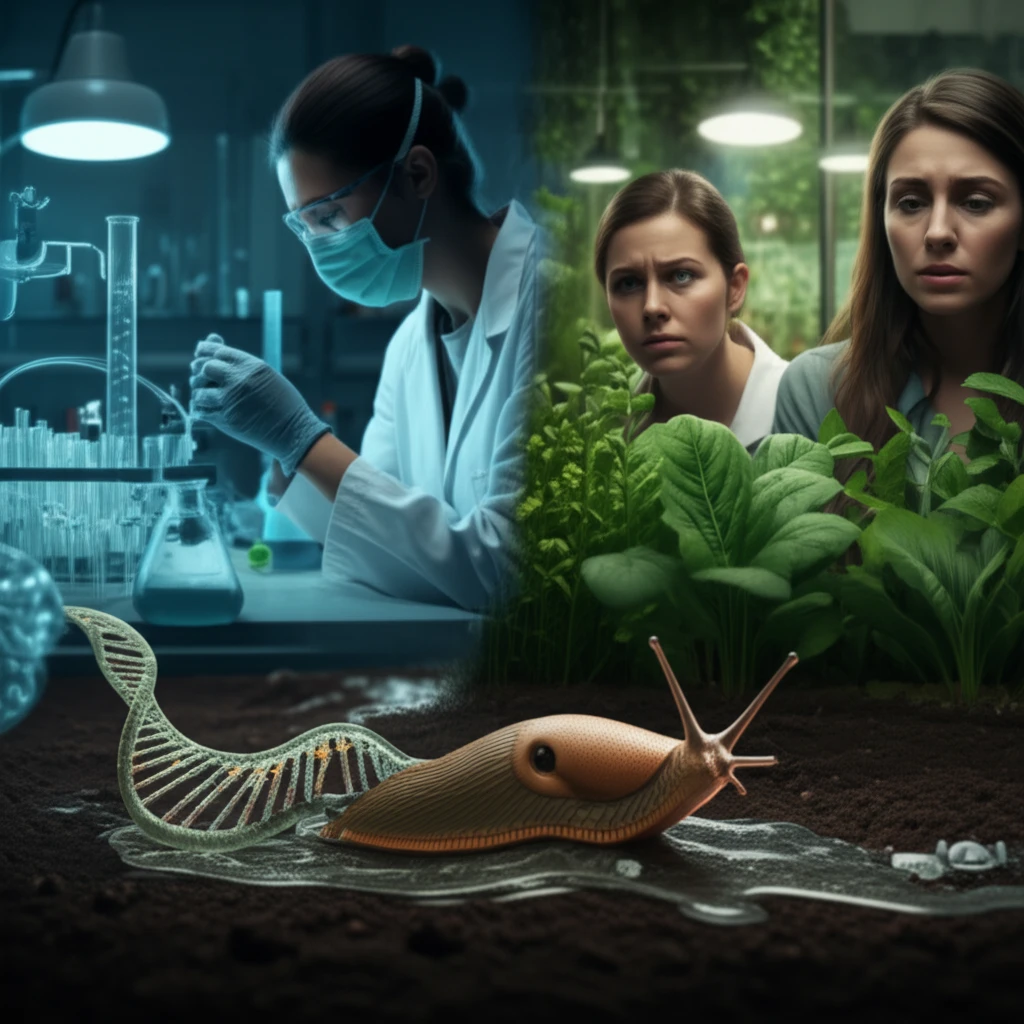
Surreal illustration of a slug with a DNA trail, symbolizing emerging disease complexities.

Slug Slime Scare: Unpacking the Truth About Emerging Diseases

"Discover how medical understanding and public perception shape our response to new health threats – and what it means for you."


Imagine discovering that the harmless-looking slugs in your garden could be linked to a potentially serious disease. This was the reality faced by communities in Southern Brazil when the worm Angiostrongylus costaricensis, which parasitizes land snails and humans, was identified. This discovery highlighted not only a potential under-diagnosis of abdominal angiostrongyliasis but also sparked a complex interplay between medical understanding and public perception.

The emergence of a new infectious disease isn't just a medical event; it's a social phenomenon. The way a disease is understood, diagnosed, and treated is heavily influenced by cultural beliefs, scientific advancements, and public anxieties. This article delves into the fascinating case of abdominal angiostrongyliasis, exploring how its perception has been shaped in different ways in Costa Rica and Brazil, and what these differences mean for those affected.

Drawing from in-depth research, we'll unpack how the concept of this disease has been constructed, the impact on clinical and epidemiological diagnosis, and the crucial role of interdisciplinary approaches in understanding and addressing emerging health threats. Ultimately, we aim to empower you with a clearer understanding of how diseases emerge, evolve, and impact our lives.

From Agricultural Pest to Public Health Crisis: The Making of a Disease

Surreal illustration of a slug with a DNA trail, symbolizing emerging disease complexities.

In 1995, residents of Nova Itaberaba and Planalto Alegre in Santa Catarina, Brazil, faced an unusual invasion: land slugs, later identified as Sarasinula linguaeformis, swarmed their crops, homes, and gardens. Beyond the agricultural damage, the sheer number of slugs raised concerns about potential health risks, especially the possibility of a parasitic infection.

This concern prompted an investigation that revealed the slugs were carriers of Angiostrongylus costaricensis, a nematode known to cause abdominal angiostrongyliasis in humans. The discovery transformed an agricultural problem into a public health one, triggering a series of studies to assess the risk to the local population.

  • Initial Response: Public officials requested investigation, raising concerns about potential parasitic infections.
  • Scientific Link: Research confirmed the presence of Angiostrongylus costaricensis in the slugs, connecting them to human health risks.
  • Public Screening: Blood samplings were conducted to screen the human population, revealing a number of positive cases.
The situation was further complicated by media coverage. While it raised awareness, it also led to heightened anxiety and even stigmatization of the affected communities. As one resident lamented, "Nobody comes to our festivities anymore, and they also refuse to buy our products."

Beyond the Biology: Why Understanding Disease Construction Matters

The case of abdominal angiostrongyliasis demonstrates that the emergence of a disease is not solely a biological event. It is a complex process shaped by medical knowledge, public perception, and social context. The way we understand and respond to a disease is influenced by the scientific methods used, the information disseminated by the media, and the cultural beliefs of the affected communities.

Recognizing the social construction of disease is crucial for effective public health interventions. It allows us to address not only the biological aspects of the disease but also the social and psychological factors that contribute to its spread and impact. This includes addressing public anxieties, combating stigmatization, and promoting informed decision-making.

Ultimately, understanding the interplay between science and society is essential for navigating the challenges of emerging infectious diseases. By embracing interdisciplinary approaches and engaging with the public, we can build more resilient and equitable health systems that are better equipped to protect communities from existing and emerging threats.

About this Article -

This article was crafted using a human-AI hybrid and collaborative approach. AI assisted our team with initial drafting, research insights, identifying key questions, and image generation. Our human editors guided topic selection, defined the angle, structured the content, ensured factual accuracy and relevance, refined the tone, and conducted thorough editing to deliver helpful, high-quality information.See our About page for more information.

This article is based on research published under:

DOI-LINK: 10.1590/s0104-59702011000300016, Alternate LINK

Title: Worms, Slugs And Humans: The Medical And Popular Construction Of An Emerging Infectious Disease

Subject: History and Philosophy of Science

Journal: História, Ciências, Saúde-Manguinhos

Publisher: FapUNIFESP (SciELO)

Authors: Márcia Grisotti, Fernando Dias De Avila-Pires

Published: 2011-09-01

Everything You Need To Know

1

What caused the emergence of abdominal angiostrongyliasis as a public health concern?

The discovery of *Angiostrongylus costaricensis* in land slugs (*Sarasinula linguaeformis*) in Southern Brazil, specifically in areas like Nova Itaberaba and Planalto Alegre, led to the identification of abdominal angiostrongyliasis as a potential public health threat. This involved recognizing the slugs as vectors and the subsequent transmission of the parasitic nematode to humans, thus transforming an agricultural issue into a health concern. The medical understanding shifted from a simple agricultural pest to a carrier of a disease-causing parasite. The implications involved public screening, heightened anxiety and potential economic impact due to public perception.

2

How was the concept of abdominal angiostrongyliasis constructed?

The concept of abdominal angiostrongyliasis was constructed through a combination of scientific investigation, public awareness, and media coverage. Initially, the focus was on the agricultural damage caused by the land slugs (*Sarasinula linguaeformis*). Once the connection to the parasitic nematode *Angiostrongylus costaricensis* was established, the narrative shifted towards public health risks. Scientific methods, such as blood samplings, were crucial in defining the scope of the problem. The media played a role in disseminating information, which in turn influenced public perception and anxieties. This demonstrates how a disease is not just a biological entity but is also shaped by the social and cultural context.

3

What is abdominal angiostrongyliasis, and why is it significant?

Abdominal angiostrongyliasis is a disease caused by the parasitic nematode *Angiostrongylus costaricensis*. Humans contract this disease through contact with or ingestion of land snails or slugs, like *Sarasinula linguaeformis*, that carry the parasite. The significance of this disease in the context of the article lies in its emergence as a public health concern in Southern Brazil and the resulting interplay between scientific understanding, public perception, and the social impact on affected communities. The implications include potential under-diagnosis, varying public responses, and the need for interdisciplinary approaches to address emerging health threats.

4

What was the initial response to the abdominal angiostrongyliasis situation?

The response to the emergence of abdominal angiostrongyliasis in Brazil involved several key steps. Public officials requested investigations to assess the potential health risks associated with the land slugs. Scientific research confirmed the presence of *Angiostrongylus costaricensis* in the slugs, establishing a direct link to human health concerns. Blood samplings were conducted to screen the local population for the parasite, revealing positive cases. These actions aimed to understand the disease's spread, mitigate its impact, and inform public health strategies. These actions highlight the importance of coordinated efforts to manage emerging infectious diseases.

5

How did public perception affect the response to this disease?

Public perception significantly influenced the response to abdominal angiostrongyliasis. The media coverage, while aiming to raise awareness, also led to heightened anxiety among the affected communities. This increased anxiety, in turn, led to stigmatization, as evidenced by the decline in attendance at local festivities and refusal to purchase local products. This demonstrates that the perception of a disease and the information disseminated about it have substantial social and economic implications. Addressing public perception is crucial in managing the social impact of emerging diseases.

Newsletter Subscribe

Subscribe to get the latest articles and insights directly in your inbox.