
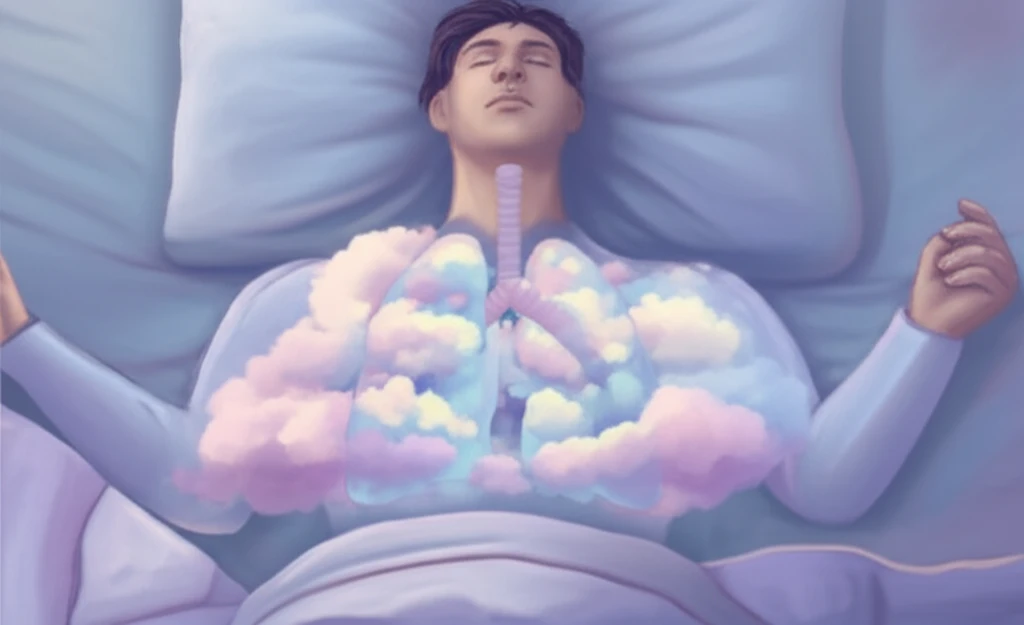
Sleep Disorders and Breathing: What's the Connection?

"Uncover the surprising link between chronic respiratory issues and sleep disturbances, and what you can do about it."
If you're living with a chronic respiratory disease like Chronic Obstructive Pulmonary Disease (COPD), you know how challenging it can be to manage your symptoms. But what you might not realize is that these conditions can also significantly impact your sleep. Sleep disorders are more common in people with chronic respiratory illnesses, creating a frustrating cycle where breathing problems disrupt sleep, and poor sleep worsens respiratory symptoms.
Research shows a strong connection between chronic respiratory diseases and sleep disorders such as insomnia, restless leg syndrome (RLS), and obstructive sleep apnea. These sleep disorders not only affect your quality of life but can also exacerbate respiratory issues, leading to more frequent flare-ups and a decline in overall health.
This article will explore the prevalence of sleep disorders in individuals with chronic respiratory diseases, examine the factors that contribute to this connection, and provide practical advice on how to improve both your sleep and respiratory health. Understanding this link is the first step towards a more restful and healthier life.
A Public Health Burden That Defies Easy Counting
Sleep-disordered breathing conditions such as obstructive sleep apnea are widely regarded as common, yet precise prevalence figures vary from study to study and population to population. Reports frequently suggest that a large share of affected individuals remain undiagnosed, which complicates efforts to estimate the true public health burden. Published statistics should therefore be read as approximations rather than settled counts. Regardless of the exact numbers, the available evidence points to a substantial and growing public health impact that warrants continued attention.
Relying on Outdated Tools
Sleep-disordered breathing, ranging from habitual snoring to severe obstructive sleep apnea, is recognized as a prevalent public health issue, but research and diagnostic practice still rely on outdated metrics and laborious methods that reduce diagnostic capacity and delay timely diagnosis and treatment sciencedirect.com. The conventional diagnostic strategy combines a sleep-oriented history, physical examination, and objective testing, reflecting that obstructive sleep apnea is a heterogeneous disease highly prevalent in both children and adults . Prior literature reviews have extensively documented conventional respiratory analysis methodologies, yet the rapidly evolving landscape of cutting-edge diagnostic technologies and their physiological signals remains insufficiently addressed link.springer.com. Emerging novel approaches are seen as having the potential to overcome many of the existing limitations of sleep-disordered breathing diagnostics and transform disease diagnosis and management to improve outcomes for patients .
From Ancient Concepts to Modern Sleep Medicine
The rise of modern sleep medicine can be traced from the rudimentary concepts of the ancient prehistoric and early classical periods to today's clinical practice, an evolution documented in comprehensive histories of the field link.springer.com. Landmark advances include the discovery of brain activity during sleep, cited as one of the most important advances in sleep research, alongside recognition of the impact of artificial lighting on modern society and the discovery of sleep inertia sleep.hms.harvard.edu. Respiratory sleep disorders acquired their own historical narratives, including dedicated accounts of the obstructive sleep apnea syndrome and the upper airway resistance syndrome . Today, disorders of sleep and wakefulness are classified across three diagnostic systems, including the Diagnostic and Statistical Manual of Mental Disorders, fifth edition (2013, with a text revision in 2022) and the International Classification of Diseases, 11th revision (2022) .
The Link Between Your Lungs and Your Sleep
A recent study investigated the prevalence of sleep disorders in patients with chronic respiratory diseases. The research involved analyzing data from veterans who underwent pulmonary function testing. Questionnaires were used to assess respiratory health, sleep quality, and overall quality of life.
- High Prevalence: Sleep disorders are highly prevalent in individuals with chronic respiratory conditions.
- Poor Sleep Quality: A large percentage of participants reported poor sleep quality.
- Impact on Quality of Life: Respiratory issues affected participants' daily lives, including functional limitations and overall quality of life.
- Correlation with Morbidity: The severity of respiratory disease correlated with the prevalence of sleep disorders.
Linking Breathing Patterns to Sleep Physiology
Primary sleep disorders such as insomnia, hypersomnia, and obstructive sleep apnoea are defined as conditions in which the normal sleep pattern or sleep behaviours are disturbed nature.com. Open-access research in the sleep-and-breathing space, including the Frontiers in Sleep section dedicated to Sleep and Breathing, is increasingly linking respiratory patterns with sleep physiology and disorders frontiersin.org. A study published December 1, 2023, reported that sleep disorders including obstructive sleep apnea, restless leg syndrome, and insomnia are present in chronic obstructive pulmonary disease (COPD) with varied prevalence . This line of research reflects a movement away from single-condition silos toward examining how breathing disorders and sleep disorders jointly affect patients.
Where Promising Approaches Have Stumbled
Not every approach to sleep-disordered breathing has succeeded, and several widely proposed solutions have encountered practical hurdles. Screening tools, for instance, have often struggled to reliably identify affected individuals in routine care, and diagnostic innovations have sometimes proven costly or difficult to standardize. Adherence to treatment is a recurring challenge, with many patients discontinuing therapy over time. Given these mixed outcomes, claims about the effectiveness of new methods should be treated cautiously until they hold up in broader clinical settings.
Diagnosis and Burden Across Populations
Comparing sleep-disordered breathing across different populations and care settings reveals both shared patterns and notable contrasts. Reported rates appear to vary markedly depending on age, sex, body composition, and the presence of coexisting respiratory or cardiovascular disease. Diagnostic practices also diverge, with objective testing used far more routinely in some settings than in others. These inconsistencies complicate cross-study comparisons and argue for more standardized measurement and reporting across research.
Taking Control of Your Sleep and Breathing
If you have a chronic respiratory disease and are struggling with sleep, it's crucial to take proactive steps to improve your well-being. Here's what you can do:
One Integrated Problem, Not Two
Clinical commentary increasingly frames sleep-disordered breathing as intertwined with chronic respiratory disease: experts describe a synergistic link between OSA and chronic respiratory diseases that leads to greater morbidity and mortality than either disorder alone, and they argue that a comprehensive patient approach and an overnight diagnostic sleep study are imperative in these patients tandfonline.com. Treatment of OSA, for example, has been reported to reduce perioperative complications at least in some individuals, and addressing sleep disorders in patients with congestive heart failure, diabetes, COPD, and accelerated cognitive decline may serve to improve their wellbeing ncbi.nlm.nih.gov. A parallel trend is emerging in interstitial lung disease (ILD), where recent studies suggest a high prevalence of sleep issues in ILD cohorts that appear to have a meaningful negative impact on quality of life. Taken together, expert opinion points toward treating sleep and breathing as one integrated clinical problem rather than two separate conditions.
Toward Earlier and Continuous Detection
The future of sleep-disordered breathing care will likely hinge on earlier detection and continuous, home-based monitoring rather than one-night laboratory studies. Wearable and remote sensing technologies are expected to play an expanding role in capturing breathing during sleep in everyday settings, though their clinical validation is still developing. Artificial intelligence and personalized treatment algorithms hold promise for tailoring care to individual patients but remain largely experimental. As such, projections about the pace of adoption should be treated as forward-looking rather than established.
A Systemic, Multidisciplinary Problem
Sleep is intimately involved in overall health and wellbeing, and there is growing effort to address the interplay between systemic diseases and sleep in order to optimize outcomes across endocrinologic and other systemic disorders pmc.ncbi.nlm.nih.gov. Sleep-related respiratory disorders are highly prevalent and represent a growing subspecialty of respiratory medicine, with sleep apnoea reported to be nearly as prevalent in the general population as chronic obstructive pulmonary disease ncbi.nlm.nih.gov. Obstructive sleep apnea and sleep-related hypoventilation remain highly prevalent and frequently unrecognized breathing disorders, even though sleep significantly alters breathing through withdrawal of the wakefulness stimulus and changes in muscle tone, ventilatory chemosensitivity, lung properties, and metabolic rate . The global burden of sleep-disordered breathing has itself become a dedicated research focus, underscoring the systemic scale of the challenge.
Life Beyond the Breathing Index
Behind the statistics, sleep-disordered breathing shapes everyday life in ways that clinical metrics capture only imperfectly. Undiagnosed breathing pauses during sleep can leave people chronically fatigued, impairing work, driving, and family life even before formal health consequences emerge. Partners and households are typically affected as well, from loud snoring to disrupted sleep schedules and shared anxiety about symptoms. Acknowledging this human dimension matters: effective care is measured not only in breathing indices but in whether patients actually sleep, function, and feel better in their daily lives.
<b>Talk to Your Doctor:</b> Discuss your sleep problems with your physician. They can assess your respiratory condition and recommend appropriate treatments for both your lungs and your sleep. This might include medications, breathing exercises, or referral to a sleep specialist.
<b>Improve Your Sleep Hygiene:</b> Create a relaxing bedtime routine, ensure your bedroom is dark, quiet, and cool, and avoid caffeine and alcohol before bed. Consider using a humidifier to ease breathing. Prioritizing these habits can make a significant difference in your sleep quality. By addressing both your respiratory health and sleep habits, you can break the cycle of poor sleep and improved overall quality of life. Don't underestimate the power of a good night's rest!