
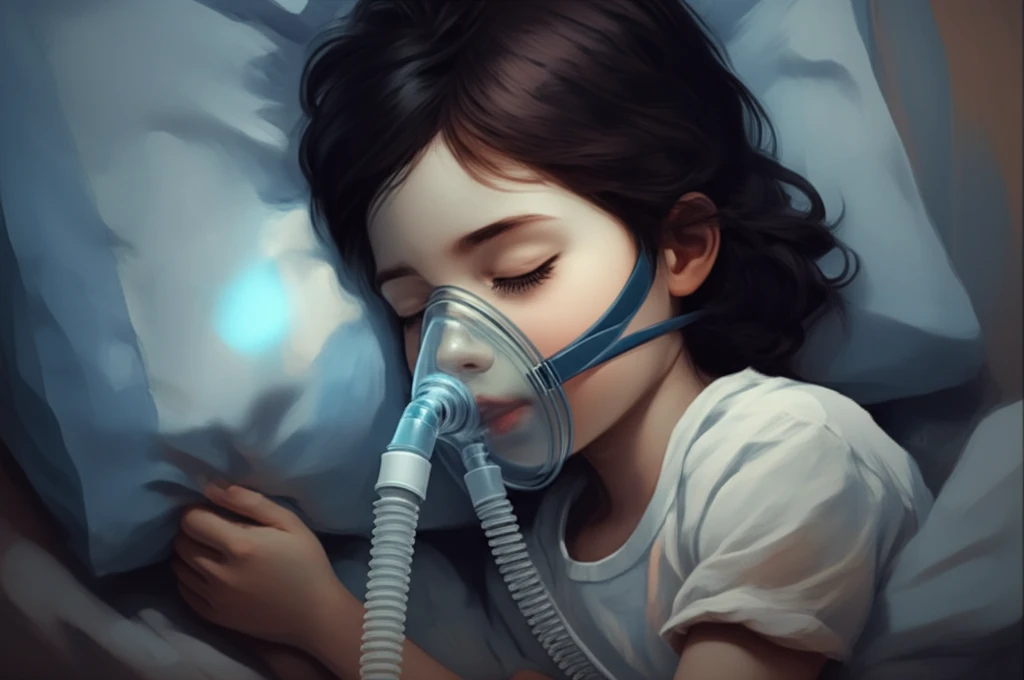
Sleep Apnea Breakthrough: How Non-Invasive Support is Changing Lives

"Discover how volume-assured pressure support (VAPS) is revolutionizing sleep apnea treatment, offering new hope for those who've struggled with traditional methods."
Obstructive sleep apnea (OSA) is a prevalent condition among children, characterized by interruptions in breathing during sleep. While often manageable, severe cases can lead to life-threatening hypoxemia, where the body experiences dangerously low oxygen levels. Obesity is a significant risk factor, complicating OSA treatment and outcomes.
Continuous Positive Airway Pressure (CPAP) has been a standard intervention, delivering constant air pressure to keep airways open. However, CPAP isn't always effective, particularly in children with obesity or those who don't respond well to adenotonsillectomy—the surgical removal of the adenoids and tonsils, commonly the first line of treatment. In these challenging cases, a tracheostomy, a surgical procedure creating an opening in the neck for breathing, has often been considered.
Now, a promising alternative is emerging. This article explores a case where non-invasive ventilation (NIV) with volume-assured pressure support (VAPS) successfully treated a child with severe OSA, offering a beacon of hope and a less invasive path forward. This approach marks a significant step in pediatric sleep medicine, potentially transforming how we manage severe OSA cases.
Sleep Apnea Prevalence and Impact
Sleep disorders, including sleep apnea, appear to be more prevalent in older adults, though exact prevalence figures remain inconsistent across studies, making definitive numbers difficult to establish. Home sleep apnea tests are approved for adults aged 18 and older for diagnosing obstructive sleep apnea (OSA), providing a simpler and less expensive alternative to traditional in-lab sleep studies. The Apnea-Hypopnea Index (AHI) is used clinically to measure severity, calculated by dividing the total number of apneic and hypopneic events by hours of sleep. Accurate diagnosis and treatment are considered more important than ever given the scale of the condition.
Diagnosis and Treatment Methods
Overnight polysomnographic testing at specialized sleep clinics remains the gold standard for diagnosing obstructive sleep apnea. Management of OSA can be performed via both surgical and non-surgical methods, depending on severity and patient needs. In pediatric cases, obstructive sleep apnea is typically treated with adenotonsillectomy alongside orthodontic procedures such as rapid maxillary expansion and mandibular advancement devices. CPAP therapy is recognized as one of the most effective sleep apnea treatments overall, though adherence remains a significant challenge.
Origins and Understanding of Sleep Apnea
Sleep apnea, also known as obstructive sleep apnea (OSA), is a common sleep-related disorder that occurs when the airway collapses during sleep. The condition can be classified as either obstructive or central sleep apnea, with obstructive sleep apnea being the more prevalent form. Symptoms include loud, chronic snoring, interruptions in breathing while sleeping, and excessive daytime somnolence. Nasal congestion and a family history of sleep apnea are recognized risk factors that have been documented throughout the history of the condition's study.
The VAPS Advantage: A Case Study
Consider the case of an eight-year-old boy with morbid obesity and severe OSA. His symptoms were classic: loud snoring, witnessed apneas, restless sleep, and mouth breathing. He also struggled with nocturnal enuresis, excessive daytime sleepiness, behavioral issues, and academic difficulties due to constantly falling asleep in school. His medical history included premature birth, hypertension, autism spectrum disorder, and attention-deficit/hyperactivity disorder.
Emerging Treatments and Device Innovations
While CPAP remains one of the most effective sleep apnea treatments, research shows that too many patients stop using their machines within a year, driving demand for alternatives. The field is seeing a complete range of new sleep apnea devices and treatments beyond traditional CPAP, with updates continuing through 2026. Recent pharmacotherapy research is also advancing, with scientists exploring drug-based approaches to managing obstructive sleep apnea. Home sleep apnea tests continue to gain approval as a practical, affordable, and faster diagnostic option compared to traditional sleep lab studies.
Complications and Overlooked Risks
Traditionally viewed as a breathing problem, sleep apnea is now known to significantly affect brain health, with new research revealing a complex link between OSA and neurological outcomes. Obstructive sleep apnea has been associated with hypertension, coronary artery disease, cardiac arrhythmias, sudden cardiac death, and heart failure, highlighting its major impact on cardiovascular function. The problem with sleep apnea is that even when the body increases red blood cell production, the amount of oxygen entering the body remains insufficient, resulting in persistent hypoxia. Critical care rehabilitation plays an important role in treating obstructive sleep apnea in acute settings, helping patients resolve specific issues and regain health and independence.
Comparing Treatment Approaches and Severity
Obstructive sleep apnea is one of the most common sleep disorders in the United States, with more than 18 million Americans suffering from some form of the condition. OSA generally responds well to CPAP therapy, improving airflow and sleep quality, whereas central sleep apnea may respond less predictably and may require alternative settings or approaches such as bilevel PAP. Sleep apnea is a surprisingly common yet often undiagnosed disorder; for example, approximately 5% of the Australian population is affected, including one in four men over the age of 30. The distinction between moderate and severe sleep apnea is clinically significant, as treatment intensity and urgency vary accordingly.
Expert Perspectives on Sleep Apnea
Sleep apnea is a common sleep disorder that causes abnormal breathing patterns during sleep, including pauses in breath, which can lead to fragmented sleep and excessive daytime fatigue. If left undiagnosed, it can cause serious long-term health issues extending well beyond sleep quality alone. Obstructive sleep apnea occurs when gravity and muscle relaxation allow the tongue and surrounding tissues to fall back into the throat area, obstructing airflow during sleep. Sleep apnea is also closely linked to cardiovascular disease, with research documenting risks, mechanisms, and the importance of early intervention.
Market Growth and Pipeline Developments
The global sleep apnea device market is projected to reach 14.15 billion USD, growing at a compound annual growth rate of 7.12% from 2025 to 2035. The pipeline for obstructive sleep apnea therapeutics shows active development, with commercial assessments covering collaborations, licensing, and acquisition deal value trends. Therapeutic pipeline products are being evaluated by product type, stage, route of administration, and molecule type, with both active and inactive products tracked. The journey from diagnosis to treatment is described as complex yet promising, with upcoming trends in devices and market landscape indicating significant innovation ahead.
Sleep Apnea as a Systemic Disorder
Sleep apnea should be thought of as a systemic disorder rather than merely a breathing problem, as it affects all tissues in the body and can have a number of serious consequences. OSA is a chronic condition characterized by repetitive collapse of the upper airway during sleep, leading to significant hypoxemia and recurrent arousals from sleep. The condition is clinically defined as stopping breathing for at least 10 seconds more than five times an hour during sleep, which significantly impacts overall health. This systemic nature underscores why sleep apnea demands broader medical attention beyond sleep medicine alone.
Real-World Experiences and Treatment Outcomes
Sleep apnea treatment can ease symptoms and might help prevent complications, including heart problems, according to clinical guidance from Mayo Clinic. Treatment may involve CPAP or alternative approaches, and in some cases patients transition between obstructive and central sleep apnea during therapy. Real-world stories from patients highlight the impact of corrective procedures, including bimaxillary orthognathic surgery, on improving sleep apnea outcomes. Community-based studies continue to evaluate the long-term impact of CPAP and other interventions on health assessment and hypertension control rates.
A New Era in Sleep Apnea Treatment
This case highlights the potential of VAPS as a valuable tool in treating severe pediatric OSA, particularly in children with obesity or those who haven't responded to traditional methods. While more research is needed, this innovative approach offers a promising alternative to tracheostomy, improving the lives and well-being of affected children and their families. By maintaining stable ventilation that adapts to varying respiratory mechanics, VAPS marks a significant advancement in personalized respiratory support.