
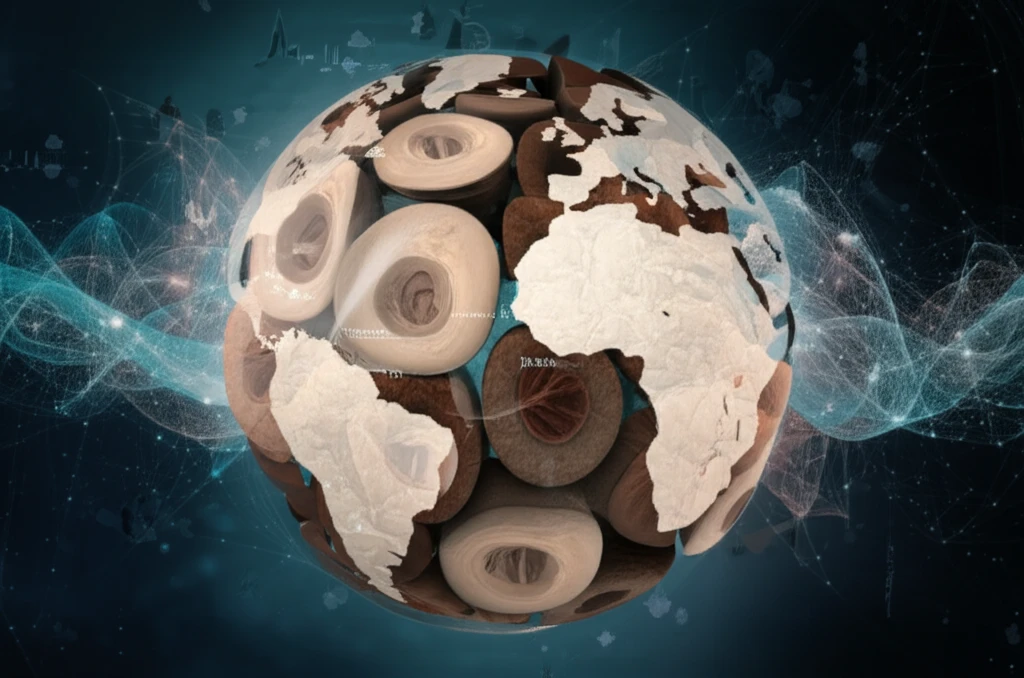
Global skin health representation showing interconnected skin cells forming a globe.

Skin Deep: Unmasking Global Skin Disease Inequities & Innovations

"A closer look at the global burden of skin diseases, the socio-economic impact, and innovative solutions for resource-poor settings."


In many parts of the world, skin conditions are more than just cosmetic concerns; they're a significant public health issue that often signals deeper systemic problems, such as HIV and neglected tropical diseases (NTDs). Recognizing and addressing dermatological diseases, especially in resource-poor regions, is crucial for developing effective global health strategies.

Skin and subcutaneous disorders rank as the 4th leading cause of non-fatal disease burden worldwide, highlighting the critical role dermatology plays in global health initiatives. As the global health landscape evolves, so too does the understanding and importance of dermatological care.

Recent global recognition of skin diseases emphasizes the importance of developing dermatologic guidelines. The World Health Organization's guidelines on skin and oral HIV-associated conditions and the inclusion of scabies on the list of neglected tropical diseases show a growing recognition of the need to integrate skin health into global health agendas. However, these efforts only scratch the surface of the dermatological challenges faced in resource-limited settings, underscoring the urgent need for more comprehensive support.

The Global Burden of Skin Disease: An Uneven Landscape

Global skin health representation showing interconnected skin cells forming a globe.

The Global Burden of Disease (GBD) project is invaluable for understanding the scale of skin diseases worldwide. By providing disability and mortality estimates, GBD helps compare the impact of different conditions, informing policy and research. The 2013 and 2015 GBD iterations offer a comprehensive overview, enabling comparisons across time and revealing the significant contribution of skin conditions to the global disease burden.

In 2013, skin conditions accounted for 1.79% of the total global disease burden, ranking as the 4th leading cause of non-fatal disease burden. Dermatitis, encompassing atopic, seborrheic, and contact types, led to the greatest burden among skin conditions, costing 9.3 million DALYs.

  • Geographic Variations: Melanoma causes the greatest burden in resource-rich regions like Australia and North America, while dermatitis has the highest DALY rate in Sub-Saharan Africa. Mortality due to melanoma was found to be 4.7 times higher in resource-rich countries compared to resource-poor ones in 2010. In contrast, mortality from measles was 197 times higher in resource-poor nations compared to resource-rich countries.
  • Age-Related Variations: Infectious causes of skin conditions, such as viral warts, pyoderma, cellulitis, and scabies, cause a greater burden among children. Older adults face a higher disability burden from psoriasis, alopecia areata, urticaria, fungal skin diseases, and decubitus ulcers.
However, these epidemiological estimates are likely underestimated due to several factors. The GBD's reliance on the ICD classification system can misclassify skin conditions. Furthermore, the stigma associated with dermatological diseases leads to underreporting. Finally, limited geographic data coverage and inconsistent data collection methods hinder comprehensive analysis, highlighting the need for a stronger global dermatologic research infrastructure.

Closing the Gap: Innovative Solutions for Equitable Skin Health

The GBD project underscores the urgent need to address skin diseases, which rank as the 4th leading cause of non-fatal morbidity worldwide. These findings emphasize variations by region and condition, with resource-poor areas disproportionately burdened by infectious skin conditions and resource-rich areas grappling with malignancies. Given the limited high-quality trials in resource-poor settings, there is a significant gap in data regarding the true impact of dermatological conditions in these regions.

Addressing this disparity requires dynamic solutions. Teledermatology offers a way to channel dermatological expertise to underserved areas. Improving dermatological training programs and task-shifting care to community health workers will be critical in delivering more tactile solutions to the problem as well. Innovative diagnostic tools, such as point-of-care diagnostics for Kaposi's sarcoma, offer a glimpse into the future by bringing patients closer to life-saving treatments.

However, in developing these solutions, it is crucial to maintain quality and ensure that increased access translates to high-quality care. By remaining committed to delivering care to all patients, seen and unseen, we can strive towards a more equitable and comprehensive approach to global skin health.

About this Article -

This article was crafted using a human-AI hybrid and collaborative approach. AI assisted our team with initial drafting, research insights, identifying key questions, and image generation. Our human editors guided topic selection, defined the angle, structured the content, ensured factual accuracy and relevance, refined the tone, and conducted thorough editing to deliver helpful, high-quality information.See our About page for more information.

This article is based on research published under:

DOI-LINK: 10.1007/s13671-017-0192-7, Alternate LINK

Title: Global Burden Of Skin Disease: Inequities And Innovations

Subject: Dermatology

Journal: Current Dermatology Reports

Publisher: Springer Science and Business Media LLC

Authors: Divya Seth, Khatiya Cheldize, Danielle Brown, Esther E. Freeman

Published: 2017-08-07

Everything You Need To Know

1

What is the Global Burden of Disease (GBD) project, and why is it important?

The Global Burden of Disease (GBD) project is a crucial initiative that assesses the impact of various diseases worldwide, including skin conditions. It provides disability and mortality estimates, allowing for comparisons of different health issues and informing policy decisions and research priorities. This is important because understanding the scale of skin diseases through the GBD project helps to identify specific conditions and regions that require the most attention and resources, thereby guiding efforts to improve global health.

2

What is the significance of skin diseases being the 4th leading cause of non-fatal disease burden worldwide?

In the context of the article, skin conditions ranked as the 4th leading cause of non-fatal disease burden worldwide. This is significant because it highlights the substantial impact skin diseases have on global health. Conditions like dermatitis contribute significantly to this burden, particularly in certain regions. The implications of this include the need for increased awareness, research, and resources to address these conditions effectively, especially in resource-poor settings where the burden is often highest.

3

What is the significance of the World Health Organization's (WHO) guidelines and the inclusion of certain skin conditions?

The World Health Organization (WHO) guidelines on skin and oral HIV-associated conditions and the inclusion of scabies on the list of neglected tropical diseases are significant because they demonstrate a growing global recognition of the importance of integrating skin health into wider health agendas. This inclusion means that these conditions are now officially recognized as public health priorities, prompting increased attention, funding, and research. The implications include the potential for improved diagnosis, treatment, and prevention strategies for these conditions, particularly in underserved communities where they are most prevalent.

4

What are geographic variations in skin disease burden, and why are they important?

Geographic variations in skin disease burden refer to the differences in the prevalence and impact of skin conditions across different regions. For instance, melanoma causes the greatest burden in resource-rich regions like Australia and North America, while dermatitis has the highest DALY rate in Sub-Saharan Africa. These variations are significant because they highlight the need for tailored public health interventions. Understanding these differences helps in allocating resources effectively, developing targeted prevention and treatment programs, and addressing the specific challenges faced by different populations.

5

What are the limitations of the Global Burden of Disease (GBD) estimates?

The limitations of the Global Burden of Disease (GBD) estimates relate to how skin conditions are categorized and reported. The GBD's use of the ICD classification system can sometimes misclassify skin conditions. Moreover, underreporting due to stigma, limited geographic data, and inconsistent data collection hinder a comprehensive analysis. This is important because these limitations can lead to an underestimation of the true impact of skin diseases, potentially leading to inadequate resource allocation and research efforts. The implications include the need for improved diagnostic tools, increased data collection, and a stronger global dermatologic research infrastructure to ensure that the true burden of skin diseases is accurately assessed and addressed.

Newsletter Subscribe

Subscribe to get the latest articles and insights directly in your inbox.