
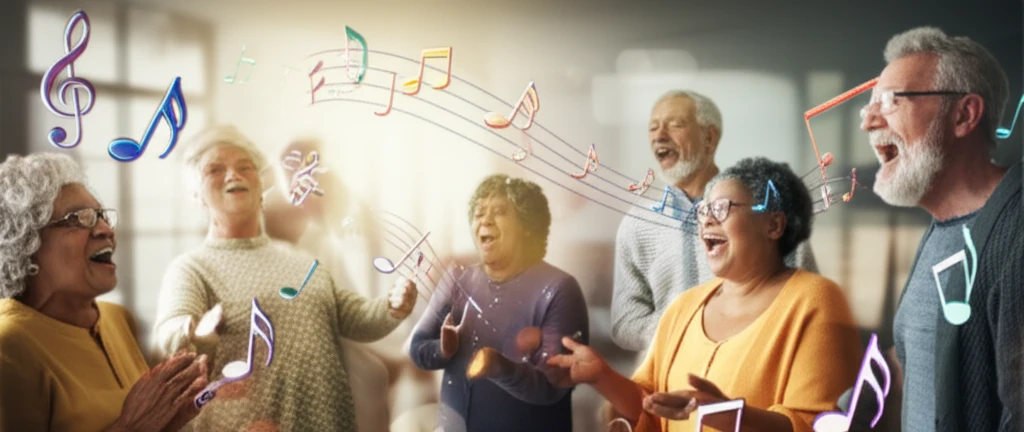
Singing for the Mind: Can Music Therapy Truly Enhance Life for Those with Dementia?

"Exploring the Science Behind Music's Healing Power and Its Impact on Quality of Life and Emotional Well-being."
Dementia, a progressive and degenerative condition, presents significant challenges, affecting memory, behavior, and overall quality of life. As the global population ages, the prevalence of dementia is rising, underscoring the urgent need for effective interventions. Beyond the cognitive decline, individuals with dementia often experience emotional distress, behavioral changes, and reduced social engagement, highlighting the need for comprehensive care strategies.
In recent years, music therapy has emerged as a promising non-pharmacological approach to dementia care. Its appeal lies in its ability to engage individuals in meaningful ways, tapping into emotional and cognitive pathways that can be less affected by the disease. Singing, in particular, has shown remarkable potential, offering a readily accessible activity that promotes social interaction, emotional expression, and cognitive stimulation.
This article explores the science and benefits of music therapy for people living with dementia, focusing on the potential of singing to enhance both quality of life and emotional well-being. We'll explore the findings of recent research, discuss practical applications, and consider the implications for both individuals with dementia and their caregivers. This piece will give the reader a comprehensive understanding of the therapeutic power of music, and the ways that it is being used to bring comfort, joy, and enhanced well-being to individuals living with dementia.
The Science of Singing: How Music Therapy Works in the Brain
Music therapy, especially singing, engages multiple areas of the brain. It's not just about the melody; it's about the physical, emotional, and cognitive processes that music stimulates. For individuals with dementia, these multi-faceted engagements can offer significant benefits. Singing, for example, is a form of active music therapy, meaning it involves direct participation. This active involvement contrasts with passive listening, where the individual receives music but isn't directly involved in creating it.
- Cognitive Stimulation: Singing can help to keep the memory active.
- Emotional Expression: Singing provides a medium through which people can express their emotions.
- Social Interaction: Singing provides opportunities for interaction, building community.
- Physical Activity: Singing requires a good deal of physical activity.
The Future of Music Therapy in Dementia Care
Music therapy, particularly singing, offers a promising avenue for improving the quality of life and emotional well-being for people living with dementia. The existing research suggests that music therapy can provide tangible benefits, from boosting mood and enhancing cognitive function to creating social connections and reducing feelings of isolation. As the population ages and the prevalence of dementia continues to rise, the need for effective, non-pharmacological interventions becomes increasingly urgent. Music therapy offers a compassionate, engaging, and accessible approach that can significantly improve the lives of those facing the challenges of dementia, enriching their lives and supporting their emotional health. Further research and wider implementation of music therapy programs will undoubtedly make a positive impact on the well-being of individuals with dementia and their loved ones.