
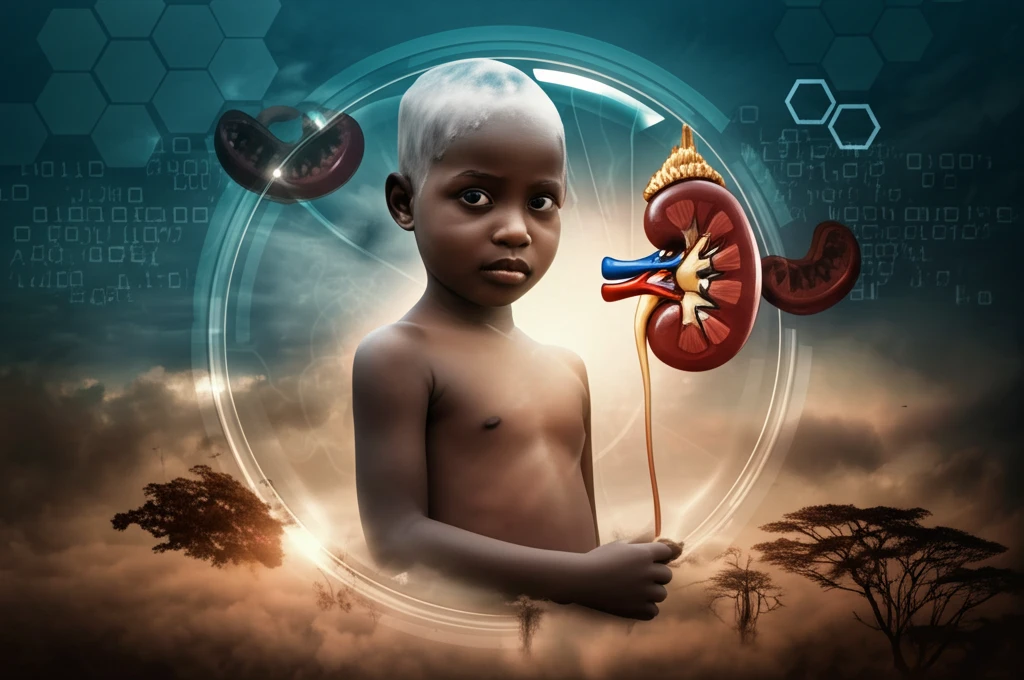
Silent Threat: Understanding Proteinuria in Children with Sickle Cell Anemia

"Early detection and management of kidney complications in sickle cell anemia can significantly improve long-term health outcomes for children."
Sickle cell anemia (SCA) is a genetic blood disorder affecting millions worldwide, with a significant prevalence in Nigeria. While many associate SCA with pain crises and other well-known symptoms, kidney complications, particularly sickle cell nephropathy (SCN), pose a significant threat. One of the early indicators of SCN is proteinuria, a condition where protein is present in the urine. This seemingly silent symptom can lead to severe kidney damage if left unchecked.
Recognizing the importance of early detection, researchers in Ilorin, Nigeria, conducted a study to determine the prevalence of persistent proteinuria among children with SCA. The study aimed to highlight the necessity of routine screening for proteinuria in SCA management, emphasizing that early intervention can prevent progressive kidney damage.
This article delves into the findings of that study, explaining proteinuria in the context of SCA, and underscoring why parents and caregivers need to be proactive about monitoring kidney health in children with this condition.
Pain, Crisis, and the Scale of Sickle Cell Disease
Sickle cell disease is a group of inherited disorders that affect the red blood cells, causing pain, anemia, and other complications. People with the condition make an abnormal hemoglobin, called hemoglobin S, which binds oxygen in the lungs and carries it to all parts of the body. The disease is present at birth, and its hallmark episodes of severe pain can become life-threatening crises. In children, these crises are especially common early on: reports indicate vaso-occlusive crises occur in 60-80% of children with the disease by age 5, with adults averaging 6-9 crises per year. Sickle cell disease can also lead to problems such as jaundice and growth issues in children.
An Inherited Condition, Tested Through Models
Sickle cell disease is the name for a group of inherited health conditions affecting the red blood cells, with sickle cell anaemia as the most serious type. The condition is a hereditary, homozygous genetic blood disorder, and it is particularly common in people with an African or Caribbean family background. Because it is inherited and present from birth, management focuses on treating complications and crises rather than preventing the underlying genetic defect. Research into new therapies faces practical obstacles, as researchers studying an established mouse model of the disease noted the challenge of developing an unambiguous method for testing new treatments, using survival as an end point. These model limitations matter because they slow the path from laboratory findings to reliable treatments for patients.
From Mutation Discovery to Understanding Crisis
Sickle cell anemia is a hereditary disease rooted in a mutation of the hemoglobin beta gene, which is located on chromosome 11. This mutation causes the body to produce abnormally shaped red blood cells that become rigid and crescent-shaped instead of flexible and round. Because it is a genetic disorder that alters how hemoglobin is made, red blood cells sickle or take on a crescent form. Those misshapen cells block blood flow, which leads to pain crises and serious complications including organ damage, blood clots, stroke, and infection. Together, these discoveries about the genetic cause and the mechanical consequences of sickling underpin the modern understanding of the disease.
The Ilorin Study: Unveiling Proteinuria Rates
Between October 2004 and July 2005, researchers at the University of Ilorin Teaching Hospital examined 75 children aged 1 to 17 years with confirmed SCA. The children were in a steady state, meaning they weren't experiencing acute sickle cell crises. Using dipstick urinalysis, a simple and non-invasive test, the researchers looked for persistent proteinuria, defined as the presence of protein in the urine at two separate evaluations, one month apart.
- Early Detection: Proteinuria can be detected through routine urine testing.
- Preventive Measures: Addressing proteinuria early can prevent further kidney damage.
- Improved Outcomes: Regular monitoring can lead to better long-term health for children with SCA.
Current Reviews on the Disease and Its Triggers
Recent literature and overviews continue to map the full clinical picture of sickle cell disease, from its underlying mechanisms to the everyday events that set off crises. A key area of current focus is identifying crisis triggers so that patients can manage their daily lives more safely. For example, medically reviewed guidance now addresses how to exercise without triggering a crisis, giving people living with the disease practical tools to stay active. Reviews also emphasize that understanding what provokes sickling episodes is central to reducing hospital visits and improving quality of life.
Confronting Confusion and Stigma
A common failure point in public understanding is confusing sickle cell anemia with low iron (iron deficiency) anemia, even though the two are distinct conditions. Iron deficiency anemia is caused primarily by insufficient iron intake or loss of iron from the body, whereas sickle cell disease is an inherited blood disorder caused by a mutation in the responsible gene. This confusion contributes to broader misconceptions that fuel stigma, discrimination, and emotional distress for patients and families. Awareness efforts, including World Sickle Cell Day messaging that highlights the roughly 300,000 newborns affected each year, stress that fighting stigma is as important as treatment itself.
Normal Versus Sickle Cells at a Glance
Visual comparisons of normal and sickle red blood cells highlight the structural differences at the heart of the disease. Where healthy red blood cells maintain a flexible, rounded shape that lets them travel easily through blood vessels, sickle cells take on an abnormal form. This distortion illustrates how a single change in cell shape can alter the disease's consequences throughout the body. Such side-by-side images are widely used to make the mechanism of sickle cell anemia immediately understandable.
Taking Action: What Parents and Caregivers Need to Know
If you're a parent or caregiver of a child with sickle cell anemia, understanding the risk of kidney complications is essential. Make sure your child receives regular medical check-ups, including urine testing to screen for proteinuria. Early detection and management of proteinuria can significantly improve your child's long-term health and quality of life. Discuss with your healthcare provider the best strategies for monitoring and protecting your child's kidney health. Remember, proactive care can make all the difference.
Experts on a Painful, Underserved Disease
Experts describe sickle cell anemia as a genetic blood disease in which red blood cells change shape in a way that limits their ability to carry oxygen around the body. This impaired oxygen transport can lead to organ damage and is severely painful for those affected. The majority of people living with the disease are of African or Caribbean descent, and commentary highlights that treatment in many parts of Africa remains lacking. The contrast between the burden of disease and the availability of care underscores the need for more equitable access to treatment.
Screening, Counseling, and the Earliest Signs
The future outlook for sickle cell disease management increasingly centers on testing, screening, and prevention across regions such as the Middle East and Africa. Genetic counseling and prenatal testing are viewed as important components of comprehensive management, influencing family planning and disease prevention. Early detection is especially valuable because symptoms usually appear in early childhood, often between six to eight months of age. Reported symptoms may include pain, fever, and swelling of the hands and feet, though they vary from person to person, making newborn screening and follow-up care critical next steps.
A Hemolytic Anemia With Global Reach
Sickle cell anemia is an inherited and sometimes serious condition classified as a type of hemolytic anemia. An unusual hemoglobin forces red blood cells into a crescent shape, and these irregular cells die too soon, creating an ongoing shortage of red blood cells. This breakdown of misshapen cells leads to anemia, pain, and organ damage. The disorder primarily affects people of African, Mediterranean, Middle Eastern, and Indian descent, positioning it as a global condition with uneven distribution of care.
Living With Sickle Cell, Physically and Psychologically
At the most basic level, hemoglobin is the protein inside red blood cells that carries oxygen to cells, with oxygen attaching to the iron-containing part of the protein. Understanding of this oxygen-carrying chemistry built up over centuries, from the discovery of iron in blood in 1747 to the elucidation of hemoglobin's chemical structure in the 1960s. Beyond the laboratory, case studies and research highlight the psychological impact of living with sickle cell anaemia, a condition that takes multiple faces and can be life-threatening. This underscores how orthodox medicine can offer treatment but the emotional toll on patients and families remains a central part of the disease's real-world burden.