
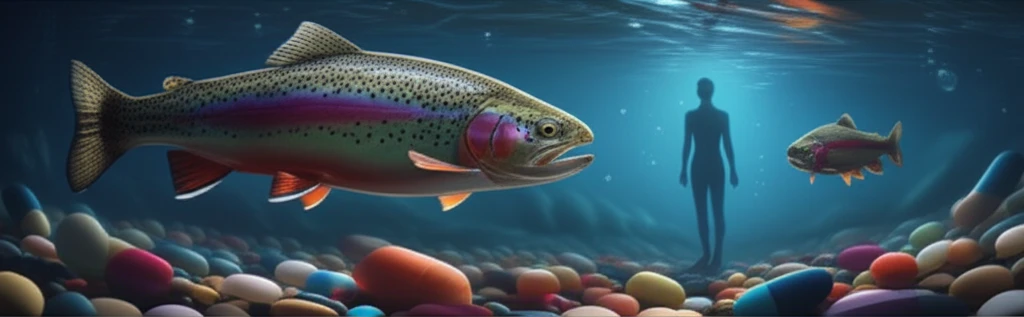
Rainbow trout swimming in a river contaminated with pharmaceuticals, reflecting human health concerns.

Silent Spring 2.0? How Everyday Drugs Threaten Aquatic Life and Human Health

"A new study reveals the alarming effects of common pharmaceutical mixtures on the hormonal systems of rainbow trout, raising concerns about widespread environmental contamination and potential risks to human health."


For decades, we've been warned about the dangers of pesticides and industrial chemicals seeping into our waterways. Rachel Carson's "Silent Spring" ignited a global movement by exposing the devastating effects of DDT on bird populations and, by extension, the entire food chain. But what if a new, less obvious threat was lurking in our rivers and streams? A threat made up of the very medications we take to improve our health?

A groundbreaking study from the University of Namur in Belgium has shed light on the potential dangers of pharmaceutical mixtures in aquatic environments. Researchers investigated how a combination of common drugs—including paracetamol, carbamazepine, diclofenac, irbesartan, and naproxen—affects the endocrine systems of juvenile female rainbow trout. What they found is both surprising and deeply concerning.

The study reveals that even at environmentally-relevant concentrations, these drugs can disrupt hormone production and gene expression in fish, leading to potential long-term reproductive issues. This raises broader questions about the impact of pharmaceutical pollution on aquatic ecosystems and the potential risks to human health through contaminated water sources and food chains.

What Happens When Fish Get Dosed with Our Medicine?

Rainbow trout swimming in a river contaminated with pharmaceuticals, reflecting human health concerns.

The researchers exposed all-female juvenile rainbow trout to varying concentrations of a pharmaceutical mixture for 42 days. These concentrations mirrored those found in the Meuse River in Belgium, with some groups exposed to levels 10 or 100 times higher than the environmental average. The selected pharmaceuticals—paracetamol (a common pain reliever), carbamazepine (an anticonvulsant), diclofenac (an anti-inflammatory), irbesartan (a blood pressure medication), and naproxen (another anti-inflammatory)—are frequently detected in municipal wastewater effluents.

Here’s what the study revealed:

  • Hormone Havoc: The fish experienced significant increases in sex-steroid hormone production, particularly 11-ketotestosterone (11-KT). This hormone is crucial for the development of primary ovarian follicles.
  • Gene Expression Gone Wild: Key genes involved in ovarian steroidogenesis were significantly overexpressed. Genes vital for maintaining the ovary's function also showed increased activity.
  • Germ Cell Fate Disrupted: The steady-state mRNA level of genes implicated in germ cell fate, such as foxl3, increased dramatically—up to fivefold at the highest concentration of the mixture.
  • Endocrine Disruption: The pharmaceuticals acted as endocrine-disrupting chemicals, potentially leading to long-term reprotoxic effects in aquatic organisms.
These findings indicate that even low-level exposure to common pharmaceuticals can throw the delicate hormonal balance of fish into disarray. But why should we care about the sex lives of rainbow trout?

What Can We Do to Protect Our Waterways?

The study underscores the urgent need for better monitoring and regulation of pharmaceutical discharge into aquatic environments. Here are a few potential solutions: <ul> <li><b>Advanced Wastewater Treatment:</b> Implementing technologies that can effectively remove pharmaceutical residues from wastewater before it's released into rivers and streams.</li> <li><b>Greener Pharmacy:</b> Promoting the development and use of pharmaceuticals that are more easily biodegradable and less harmful to the environment.</li> <li><b>Responsible Disposal:</b> Educating the public about proper medication disposal to prevent drugs from entering the water system through improper flushing.</li> <li><b>Further Research:</b> Conducting more comprehensive studies to understand the long-term effects of pharmaceutical mixtures on aquatic ecosystems and human health.</li> </ul> While the full extent of the threat is still unfolding, one thing is clear: we can no longer afford to ignore the silent spring of pharmaceutical pollution. The health of our planet—and our own well-being—depends on it.

About this Article -

This article was crafted using a human-AI hybrid and collaborative approach. AI assisted our team with initial drafting, research insights, identifying key questions, and image generation. Our human editors guided topic selection, defined the angle, structured the content, ensured factual accuracy and relevance, refined the tone, and conducted thorough editing to deliver helpful, high-quality information.See our About page for more information.

This article is based on research published under:

DOI-LINK: 10.1016/j.aquatox.2018.10.006, Alternate LINK

Title: Environmentally-Relevant Mixture Of Pharmaceutical Drugs Stimulates Sex-Steroid Hormone Production And Modulates The Expression Of Candidate Genes In The Ovary Of Juvenile Female Rainbow Trout

Subject: Health, Toxicology and Mutagenesis

Journal: Aquatic Toxicology

Publisher: Elsevier BV

Authors: Mélodie Schmitz, Mahaut Beghin, Syaghalirwa N.M. Mandiki, Katherine Nott, Michaël Gillet, Sébastien Ronkart, Christelle Robert, Sébastien Baekelandt, Patrick Kestemont

Published: 2018-12-01

Everything You Need To Know

1

What did the study find regarding the effects of common pharmaceuticals on aquatic life?

A recent study investigated the effects of a mixture of common pharmaceuticals on juvenile female rainbow trout. The drugs included paracetamol, carbamazepine, diclofenac, irbesartan, and naproxen. Researchers found that even at environmentally-relevant concentrations, these drugs can disrupt hormone production and gene expression in fish, potentially leading to long-term reproductive issues. This is significant because it suggests that pharmaceutical pollution could have far-reaching consequences for aquatic ecosystems.

2

How do pharmaceuticals act as endocrine disruptors in fish, based on the findings?

The pharmaceuticals in the study acted as endocrine-disrupting chemicals. This means they interfered with the normal hormonal systems of the rainbow trout. Specifically, the fish experienced increased production of sex-steroid hormones like 11-ketotestosterone (11-KT), overexpression of genes involved in ovarian steroidogenesis, and disruption of germ cell fate. The disruption of the endocrine system is significant because of its potential to cause long-term reprotoxic effects in aquatic organisms. Endocrine disruption can affect the health and stability of populations and ecosystems.

3

What specific changes in gene expression were observed in the fish exposed to the pharmaceutical mixture, and why are these changes important?

The altered gene expression affected genes vital for ovarian function, and those involved in germ cell fate. The steady-state mRNA level of genes implicated in germ cell fate, such as foxl3, increased dramatically. This is important because these genes play a critical role in the development and maintenance of the ovaries. Changes in gene expression could lead to reproductive problems and other health issues in the fish.

4

What are some potential solutions to protect waterways from pharmaceutical pollution?

There are several potential solutions, including: 1) Advanced wastewater treatment technologies to remove pharmaceutical residues before water is released into the environment. 2) Promoting the development of pharmaceuticals that are more biodegradable and less harmful, known as 'Greener Pharmacy'. 3) Educating the public about responsible medication disposal to prevent drugs from entering the water system. 4) Further comprehensive studies to understand the long-term effects of pharmaceutical mixtures on aquatic ecosystems and potentially human health. These steps are necessary to mitigate the risks associated with pharmaceutical pollution.

5

How might pharmaceutical pollution in aquatic environments affect human health?

Pharmaceutical pollution in aquatic environments raises potential concerns for human health through several pathways. Contaminated water sources could expose humans to low levels of pharmaceuticals. Additionally, the consumption of fish from contaminated waters could lead to the bioaccumulation of these substances in the human body. While the exact effects on human health are still being researched, the disruption of endocrine systems in fish raises concerns about potential hormonal and reproductive effects in humans as well. This is an area where further research is needed.

Newsletter Subscribe

Subscribe to get the latest articles and insights directly in your inbox.