
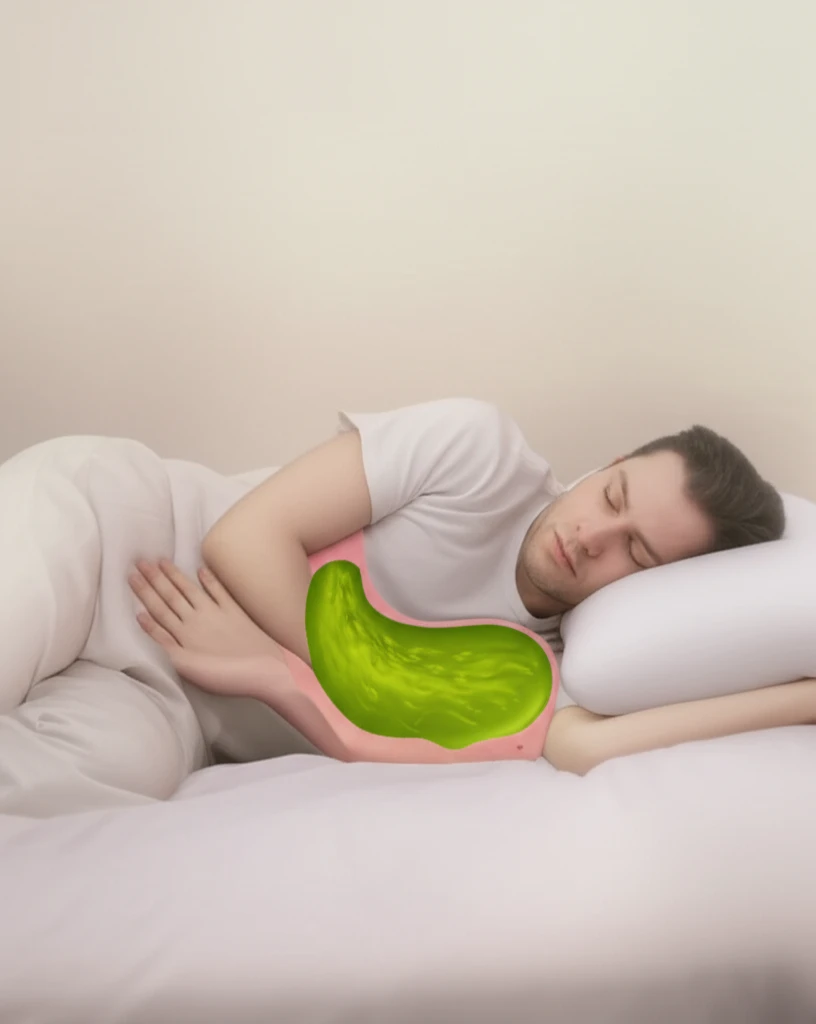
Silent Night Sabotage: Can Your Sleep Position Worsen Acid Reflux?

"Uncover the surprising link between sleep posture and laryngopharyngeal reflux (LPR). Is your nighttime rest secretly fueling throat irritation?"
Laryngopharyngeal reflux (LPR), often dubbed “silent reflux,” presents a unique challenge in comparison to its more recognized counterpart, gastroesophageal reflux disease (GERD). Unlike GERD, which is notorious for causing heartburn and indigestion, LPR frequently manifests with subtle symptoms such as chronic cough, hoarseness, and throat clearing. These symptoms can significantly impact one's quality of life, leading to discomfort and frustration.
A recent study published in the American Journal of Otolaryngology-Head and Neck Medicine and Surgery investigated the effectiveness of using a sleep positioning device to mitigate LPR symptoms. The study, conducted by Tierney et al., sparked considerable interest due to its innovative approach. The research explored whether altering sleep posture could offer a minimally invasive solution for individuals grappling with LPR.
While the study highlights the potential benefits of sleep positioning, it also raises important questions about the underlying causes of LPR and the suitability of this approach for all patients. A deeper understanding of how sleep position affects reflux and what other factors might be at play is essential for effectively managing this condition.
The Scope of Nighttime Acid Reflux
Nighttime acid reflux is a widespread condition that affects millions of people, disrupting sleep quality and potentially causing long-term damage to the esophagus. While prevalence estimates vary, the condition is recognized as a significant health concern that impacts daily functioning and overall well-being. The silent nature of nighttime reflux—occurring while individuals are unconscious—makes it particularly insidious, as damage can accumulate over time without awareness.
Traditional Sleep Positioning Strategies
The standard approach for managing nighttime acid reflux involves using gravity and body positioning as primary tools. Sleeping on the left side is commonly recommended because it positions the stomach below the esophageal sphincter, reducing the likelihood of acid flowing back into the esophagus. Elevating the head of the bed or using wedge pillows is another accepted method, as it leverages gravity to keep stomach acid down. However, these approaches have limitations, as they require consistent adherence and may not be comfortable for all sleepers. Additionally, the effectiveness can vary depending on individual anatomy and the severity of the condition.
Foundational Understanding of Sleep Position and Reflux
Early research established that sleep position plays a critical role in gastroesophageal reflux, with studies demonstrating that the left lateral decubitus position reduces esophageal exposure to acid. A traditional approach for patients with symptomatic nighttime GERD has been to elevate the head of the bed or upper body with a wedge pillow. These foundational observations laid the groundwork for understanding how body positioning during sleep can either exacerbate or alleviate reflux symptoms. The recognition that gravity and anatomical positioning are key factors has influenced clinical recommendations for decades.
The Sleep Position and Acid Reflux Connection: Unpacking the Details
The study by Tierney et al. primarily examined how a sleep positioning device could alleviate LPR symptoms. The device aims to keep patients from sleeping completely flat, reducing the amount of acid exposure in the upper airways during sleep. However, an important point raised in a commentary on the study is the need to consider the broader context of LPR and GERD.
- GERD: Often associated with heartburn, indigestion, and a sour taste in the mouth. Symptoms worsen when lying down.
- LPR: Can present with a chronic cough, hoarseness, throat clearing, and a feeling of a lump in the throat. May not always involve heartburn.
Recent Studies on Sleep Position and Reflux
Recent research has confirmed the association between sleep position and nocturnal gastroesophageal reflux, with concurrent monitoring studies providing objective data on this relationship. A study published in the Journal of Clinical Gastroenterology found that left-side sleeping significantly reduces nighttime heartburn and improves sleep quality. Sleep positional therapy using electronic wearable devices has shown promise, with one study reporting symptom improvement in 70.4% of patients. Research indicates that the best sleep position for acid reflux involves sleeping on the left side with head elevation of 6 to 8 inches, which uses gravity to prevent stomach acid from flowing back into the esophagus.
Challenges and Limitations in Positional Therapy
While sleep position significantly influences acid reflux symptoms, the relationship is not always straightforward. Some research suggests that simply changing sleep position may not be sufficient for all patients, particularly those with severe GERD. Individual variability in anatomy, reflux severity, and sleep patterns means that positional approaches have limitations. The effectiveness of positional therapy can be compromised by factors such as difficulty maintaining a specific position throughout the night and the discomfort of using positioning devices.
Comparing Sleep Positions for Reflux Management
Comparative analysis of sleep positions reveals that left-side sleeping consistently outperforms other positions for managing acid reflux. Sleeping on the left side uses gravity to keep stomach acid down, while right-side sleeping can increase reflux episodes due to anatomical positioning. The combination of left-side sleeping with head elevation appears to be the most effective approach. Simple changes in sleeping position can bring significant relief for GERD symptoms, with research supporting left lateral sleeping as superior to supine or right-side positions.
Beyond Sleep Position: A Holistic Approach to Managing Reflux
While strategically adjusting your sleep position can be a valuable tool in managing acid reflux, it's most effective when combined with other lifestyle adjustments and, if necessary, medical treatments. By understanding the nuances of your specific condition and adopting a comprehensive approach, you can achieve significant relief and improve your overall well-being. Always consult with healthcare provider.
Integrating Positional Therapy into Comprehensive Care
The evidence consistently supports that sleep position plays a meaningful role in managing nighttime acid reflux, with left-side sleeping emerging as the most favorable position. While positional therapy alone may not resolve all cases of GERD, it represents an accessible, non-pharmacological intervention that can complement other treatment approaches. Healthcare providers increasingly recognize the importance of addressing sleep positioning as part of a comprehensive management strategy for acid reflux patients.
Advancing Sleep Positional Therapy Technology
Future research is likely to focus on developing more sophisticated wearable devices that can monitor and guide sleep positioning in real-time. The understanding of why left-side sleeping is beneficial—related to stomach anatomy and the lower esophageal sphincter—continues to drive innovation in positional therapy approaches. As research progresses, personalized positional therapy recommendations based on individual patient characteristics may become more common.
Addressing Systemic Barriers to Effective Reflux Management
Managing nighttime acid reflux requires addressing broader systemic challenges, including awareness and education about the condition. Many individuals may not recognize the connection between their sleep position and reflux symptoms, leading to suboptimal management. Access to healthcare resources and the availability of positioning devices can also impact the ability to implement positional therapy effectively.
Improving Quality of Life Through Positional Awareness
Research demonstrates that sleep positional therapy using smartwatch applications can reduce nighttime gastroesophageal reflux symptoms by training patients to avoid the right lateral decubitus position. Studies published in the American Journal of Gastroenterology confirm that left lateral sleeping position may minimize nocturnal acid reflux. These findings have direct implications for improving patient quality of life, as better management of nighttime reflux can lead to improved sleep, reduced discomfort, and potentially fewer long-term complications.