
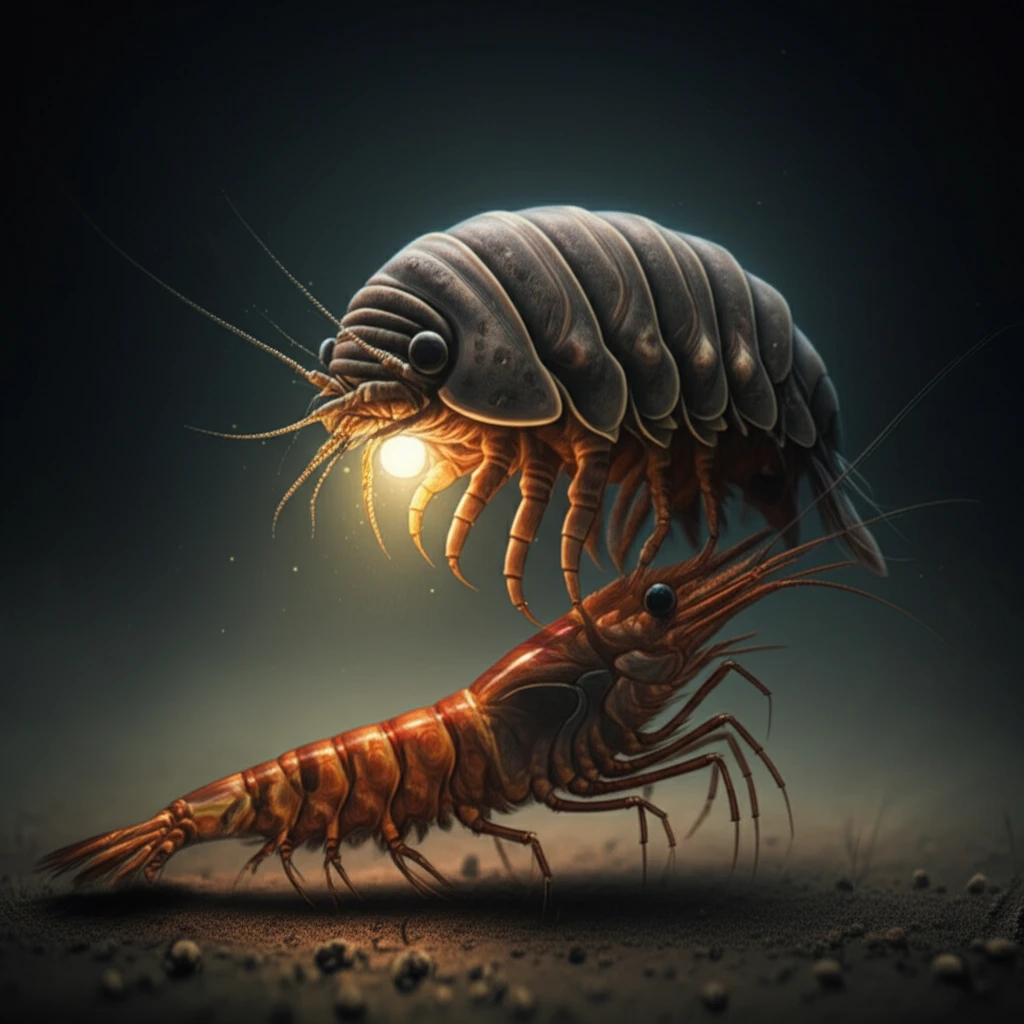
Shrimp's Hidden Struggle: Unmasking the Parasites That Call Them Home

"Dive into the surprising world of shrimp parasites and how they impact shrimp populations, sexual dynamics and overall health."
Beneath the surface of our oceans, a silent battle unfolds daily. Shrimp, a seafood staple and a vital part of the marine ecosystem, often play host to a variety of parasites. Among these are the bopyrid isopods, a group of crustaceans notorious for their parasitic lifestyle.
This article sheds light on the often-overlooked world of shrimp parasites, focusing on the isopod Urobopyrus processae and its relationship with the night shrimp Ambidexter symmetricus. By examining the findings of a recent study, we'll uncover the surprising ways these parasites impact shrimp populations, their sexual dynamics, and overall health.
Whether you're a seafood enthusiast, a marine biology student, or simply curious about the natural world, this exploration into the lives of shrimp and their uninvited guests will offer a fascinating glimpse into the intricate web of life beneath the waves.
The Parasite's Playbook: How Urobopyrus processae Impacts Shrimp
Urobopyrus processae, a widespread species of bopyrid isopod, targets the branchial chambers (gill chambers) of processid shrimps like Ambidexter symmetricus. Once inside, these parasites can wreak havoc on their host's life, influencing everything from their physical development to their reproductive success.
- Infestation Rates Vary: Infestation rates fluctuated significantly, ranging from 1.3% to a staggering 32.1% between 2010 and 2011, indicating the dynamic nature of parasite-host interactions.
- Gender Bias: Female shrimp were more likely to be infested than their male counterparts, suggesting a preference or vulnerability related to sex.
- Location Matters: Parasites showed a preference for the right branchial chamber, a detail that raises questions about the isopod’s behavior and shrimp anatomy.
- Size and Growth: Infested shrimp ranged in size from 1.26 mm to 6.24 mm in carapace length (CL). Female parasite total length (TL) increased with host size. The size of male parasites was also related to female size, which indicates a complex interdependency.
- Castration Effects: The study suggests that U. processae effectively castrates female shrimp. Only a tiny fraction of the infested female shrimps were found brooding eggs, which indicates how the parasite disrupts shrimp reproduction.
The Broader Implications: A Call for Further Research
The relationship between Urobopyrus processae and Ambidexter symmetricus offers a microcosm of the complex interactions shaping marine ecosystems. This study highlights the significant role that parasites play in regulating host populations and influencing their reproductive strategies.
Further research is needed to fully understand the long-term consequences of these parasitic relationships. Key areas of investigation include: determining the species impact in a different location, fully determine if other processid are infected, and fully explore how the parasites are effecting the shrimp's endocrinal and hormonal systems.
By continuing to unravel the mysteries of shrimp-parasite interactions, we can gain valuable insights into the health and stability of our oceans.