
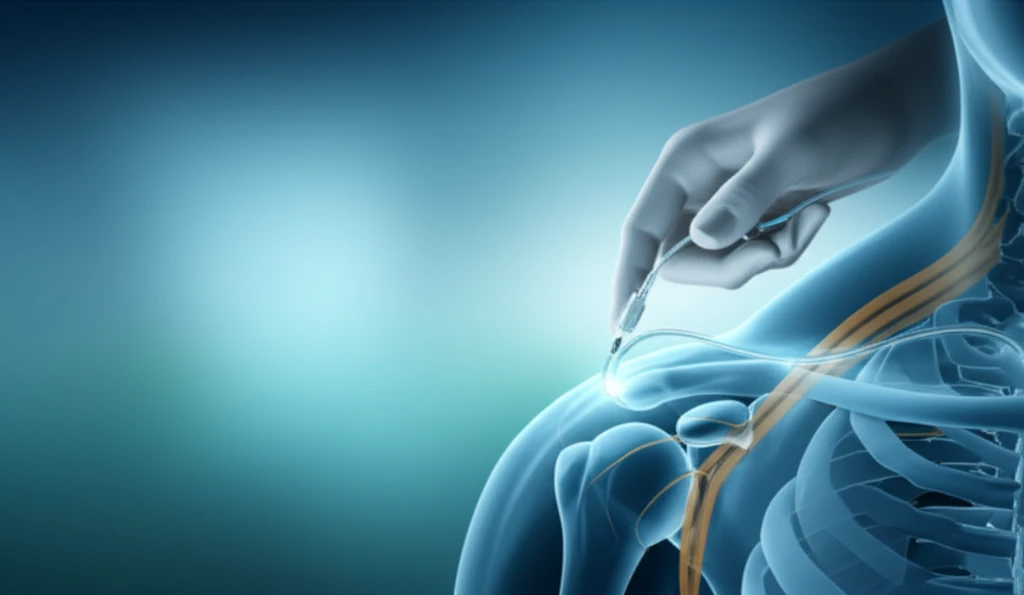
Illustration of a doctor adjusting a catheter near a shoulder joint, symbolizing innovative pain management in shoulder arthroplasty.

Shoulder Arthroplasty: Is a 'Dry Catheter' the Key to Safer Pain Management?

"Explore how a novel technique in regional anesthesia can help distinguish surgical complications from nerve-related issues in shoulder replacement surgery."


Total shoulder arthroplasty (TSA) aims to restore movement and relieve pain for individuals with severe shoulder joint damage. Post-surgery pain control is paramount. Effective pain relief allows patients to engage in physical therapy sooner, shortens hospital stays, and boosts overall satisfaction. When pain is poorly managed, it can trigger physiological stress responses, limit mobility, and even increase the risk of deep vein thrombosis (DVT).

Traditionally, interscalene regional anesthesia, which involves placing a catheter near the nerves in the neck to deliver pain medication, has been a common approach for managing post-operative pain following TSA. However, this method isn't without potential risks. One significant challenge is differentiating between nerve-related complications caused by the surgery itself and those arising from the regional anesthesia.

To address this issue, researchers developed a 'dry catheter' technique. With this approach, the catheter is placed but not immediately activated. A neurovascular examination is performed on the patient immediately after surgery, before any anesthetic is delivered through the catheter. If the exam is normal, the regional anesthesia is then initiated. This allows doctors to determine if any nerve issues were caused by the surgery, prior to starting the nerve block.

How Does the 'Dry Catheter' Technique Work?

Illustration of a doctor adjusting a catheter near a shoulder joint, symbolizing innovative pain management in shoulder arthroplasty.

The dry catheter technique represents a strategic shift in how regional anesthesia is administered for shoulder arthroplasty. In a study involving 125 shoulders, doctors placed an interscalene catheter as usual, but they didn't immediately start the medication infusion. Patients underwent their shoulder surgery under general anesthesia, and upon awakening in the recovery room, a comprehensive neurovascular examination was performed. This examination checked for any signs of nerve damage, such as weakness, numbness, or impaired motor function.

Only if the initial neurovascular examination was normal did the medical team proceed with activating the regional anesthesia. A local anesthetic, ropivacaine, was then administered through the catheter to provide pain relief. Throughout the patient's hospital stay, pain levels were carefully monitored and documented.

  • Pre-operative Assessment: Baseline neurological function is evaluated.
  • Catheter Placement: An interscalene catheter is placed without immediate activation.
  • Post-operative Examination: A thorough neurovascular exam is conducted post-surgery, pre-anesthesia.
  • Anesthesia Activation: If the exam is normal, regional anesthesia is initiated; otherwise, alternative pain management is used.
  • Monitoring: Pain levels and neurological status are closely monitored throughout recovery.
The results of the study revealed that the dry catheter technique helped differentiate between surgical and anesthesia-related complications. Out of the 125 shoulders studied, there were nine post-operative nerve-related complications. In one notable case, a patient exhibited an immediate radial nerve palsy after surgery. Because of the dry catheter technique, doctors were able to quickly identify that the catheter itself might be contributing to the problem. The catheter was removed, and the patient regained full motor strength within an hour.

The Future of Pain Management in Shoulder Arthroplasty

The dry catheter technique represents a valuable step forward in optimizing patient safety and pain control following shoulder arthroplasty. By allowing for a clear distinction between surgical and anesthesia-related nerve issues, this method empowers medical teams to make informed decisions and tailor pain management strategies to individual patient needs. While the study authors ultimately stopped using interscalene anesthesia due to their perceived complication rate, the dry catheter approach offers a framework for other medical centers to refine their protocols and improve patient outcomes in shoulder arthroplasty.

About this Article -

This article was crafted using a human-AI hybrid and collaborative approach. AI assisted our team with initial drafting, research insights, identifying key questions, and image generation. Our human editors guided topic selection, defined the angle, structured the content, ensured factual accuracy and relevance, refined the tone, and conducted thorough editing to deliver helpful, high-quality information.See our About page for more information.

Everything You Need To Know

1

What is total shoulder arthroplasty, and why is post-operative pain control so important?

Total shoulder arthroplasty, or TSA, is a surgical procedure designed to alleviate pain and restore movement in individuals suffering from severe shoulder joint damage. Effective pain management after TSA is crucial because it enables patients to participate in physical therapy sooner, reduces the length of hospital stays, and enhances overall satisfaction. Poorly managed pain can lead to physiological stress, limited mobility, and an increased risk of deep vein thrombosis (DVT).

2

Can you explain how the 'dry catheter' technique works in shoulder arthroplasty?

The 'dry catheter' technique involves placing an interscalene catheter, a device used for regional anesthesia, near the nerves in the neck without immediately administering pain medication. After the shoulder arthroplasty surgery, but before activating the catheter, a comprehensive neurovascular examination is performed to check for any signs of nerve damage, such as weakness or numbness. Only if this examination is normal is the local anesthetic, ropivacaine, administered through the catheter.

3

Why is the 'dry catheter' technique considered significant in shoulder arthroplasty?

The 'dry catheter' technique is important because it helps doctors differentiate between nerve-related complications caused by the shoulder arthroplasty surgery itself and those that may arise from the interscalene regional anesthesia. By conducting a neurovascular examination before activating the catheter, medical teams can determine if any nerve issues were pre-existing due to the surgery, allowing for more informed decisions about pain management strategies.

4

What does it mean if nerve damage is detected after surgery when using the 'dry catheter' technique?

If nerve damage is detected during the post-operative neurovascular examination while using the 'dry catheter' technique, it suggests that the nerve issue may have been caused by the shoulder arthroplasty surgery itself, rather than the interscalene regional anesthesia. This allows doctors to consider alternative pain management strategies and address the surgical complication directly. For example, in one case, radial nerve palsy was identified, and the removal of the catheter led to the patient regaining full motor strength, demonstrating the importance of quickly identifying the source of the problem.

5

What are the potential future implications of using the 'dry catheter' technique in pain management after shoulder arthroplasty?

The 'dry catheter' technique represents an advancement in patient safety and pain control following shoulder arthroplasty. While the study mentioned led the authors to discontinue using interscalene anesthesia due to perceived complications, the dry catheter approach offers a framework for medical centers to refine their protocols. It enables a clearer distinction between surgical and anesthesia-related nerve issues, empowering medical teams to make informed decisions and tailor pain management strategies to individual patient needs, ultimately improving patient outcomes.

Newsletter Subscribe

Subscribe to get the latest articles and insights directly in your inbox.