
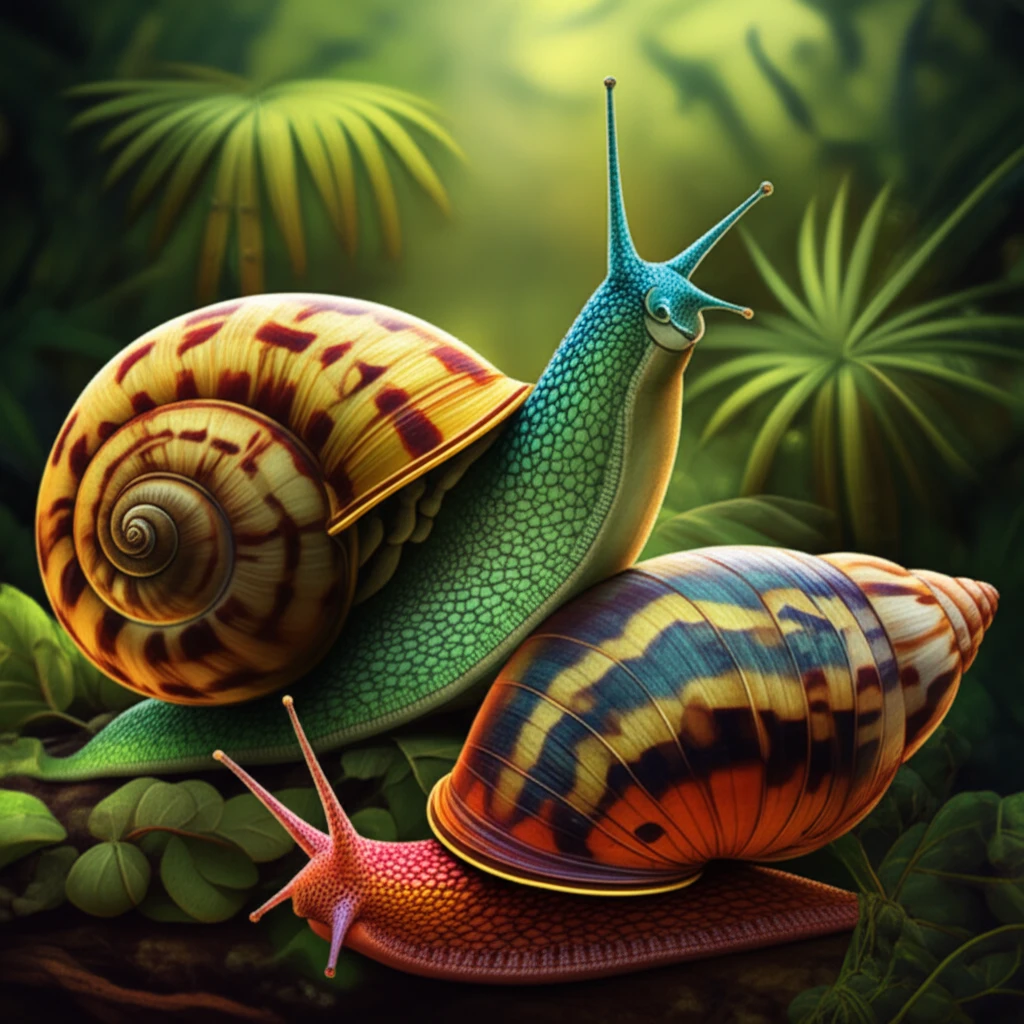
Shell-Shockingly Cute: Two New Snail Species Discovered in Brazil!

"Meet Thaumastus parvus and Thaumastus caetensis, tiny treasures adding to Brazil's incredible biodiversity."
Brazil is a hotspot of biodiversity, teeming with life both grand and minute. Recently, that biodiversity got a little richer with the discovery of two new species of snails, both belonging to the genus Thaumastus. These snails, found in the state of Minas Gerais, are not just new to science, but also offer valuable insights into the evolution and distribution of these often-overlooked creatures.
The Thaumastus genus belongs to the Orthalicidae family, within the Bulimulinae subfamily. These snails are unique to Brazil, making the discovery of new species particularly significant for understanding the region's unique ecosystems. This project expands our characterization and knowledge of the genera and species included in this superfamily.
Researchers collected specimens between 1994 and 2001, meticulously comparing them to known species and type specimens housed in museums around the world. Through careful morphological and anatomical analysis, they determined that two distinct populations warranted recognition as new species. These species was studied using microscopy and scanning electron photomicrographs
Meet the Newcomers: Thaumastus parvus and Thaumastus caetensis
The two new species, named Thaumastus parvus and Thaumastus caetensis, each possess unique characteristics that set them apart from their relatives. While they share a common ancestry, subtle differences in their shell structure, reproductive systems, and even radula (the snail equivalent of a tongue) allowed scientists to classify them as distinct species.
- Smaller dimensions overall compared to related species.
- Fewer plates in its jaw.
- Differences in the number of follicle groups within the ovotestis (the snail's combined ovary and testis).
- A distinct form of fertilization complex.
Why These Tiny Snails Matter
The discovery of new species, no matter how small, is a reminder of how much we still have to learn about the natural world. Each species plays a role in its ecosystem, and understanding these roles is crucial for conservation efforts.
By carefully analyzing the morphology and anatomy of these snails, researchers can piece together their evolutionary history and understand how they relate to other species. This information is essential for building accurate phylogenetic trees and understanding the diversification of life.
These discoveries also highlight the importance of continued biodiversity research and conservation efforts in Brazil. Minas Gerais, with its diverse landscapes and ecosystems, likely holds many more undiscovered species, waiting to be found and studied. Further research of the species of Thaumastus is to re-characterize its subgenera as well as to provide a basis for a future phylogenetic analysis of the genus.