
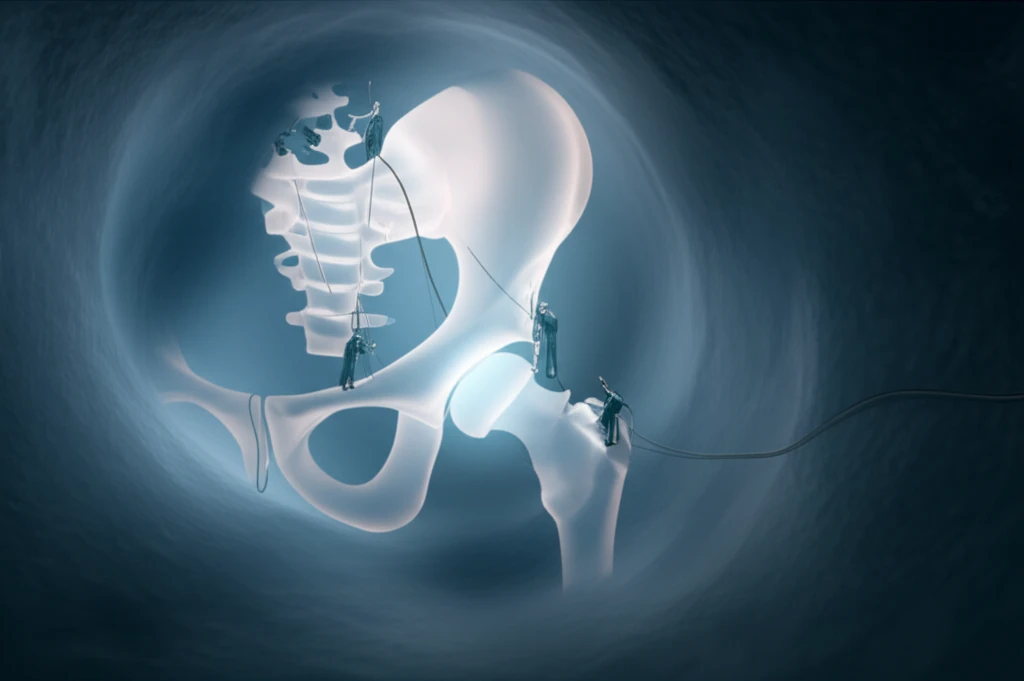
Arthroscopic surgery illustration showcasing precision and pediatric care.

Septic Hip in Kids: A Cutting-Edge, Minimally Invasive Solution

"Discover how arthroscopic techniques offer a less invasive way to treat septic arthritis in children, promoting faster recovery and minimizing long-term complications."


Septic arthritis of the hip is a serious infection that affects children more often than adults. Because a child's hip joint is vulnerable, early and effective treatment is crucial to prevent lasting damage and disability. If left unmanaged, it can lead to unfavorable outcomes and lifelong mobility issues.

Traditional treatments have included repeated joint aspirations, open arthrotomy (surgical opening of the joint), and arthroscopic drainage. However, recent studies suggest that arthroscopic techniques, which involve smaller incisions and specialized instruments, can offer successful outcomes with potentially fewer complications.

This article explores a case where a 3-year-old child was successfully treated for septic arthritis of the hip using arthroscopic methods. This approach utilized a 2.7 mm arthroscope—typically used for ankle procedures—demonstrating a less invasive option for pediatric patients. This case highlights the potential benefits of arthroscopic surgery in even the smallest patients, offering hope for improved recovery and long-term joint health. With parental consent, data concerning her case would be submitted for publication.

Arthroscopic Innovation: How a Small Scope Makes a Big Difference

Arthroscopic surgery illustration showcasing precision and pediatric care.

The case study details how a 3-year-old girl presented with fever, limping, and groin pain—classic signs of septic arthritis. After a recent upper respiratory infection, her symptoms appeared suddenly, raising concerns about a possible joint infection.

Upon examination at the emergency room, her body temperature was elevated at 38°C. Physical assessment revealed limited and painful movement in her right hip, although there was no visible redness or tenderness on the hip itself. Initial X-rays showed only mild soft tissue swelling. Further blood tests indicated elevated levels of leukocytes (15,440/ml), C-reactive protein (42 ng/ml), and erythrocyte sedimentation rate (60 mm/hr), all pointing towards a significant inflammatory process. Fluid drawn from the hip joint confirmed the diagnosis, showing a high leukocyte count (54,000/ml with 99% neutrophils), confirming acute septic arthritis of the hip joint.

To combat these challenges and effectively treat septic hip, surgeons often consider several key strategies:
  • Specialized Instruments: Utilizing smaller arthroscopes and instruments designed for pediatric anatomy.
  • Careful Traction: Employing techniques that provide adequate joint space without risking injury to the physis (growth plate).
  • Precise Portal Placement: Choosing entry points that minimize the risk to surrounding nerves and vessels.
Given the complexities of operating on a child's hip, the surgical team opted for an innovative approach. The patient was positioned supine under general anesthesia. Two small portals—anterolateral and ancillary—were created to access the hip joint. A 30°, 2.7-mm arthroscope, typically used for ankle procedures, was inserted through the anterolateral portal to visualize the joint. The ancillary portal, located 2.5 cm distally, served as the working portal. This setup allowed the surgeons to switch instruments as needed. Synovectomy, the removal of inflamed synovial tissue, was performed at the femoral neck junction. Manual traction, applied carefully by an assistant, created the necessary space within the joint.

A Promising Future for Pediatric Hip Care

This case demonstrates that arthroscopic treatment, even with instruments typically used for smaller joints like the ankle, can be a safe and effective option for treating septic arthritis in young children. By avoiding a large incision and using precise techniques, surgeons can minimize trauma to the hip joint, reduce scarring, and promote faster rehabilitation. Although this approach requires a skilled surgical team and careful attention to the unique anatomical challenges of pediatric patients, it offers a promising path toward improved outcomes and a better quality of life for children with septic hip.

About this Article -

This article was crafted using a human-AI hybrid and collaborative approach. AI assisted our team with initial drafting, research insights, identifying key questions, and image generation. Our human editors guided topic selection, defined the angle, structured the content, ensured factual accuracy and relevance, refined the tone, and conducted thorough editing to deliver helpful, high-quality information.See our About page for more information.

This article is based on research published under:

DOI-LINK: 10.5371/hp.2013.25.2.145, Alternate LINK

Title: Arthroscopic Treatment Of Septic Arthritis Of The Hip In A Child: A Case Report

Subject: Orthopedics and Sports Medicine

Journal: Hip & Pelvis

Publisher: The Korean Hip Society

Authors: Young-Bong Ko, Hyoung-Seok Jung, Ji-Hoon Baek, Han-Jun Lee, Yong-Chan Ha

Published: 2013-01-01

Everything You Need To Know

1

What is septic arthritis of the hip, and why is it a concern?

Septic arthritis of the hip is a severe bacterial infection within the hip joint, primarily affecting children more frequently than adults. Its significance lies in its potential to cause lasting damage and mobility problems if not treated promptly and effectively. Early intervention is crucial to prevent unfavorable outcomes, which could include lifelong issues.

2

What is arthroscopic surgery, and how was it used in this case?

Arthroscopic surgery is a minimally invasive surgical technique involving small incisions and specialized instruments, such as an arthroscope. The 3-year-old girl's treatment involved using a 2.7 mm arthroscope, which is normally used for ankle procedures. This approach allowed the surgical team to visualize and treat the infection inside the hip joint without the need for a large incision. This reduces trauma and promotes faster recovery.

3

What is a 2.7 mm arthroscope, and why is it relevant in this context?

A 2.7 mm arthroscope is a small, specialized instrument used to visualize and treat joint problems. It's typically used for ankle procedures. In this case, it was used to treat septic arthritis of the hip in a 3-year-old. Using a small arthroscope allowed for a less invasive approach, minimizing trauma to the hip joint and promoting faster recovery. The small size is crucial in pediatric cases to limit the disruption to the developing joint.

4

What are the anterolateral and ancillary portals, and what role do they play?

The anterolateral and ancillary portals are the small entry points created during the arthroscopic procedure to access the hip joint. The anterolateral portal, where the arthroscope is inserted, is used to view the joint. The ancillary portal serves as a working portal where instruments can be switched as needed. Careful placement of these portals is critical to minimize the risk to surrounding nerves and vessels, which is especially important in pediatric patients.

5

What is synovectomy, and why was it performed in this case?

Synovectomy is the removal of inflamed synovial tissue within a joint. In the case of the 3-year-old, a synovectomy was performed at the femoral neck junction. The procedure helps to reduce inflammation and remove the source of the infection, which is a key part of treating septic arthritis. This contributes to faster recovery and improved joint health by eliminating the infected tissue.

Newsletter Subscribe

Subscribe to get the latest articles and insights directly in your inbox.