
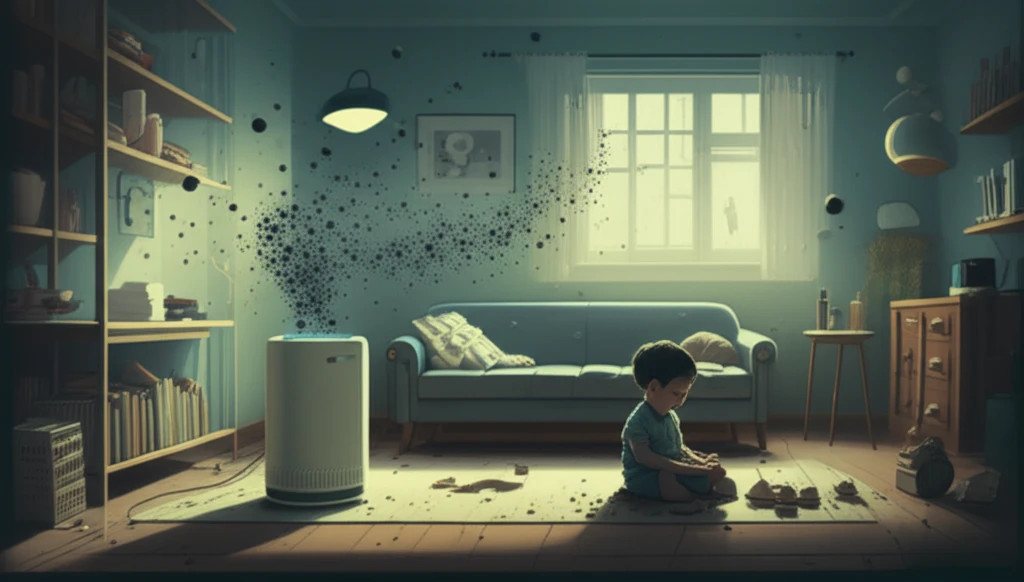
Secondhand Smoke and Ozone: A Hidden Danger in Your Home?

"New research reveals how air purifiers can transform common pollutants into harmful ultrafine particles, especially endangering children."
Many people invest in air purifiers to create a healthier indoor environment, hoping to eliminate pollutants like secondhand smoke (SHS). However, emerging research suggests that certain air purification methods, particularly those using ozone, may inadvertently create new and potentially more harmful pollutants.
A study led by chemist Mohamad Sleiman at Lawrence Berkeley National Laboratory highlights the reaction between ozone and the chemicals present in secondhand smoke. This reaction produces ultrafine particles, smaller than 100 nanometers, which pose a significant health risk due to their ability to penetrate deep into the lungs and enter the bloodstream.
This article will explore the findings of this research, explain the potential dangers of these ultrafine particles, and offer guidance on how to create a safer indoor environment for you and your family.
The Unexpected Reaction: Ozone Turns SHS Into Ultrafine Particles
The research team simulated indoor conditions by releasing SHS from 10 smoldering cigarettes into a controlled environment. They then introduced ozone, mimicking the use of an ozone-generating air purifier. The results were startling: the concentration of ultrafine particles increased dramatically – up to eight times higher than in the original secondhand smoke.
- Increased Particle Concentration: Ozone exposure increased ultrafine particles eightfold.
- New Chemical Compounds: High-molecular-weight nitrogenated oligomers were formed.
- Asthma Hazard: Some compounds had higher asthma hazard indices than nicotine.
Protecting Your Home: Steps to Reduce the Risk
The research underscores that there is no safe level of exposure to tobacco smoke, and using ozone-generating air purifiers may exacerbate the problem by creating new harmful pollutants. So, what can you do to protect your home and family?
<ul> <li><b>Avoid Ozone Air Purifiers:</b> Opt for alternative air purification methods like HEPA filters, which physically trap particles without producing ozone.</li> <li><b>Eliminate Secondhand Smoke:</b> The most effective solution is to create a smoke-free environment. If smoking occurs, ensure it's done outdoors and away from open windows and doors.</li> <li><b>Ventilate Regularly:</b> Open windows and doors to improve air circulation and reduce the concentration of indoor pollutants.</li> <li><b>Consider Professional Assessment:</b> If you have concerns about indoor air quality, consider hiring a professional to assess your home and recommend appropriate solutions.</li></ul>
By understanding the potential risks associated with ozone air purifiers and taking proactive steps to improve indoor air quality, you can create a healthier and safer home environment for yourself and your loved ones.