
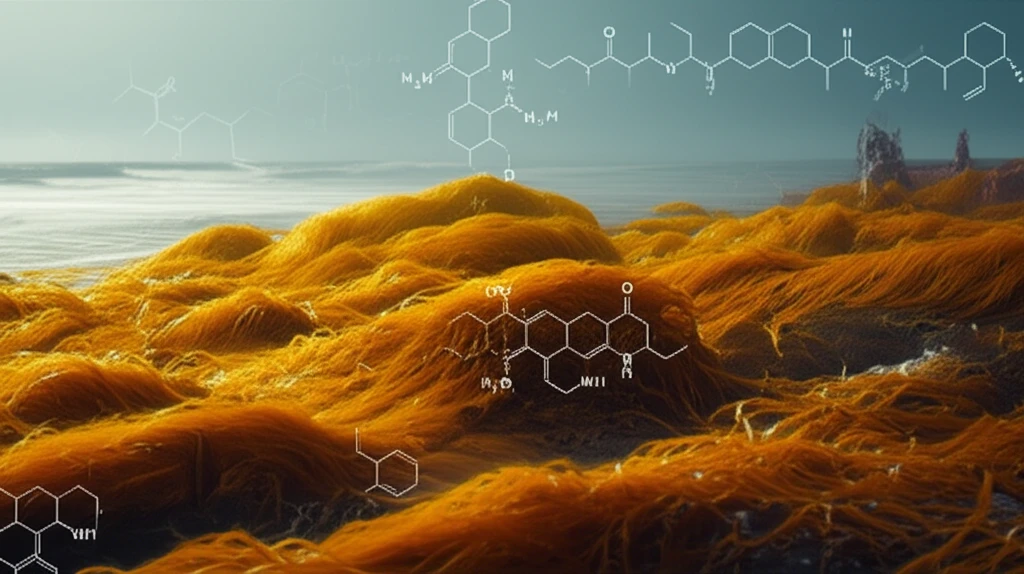
Sargassum seaweed on Ghana's coast: A double-edged sword of fertilizer potential and heavy metal contamination.

Seaweed Surge: Uncovering the Truth About Sargassum on Ghana's Coast

"Is the invasive seaweed a blessing or a curse? A preliminary investigation reveals the chemical composition and potential impacts of Sargassum along Ghana's West Coast."


The first report of the invasive brown seaweed Sargassum washing up on the shores of Ghana's Western Region dates back to 2009. Its arrival had a swift and harsh impact, disrupting the delicate balance of biodiversity, crippling the tourism sector, and threatening the very way of life for coastal communities that depend on the ocean's bounty. For years, researchers and locals alike have grappled with a pressing question: Is this influx a harbinger of ecological disaster, or could it, paradoxically, offer new opportunities?

In response to this puzzle, a detailed study was undertaken with clear objectives: to identify the species of Sargassum involved and to dissect its chemical makeup, understanding both its nutritional value and any potential toxicological risks. This knowledge is pivotal. It could unlock avenues for turning the seaweed into a useful resource or, conversely, reinforce the need for stringent control measures.

To achieve these aims, twenty-four Sargassum samples were gathered from six distinct zones along the Western Region's coastline. These samples were then subjected to rigorous analysis, employing an Atomic Absorption Spectrophotometer (AAS) 900T to reveal their nutritional and toxicological secrets. The findings that emerged painted a complex picture, challenging initial assumptions and opening new lines of inquiry.

Decoding Sargassum: What's Inside This Seaweed?

Sargassum seaweed on Ghana's coast: A double-edged sword of fertilizer potential and heavy metal contamination.

The analysis revealed that Sargassum samples contained surprisingly low concentrations of free nitrogen. This might seem like a disadvantage, but the story doesn't end there. The forms of nitrogen that plants can readily use such as nitrate and ammonia were found in abundance, alongside high levels of phosphates. This combination positions Sargassum as a potentially valuable source of organic fertilizer, offering a sustainable alternative for agriculture.

However, this promising outlook is tempered by a significant concern: the presence of high concentrations of toxic heavy metals. These metals have far-reaching implications. They can disrupt the growth and metabolic processes of plants and pose serious health risks to humans.

  • Heavy metals, particularly arsenic and lead, are known carcinogens. They're linked to a range of severe health issues, including skin, lung, liver, and bladder cancers, as well as miscarriages.
  • The source of these heavy metals is a critical question. The study suggests a likely connection to indiscriminate waste disposal from domestic and industrial sources, the burgeoning oil and gas sector, mining activities, and the heavy shipping traffic that frequents these waters.
This raises a critical question: Can the benefits of Sargassum as a fertilizer outweigh the risks posed by its heavy metal content? Further research and careful management strategies are essential to answer this question and ensure the safe and sustainable use of this invasive seaweed.

Turning the Tide: Can Sargassum Be Part of the Solution?

The arrival of Sargassum on Ghana's coast presents a complex challenge, demanding innovative solutions. While the presence of heavy metals raises concerns, the seaweed's potential as an organic fertilizer cannot be ignored. By understanding its chemical composition and implementing responsible management practices, coastal communities can potentially transform this invasive species from an ecological threat into a valuable resource. Further studies are needed, but this preliminary investigation offers a crucial first step towards a more sustainable future for Ghana's coastline.

About this Article -

This article was crafted using a human-AI hybrid and collaborative approach. AI assisted our team with initial drafting, research insights, identifying key questions, and image generation. Our human editors guided topic selection, defined the angle, structured the content, ensured factual accuracy and relevance, refined the tone, and conducted thorough editing to deliver helpful, high-quality information.See our About page for more information.

Everything You Need To Know

1

When did *Sargassum* first appear on Ghana's coast, and what initial impacts did it have on the local environment and communities?

*Sargassum*, an invasive brown seaweed, was first reported on Ghana's Western Region coast in 2009. Its arrival swiftly disrupted the delicate balance of biodiversity, negatively affecting the tourism sector and threatening the livelihoods of coastal communities. The influx posed a significant ecological challenge, prompting researchers and locals to investigate its potential impacts and possible uses.

2

What methods were used to analyze the *Sargassum* samples, and what were the key findings regarding its chemical composition?

Twenty-four *Sargassum* samples were collected from six zones along the Western Region's coastline and analyzed using an Atomic Absorption Spectrophotometer (AAS) 900T. The analysis revealed surprisingly low concentrations of free nitrogen, but abundant levels of nitrate, ammonia, and high levels of phosphates. These findings suggest *Sargassum*'s potential as an organic fertilizer. However, the presence of high concentrations of toxic heavy metals, including arsenic and lead, raised significant concerns.

3

How could *Sargassum* be used, and what are the main concerns associated with its usage?

*Sargassum* has the potential to be used as an organic fertilizer due to its high levels of nitrates, ammonia, and phosphates. This offers a sustainable alternative for agriculture. However, the presence of high concentrations of toxic heavy metals, such as arsenic and lead, poses serious health risks to humans and can disrupt the growth and metabolic processes of plants. This creates a need for careful management strategies and further research to ensure its safe and sustainable use.

4

What are the health risks associated with the heavy metals found in *Sargassum*, and what might be their sources?

The heavy metals, specifically arsenic and lead, found in *Sargassum* are known carcinogens linked to a range of severe health issues, including skin, lung, liver, and bladder cancers, as well as miscarriages. The study suggests these heavy metals likely originate from indiscriminate waste disposal from domestic and industrial sources, the oil and gas sector, mining activities, and heavy shipping traffic in the area.

5

What steps are needed to manage the *Sargassum* influx and ensure a sustainable future for Ghana's coastline?

Addressing the *Sargassum* influx requires a multifaceted approach. Further research is crucial to fully understand the chemical composition of *Sargassum* and its impacts. Implementing responsible management practices is also essential to mitigate the risks associated with the heavy metal content. These practices could include establishing safe handling and processing methods, and finding ways to remove the heavy metals. Coastal communities must work together to transform this invasive species from an ecological threat into a valuable resource, ensuring a more sustainable future.

Newsletter Subscribe

Subscribe to get the latest articles and insights directly in your inbox.