
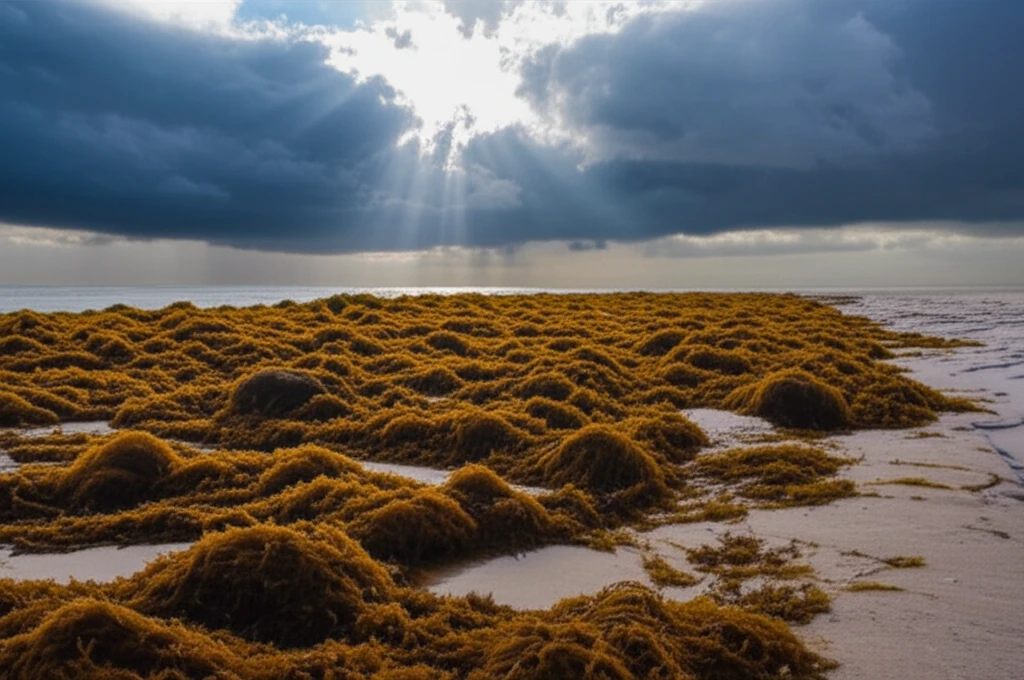
Invasive Sargassum seaweed on a Ghanaian beach, symbolizing the challenge and potential benefits.

Seaweed Invasion: Is Sargassum a Ticking Time Bomb for Ghana's Coastline?

"A preliminary investigation reveals the chemical composition of invasive Sargassum seaweed and its potential impact on the West Coast of Ghana."


The shores of Ghana, particularly the Western Region, have been grappling with an ecological puzzle since 2009: the invasion of Sargassum seaweed. Initially reported that year, these unwelcome guests have had a ripple effect, disrupting the delicate balance of biodiversity, casting a shadow over tourism, and threatening the very livelihoods of coastal communities that depend on the ocean's bounty.

Recognizing the urgent need to understand this phenomenon, researchers embarked on a study with clear objectives: to identify the species of seaweed washing ashore and to meticulously analyze its chemical makeup. This included assessing both the nutritional value and potential toxicological risks hidden within its fronds. This dual approach was crucial to understanding the full story of Sargassum's presence.

Over a period, twenty-four samples were gathered from six distinct zones along the Western Region, each representing a snapshot of the seaweed invasion. These samples were then subjected to rigorous testing, employing the sophisticated Atomic Absorption Spectrophotometer (AAS) 900T to unlock their chemical secrets. The findings painted a complex picture, revealing both potential benefits and concerning risks associated with the Sargassum invasion.

What Did the Sargassum Seaweed Analysis Uncover?

Invasive Sargassum seaweed on a Ghanaian beach, symbolizing the challenge and potential benefits.

The analysis revealed that Sargassum samples contained low concentrations of nitrogen, a critical nutrient for plant growth. But here's the twist: the seaweed was abundant in plant-available nitrogen forms like nitrate and ammonia, alongside high levels of phosphates. This nutrient profile initially suggested Sargassum could be a valuable organic fertilizer. But the story doesn't end there.

The concerning discovery was the high concentration of toxic heavy metals within the Sargassum samples, casting a shadow on its potential as a fertilizer. Heavy metals interfere with plant growth and metabolic processes. Certain heavy metals, like arsenic and lead, are known carcinogens, raising the risk of skin, lung, liver, and bladder cancers, as well as miscarriages.

  • Nitrogen Paradox: Low overall nitrogen, but high levels of usable nitrate and ammonia.
  • Fertilizer Potential: Initial promise as an organic fertilizer due to phosphate levels.
  • Heavy Metal Threat: High concentrations of toxic metals counteract potential benefits.
  • Health Risks: Carcinogenic metals like arsenic and lead pose significant health concerns.
So, where are these heavy metals coming from? The study suggests a combination of factors. Indiscriminate disposal of domestic and industrial waste, the rise of oil and gas activities, the impact of mining operations, and even the heavy traffic of shipping vessels could all be contributing to the elevated heavy metal concentrations found in the Sargassum seaweed.

The Future of Ghana's Coastline: What Can Be Done?

The invasion of Sargassum seaweed presents a complex challenge for Ghana. While the seaweed holds some promise as a potential fertilizer, the concerning levels of toxic heavy metals demand careful consideration. Further research is needed to fully assess the risks and benefits, and to develop strategies for mitigating the negative impacts of this ongoing ecological event.

About this Article -

This article was crafted using a human-AI hybrid and collaborative approach. AI assisted our team with initial drafting, research insights, identifying key questions, and image generation. Our human editors guided topic selection, defined the angle, structured the content, ensured factual accuracy and relevance, refined the tone, and conducted thorough editing to deliver helpful, high-quality information.See our About page for more information.

Everything You Need To Know

1

What exactly is Sargassum seaweed, and why is it a problem for Ghana's coastline?

Sargassum seaweed is a type of seaweed that has been invading the coastline of Ghana, particularly the Western Region, since 2009. Its presence has disrupted biodiversity, negatively impacted tourism, and threatened the livelihoods of coastal communities. Researchers have been studying its chemical composition to understand its potential benefits and risks.

2

What did the chemical analysis of the Sargassum seaweed reveal about its composition?

The analysis of Sargassum seaweed revealed that it contains low concentrations of overall nitrogen but high levels of plant-available nitrogen forms like nitrate and ammonia, along with high levels of phosphates. This initially suggested that Sargassum could be used as an organic fertilizer. However, the presence of high concentrations of toxic heavy metals, such as arsenic and lead, poses a significant risk.

3

What are the potential health risks associated with the heavy metals found in Sargassum seaweed?

The high concentrations of toxic heavy metals found in Sargassum seaweed raise significant health concerns. Metals like arsenic and lead are known carcinogens, which can increase the risk of various cancers, such as skin, lung, liver, and bladder cancers, as well as miscarriages. This overshadows the potential use of Sargassum as a fertilizer, making its presence a complex issue.

4

Where do the heavy metals in the Sargassum seaweed come from?

The heavy metals found in Sargassum seaweed likely originate from a combination of factors, including the indiscriminate disposal of domestic and industrial waste, oil and gas activities, mining operations, and shipping traffic. These sources contribute to the elevated heavy metal concentrations found in the seaweed.

5

What can be done to address the challenges caused by the Sargassum seaweed invasion?

To address the challenges posed by the Sargassum seaweed invasion, further research is needed to fully assess the risks and benefits. Strategies for mitigating the negative impacts need to be developed, considering both the potential of Sargassum as a fertilizer and the dangers posed by the toxic heavy metals it contains. Additionally, it is important to address the sources of heavy metal contamination, such as waste disposal practices and industrial activities, to reduce the levels of these toxins in the environment.

Newsletter Subscribe

Subscribe to get the latest articles and insights directly in your inbox.