
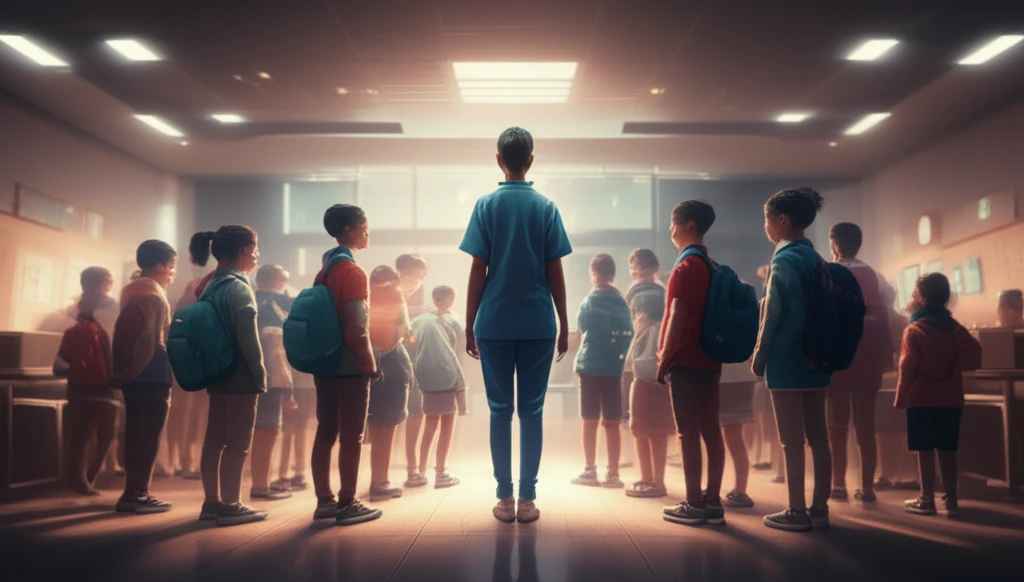
School Nurses: The Unsung Heroes of Student Well-being

"A Realist Evaluation Reveals How School Nurse Programs Can Better Support Children's Health"
School nurses play a vital role in supporting the health and well-being of school-aged children, acting as a crucial link between healthcare and education. Historically, their focus was on communicable diseases and basic health needs, but the role is rapidly evolving to address a wider range of physical, mental, and social challenges students face today. With an increasing number of students entering schools with complex health needs, it's more important than ever to understand how school nurse programs can effectively support these young people.
Recognizing the need for a more focused and efficient approach, Scotland's Chief Nursing Officer (CNO) recommended a reorganization of the school nurse role in 2013. This refocused program emphasizes nine care pathways designed to improve pupils' health and overall well-being. To understand the impact of this new program, a realist evaluation was conducted in two early adopter sites in Scotland. The goal was to assess how, for whom, and under what circumstances the program works, providing valuable insights for training and national implementation.
This article delves into the findings of that realist evaluation, exploring the contexts, mechanisms, and outcomes that influence the effectiveness of school nurse programs. By examining the experiences of school nurses, managers, and students, it uncovers the challenges and opportunities for optimizing these programs to better serve the health and well-being of school-aged children. Discover how streamlining referrals, standardizing services, and providing targeted training can empower school nurses to make a real difference in the lives of their students.
Key Findings: Enhancing Early Identification and Streamlining Referrals
The realist evaluation revealed that the refocused school nurse program enhanced opportunities for early and improved identification of health and well-being needs. The program's nine pathways streamlined the referral process, connecting relevant cases to school nurses more efficiently. This led to positive outcomes by extending the reach of school nurses and improving children's engagement with wider support services.
- Streamlined Referrals: The nine pathways helped direct students with specific needs to school nurses more efficiently.
- Improved Engagement: Connecting school nurses and children with broader services yielded better results.
- Mental Health Focus: The mental health pathway was the most used, highlighting the increasing need for mental health support in schools.
- Training Gaps: Nurses need more training to handle mild to moderate mental health issues.
The Future of School Nursing: Building Capacity and Addressing Gaps
The realist evaluation underscores the importance of tailoring school nurse programs to meet the specific needs of the school community. While the refocused program in Scotland showed promise in enhancing early identification and streamlining referrals, it also revealed areas where further development is needed.
Moving forward, capacity-building strategies should prioritize enhancing school nurses' intervention delivery skills, particularly in the area of mental health. This may involve providing additional training, resources, and support to equip nurses with the tools they need to address low to moderate mental health issues effectively. Furthermore, efforts should be made to ensure that all members of the school health team understand their roles and responsibilities within the program.
By addressing these challenges and building on the successes of the refocused program, school nursing can continue to evolve as a vital resource for supporting the health and well-being of school-aged children. Realist evaluation provides a valuable framework for understanding the complex factors that influence program effectiveness, ensuring that interventions are tailored to meet the unique needs of each community.