
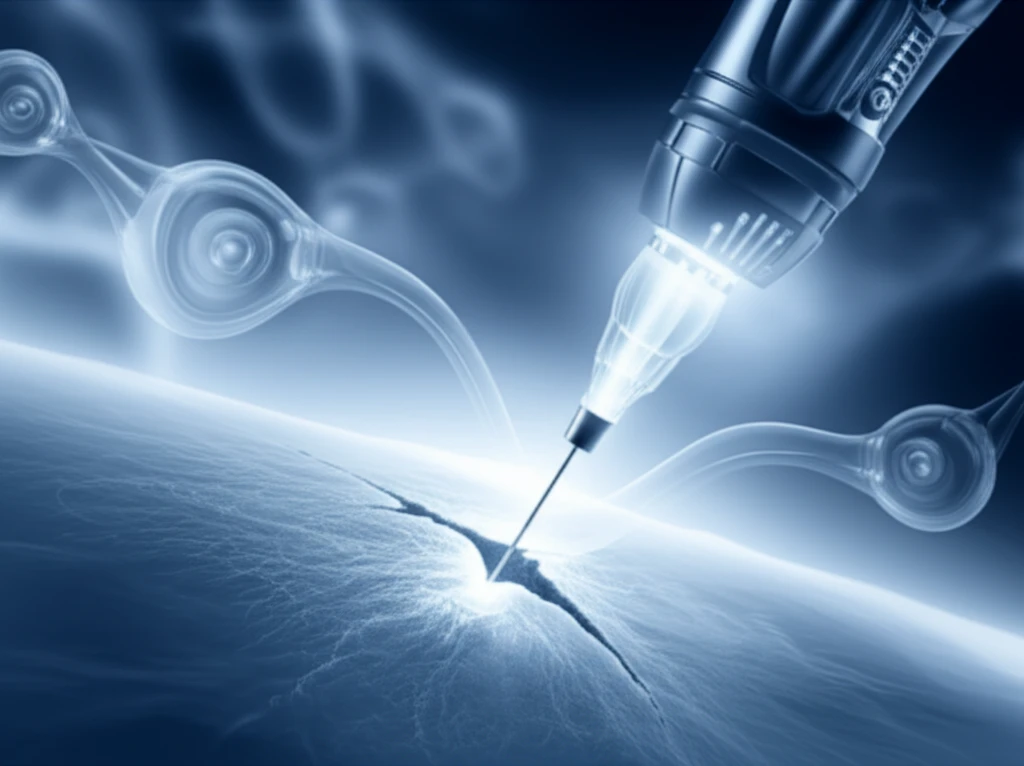
Futuristic illustration of cryosurgery and hyaluronidase treatments for skin conditions.

Scar Wars: Can Cryosurgery and Hyaluronidase Offer a New Hope for Skin Healing?

"Exploring cutting-edge, evidence-based technologies for treating stubborn scars and skin conditions, offering new hope for effective, minimally invasive solutions."


Scars and persistent skin conditions can impact confidence and quality of life. While numerous treatments exist, finding effective, minimally invasive solutions remains a priority for dermatologists and patients alike. Recent research explores the potential of intralesional cryosurgery for hypertrophic scars and keloids, as well as hyaluronidase injections for pretibial myxedema.

Cryosurgery involves using extreme cold to destroy targeted tissue, while hyaluronidase is an enzyme that breaks down hyaluronic acid, a substance that contributes to certain skin disorders. These approaches offer targeted ways to address the underlying causes of skin problems, potentially leading to significant improvements.

This article delves into the findings of these studies, examining the effectiveness, benefits, and limitations of these innovative treatments. We'll explore how they work, what conditions they can address, and what patients can expect.

Intralesional Cryosurgery: Freezing Away Scars and Rejuvenating Skin

Futuristic illustration of cryosurgery and hyaluronidase treatments for skin conditions.

Hypertrophic scars and keloids (HSK) are raised, thickened scars that can develop after injuries, surgery, or even minor skin irritations. Traditional treatments often involve surgery, steroid injections, or radiation, but these can have side effects and may not always be effective. Intralesional cryosurgery offers a new approach by inserting a cryoneedle directly into the scar tissue and freezing it from the inside out.

A study involving 380 patients with 448 HSKs of various locations and causes demonstrated the potential of this technique. The results showed:

  • Significant scar volume reduction, particularly in ear (67%), chest (50%), and upper back/shoulder (60) scars.
  • Alleviation of objective symptoms like hardness and color, and subjective symptoms like pain, tenderness, and itchiness.
  • Minimal side effects, with only slight hypopigmentation reported.
  • Histomorphometric studies revealed rejuvenation of the treated keloid scars, with improved collagen structure.
The researchers concluded that intralesional cryosurgery is an effective method for treating HSKs and may even promote tissue rejuvenation. The procedure is relatively simple, safe, and possesses a short learning curve, making it accessible for office-based treatment.

The Future of Scar and Skin Condition Treatment: A Promising Outlook

Intralesional cryosurgery and hyaluronidase injections represent promising advancements in the treatment of scars and specific skin conditions. While further research is always needed to refine techniques and identify ideal candidates, these approaches offer less invasive and potentially more effective solutions for patients seeking relief.

If you're struggling with hypertrophic scars, keloids, or pretibial myxedema, discuss these options with your dermatologist to determine if they are right for you. The information in this article should not replace professional medical advice.

The field of dermatology is constantly evolving, with new technologies and treatments emerging regularly. Staying informed about these advancements can empower patients to make informed decisions about their skin health and well-being.

About this Article -

This article was crafted using a human-AI hybrid and collaborative approach. AI assisted our team with initial drafting, research insights, identifying key questions, and image generation. Our human editors guided topic selection, defined the angle, structured the content, ensured factual accuracy and relevance, refined the tone, and conducted thorough editing to deliver helpful, high-quality information.See our About page for more information.

Everything You Need To Know

1

How does intralesional cryosurgery work to reduce scars?

Intralesional cryosurgery works by inserting a cryoneedle directly into the scar tissue. This cryoneedle freezes the scar from the inside out, destroying the targeted tissue. The freezing process reduces scar volume and alleviates symptoms like hardness, color changes, pain, tenderness, and itchiness. Histomorphometric studies have even shown improved collagen structure, indicating rejuvenation of the treated keloid scars. Traditional methods like surgery, steroid injections, or radiation can have significant side effects, while intralesional cryosurgery offers a minimally invasive alternative.

2

What is hyaluronidase and how is it used in treating skin conditions?

Hyaluronidase is an enzyme that breaks down hyaluronic acid, which is a substance found naturally in the body and contributes to certain skin disorders. While the text focuses on intralesional cryosurgery for hypertrophic scars and keloids, hyaluronidase injections are mentioned as a treatment for pretibial myxedema. Hyaluronidase injections target the excess hyaluronic acid that causes swelling and other issues associated with this condition. Further research would clarify its efficacy and optimal usage.

3

What specific results were observed in the study using intralesional cryosurgery?

A study focusing on intralesional cryosurgery, involved 380 patients with 448 Hypertrophic Scars and Keloids (HSKs) of various locations and causes. This study demonstrated significant scar volume reduction, alleviation of objective and subjective symptoms, minimal side effects (slight hypopigmentation), and improved collagen structure. Specific results showed scar volume reduction in ear (67%), chest (50%), and upper back/shoulder (60%) scars.

4

What are the potential side effects and benefits of using intralesional cryosurgery for scar treatment?

The study showed that intralesional cryosurgery resulted in minimal side effects, primarily slight hypopigmentation (lightening of the skin). The simplicity and safety of the procedure, along with its short learning curve, make it easily accessible for office-based treatment, thus increasing its appeal for widespread use. However, long-term effects and efficacy across diverse patient populations still require further investigation.

5

For what types of scars and locations does intralesional cryosurgery appear to be most effective based on current research?

Intralesional cryosurgery has shown effectiveness in reducing scar volume and alleviating symptoms associated with hypertrophic scars and keloids (HSKs). The technology shows particular promise in treating scars located on the ear, chest, and upper back/shoulder. Furthermore, improvements in collagen structure suggest potential tissue rejuvenation. However, it's important to note that the study primarily focused on HSKs, and further research is needed to determine its effectiveness on other types of scars or skin conditions.

Newsletter Subscribe

Subscribe to get the latest articles and insights directly in your inbox.