
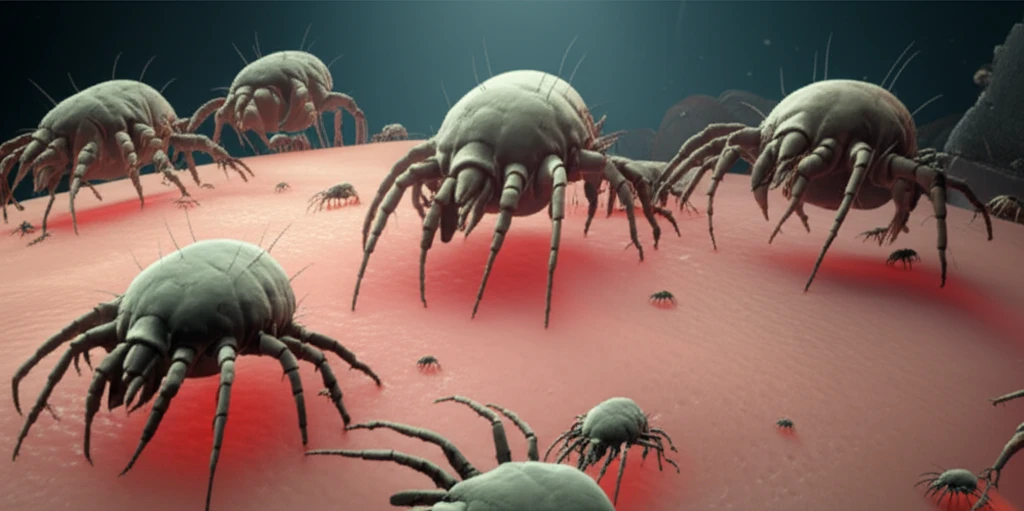
Scabies: Understanding the Global Itch and Effective Treatments

"A comprehensive guide to identifying, treating, and preventing the spread of scabies, a highly contagious skin condition affecting millions worldwide."
Scabies, a contagious skin infestation caused by the mite Sarcoptes scabiei, affects people of all ages and socioeconomic backgrounds worldwide. Understanding this condition is crucial for prompt diagnosis and effective management to prevent its spread.
This article will explore the global impact of scabies, delving into its epidemiology, clinical presentations, diagnostic methods, and various treatment options available. Understanding these aspects can empower individuals and healthcare providers to combat scabies effectively.
While scabies might seem like a minor skin condition, its impact on public health is significant, especially in crowded living conditions and resource-limited settings. By addressing the challenges associated with scabies management, we can improve the quality of life for millions affected by this condition.
Recognizing Scabies: Symptoms and Diagnosis
The hallmark symptom of scabies is intense itching, particularly at night. This itching is due to the body's allergic reaction to the mites, their feces, and eggs. The mites burrow into the skin, creating tiny, raised lines or blisters. These burrows are most commonly found in the following areas:
- Typical Scabies: Intense itching (especially at night), small bumps or blisters, burrows in skin folds (wrists, between fingers).
- Nodular Scabies: Itchy, red-brown nodules, often on the genitals or in skin folds.
- Crusted Scabies (Norwegian Scabies): Thick crusts on the skin, containing large numbers of mites. Highly contagious and often seen in immunocompromised individuals. It may have little to no itching.
- Scabies in Infants: May present with vesicles and pustules on the palms and soles, and can also affect the face and scalp, unlike adult presentations.
Effective Treatments and Prevention Strategies
Several effective treatments are available for scabies, including topical creams and oral medications. The choice of treatment depends on the severity of the infestation, the patient's age, and other health conditions. Commonly prescribed treatments include:
<ul><li><b>Topical Permethrin:</b> A cream applied to the entire body from the neck down and left on for 8-14 hours. It is generally safe and effective for most people, including pregnant women and children over 2 months old.</li><li><b>Topical Benzyl Benzoate:</b> Another topical cream, applied similarly to permethrin. However, it can be more irritating to the skin and is not recommended for young children.</li><li><b>Oral Ivermectin:</b> An oral medication that is effective for treating scabies, especially in cases of crusted scabies or when topical treatments have failed. It is generally not recommended for pregnant women or children weighing less than 15 kg.</li></ul>
Preventing the spread of scabies involves treating all close contacts of an infected person, washing clothing and bedding in hot water and drying them on high heat, and avoiding close contact with infected individuals. Early diagnosis and treatment are crucial in controlling outbreaks and preventing complications.