
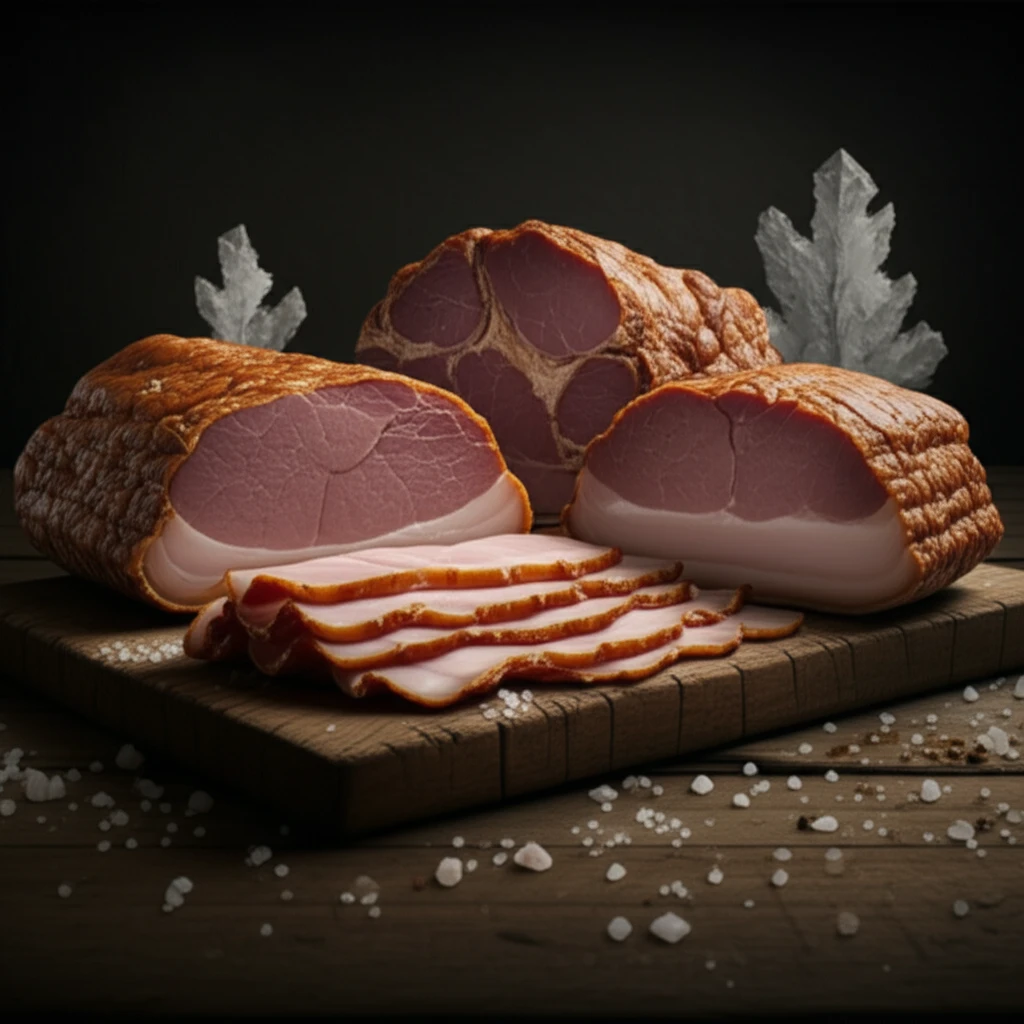
Digital illustration of dry-cured pork

Salty Secrets: How Science Is Shaping the Future of Your Favorite Cured Meats

"From ancient preservation techniques to modern food safety, discover the fascinating world of salted pork and the science behind every delicious bite."


For centuries, humans have harnessed the power of salt to preserve food, transforming perishable ingredients into lasting provisions. Among these techniques, dry-curing meat stands out as a culinary art form that marries tradition with science. This method, using sodium chloride as a key ingredient, has not only sustained populations but also created a spectrum of flavors and textures that delight palates around the globe. Today, we delve into the scientific principles behind this age-old practice, specifically focusing on the intricacies of dry-curing pork.

The process of dry-curing involves more than just sprinkling salt. It's a carefully orchestrated dance between the meat, the salt, and the environment, resulting in complex chemical and biological reactions. These processes affect the meat's moisture content, water activity, and microbial growth, all of which contribute to its safety, shelf life, and sensory qualities. This article explores the scientific elements that govern the dry-curing process, with a focus on the impact of sodium chloride and the implications for food safety.

The journey of dry-curing begins with the selection of high-quality pork. The cuts of meat are then treated with varying levels of sodium chloride, triggering a series of transformations. Through a process that reduces water activity, inhibits microbial growth, and enhances flavor, dry-curing transforms the raw meat into a product appreciated for its distinct sensory traits. This exploration aims to decipher the underlying principles and their effects on the final product's features.

The Science of Salting: Sodium Chloride and Its Multifaceted Role

Digital illustration of dry-cured pork

Sodium chloride, the very essence of salt, is the cornerstone of the dry-curing process. Beyond its flavoring capabilities, salt serves as a critical preservative, inhibiting the growth of microorganisms that spoil food. This action is achieved by drawing water out of the meat through osmosis. This reduction in water activity (Aw) is essential, as many spoilage bacteria and pathogens require a specific water level to thrive. Controlling the Aw is a primary method in extending shelf life and ensuring the safety of cured meats. The amount of salt, along with other factors, determines the final Aw, influencing the product's safety and texture.

The effects of salt extend beyond water management. It interacts with proteins in the meat, helping to denature and solubilize them. This process affects the texture, contributing to the firmness and cohesiveness often associated with cured meats. Furthermore, salt influences the flavor profile by modulating the taste and enhancing the natural flavors of the meat. It also contributes to the distinctive color, as it aids in stabilizing the pigment myoglobin, which is responsible for the red color.

  • Water Activity Reduction: Salt lowers the Aw, preventing microbial growth.
  • Protein Interaction: Salt denatures proteins, changing texture.
  • Flavor Enhancement: Salt affects taste and brings out natural flavors.
  • Color Stabilization: Salt helps to stabilize the meat's color.
The study also points out that varying the concentration of sodium chloride leads to distinct effects on the final product. Higher salt concentrations have been found to significantly impact the texture, reducing moisture, while also influencing flavor and color. Scientists have recognized that by fine-tuning salt levels, they could achieve the desired balance between preservation, sensory attributes, and consumer safety. By carefully monitoring these characteristics, they could optimize curing recipes to ensure both excellent food safety and a superior taste profile.

The Future of Cured Meats: A Blend of Tradition and Science

The journey of dry-curing meat is a testament to the enduring synergy between traditional methods and modern science. The knowledge gained from the study of sodium chloride and other ingredients continues to shape the future of food production. Researchers are constantly seeking to optimize the balance between safety, sensory attributes, and consumer appeal. This ongoing quest will continue to improve the quality and safety of our food supply, ensuring that the pleasures of delicious cured meats are enjoyed by future generations. By understanding the science behind every slice, we can appreciate the care and expertise that goes into creating these timeless culinary treasures.

About this Article -

This article was crafted using a human-AI hybrid and collaborative approach. AI assisted our team with initial drafting, research insights, identifying key questions, and image generation. Our human editors guided topic selection, defined the angle, structured the content, ensured factual accuracy and relevance, refined the tone, and conducted thorough editing to deliver helpful, high-quality information.See our About page for more information.

This article is based on research published under:

DOI-LINK: 10.1590/s0101-20612013005000055, Alternate LINK

Title: Physicochemical And Microbiological Parameters Of Dried Salted Pork Meat With Different Sodium Chloride Levels

Subject: Food Science

Journal: Food Science and Technology

Publisher: FapUNIFESP (SciELO)

Authors: Valquíria Cardoso Da Silva Ferreira, Terezinha Domiciano Dantas Martins, Eleonore De Souza Batista, Esmeralda Paranhos Dos Santos, Fábio Anderson Pereira Da Silva, Íris Braz Da Silva Araújo, Márcia Cristina Oliveira Do Nascimento

Published: 2013-06-11

Everything You Need To Know

1

What is the primary purpose of using salt, specifically sodium chloride, in the dry-curing of pork?

The primary purpose of sodium chloride in dry-curing pork is to act as a preservative. It inhibits the growth of microorganisms that cause spoilage by reducing water activity (Aw) through osmosis. Additionally, sodium chloride enhances flavor, modifies the texture of the meat by interacting with proteins, and contributes to color stabilization by affecting myoglobin.

2

How does the process of dry-curing affect the water activity (Aw) in meat, and why is this important?

Dry-curing reduces water activity (Aw) in meat by using sodium chloride to draw water out through osmosis. Lowering the Aw is vital because many spoilage bacteria and pathogens need a certain water level to thrive. Controlling Aw extends the shelf life and ensures the safety of the cured meats. The final Aw is determined by the salt concentration and other factors, influencing both safety and texture.

3

Beyond preservation, what other roles does sodium chloride play in the characteristics of dry-cured pork?

Besides preservation, sodium chloride plays multiple roles in dry-cured pork. It interacts with proteins, causing them to denature and solubilize, which affects the texture, giving the meat firmness and cohesiveness. Sodium chloride also enhances the flavor profile by modulating taste and bringing out natural flavors. Additionally, it contributes to color stabilization by influencing myoglobin, which is responsible for the red color of the meat. Varying the concentration of sodium chloride leads to distinct effects on the final product.

4

How does varying the concentration of sodium chloride affect the final product in dry-curing, and what are the implications for food producers?

Varying the concentration of sodium chloride significantly impacts the final product. Higher concentrations reduce moisture and affect texture, flavor, and color. Food producers can fine-tune sodium chloride levels to achieve a desired balance between preservation, sensory attributes, and consumer safety. By carefully monitoring these characteristics, they can optimize curing recipes for food safety and superior taste.

5

How does the synergy between traditional dry-curing methods and modern scientific understanding contribute to the future of cured meats, and what aspects are researchers focused on?

The synergy between traditional dry-curing methods and modern science ensures that cured meats are both safe and appealing. Modern understanding of sodium chloride's effects helps optimize the balance between safety, sensory attributes, and consumer appeal. Researchers are constantly seeking ways to improve the quality and safety of food production by understanding and controlling water activity, microbial growth, and protein interactions. This ongoing quest aims to ensure delicious, safe cured meats for future generations.

Newsletter Subscribe

Subscribe to get the latest articles and insights directly in your inbox.