
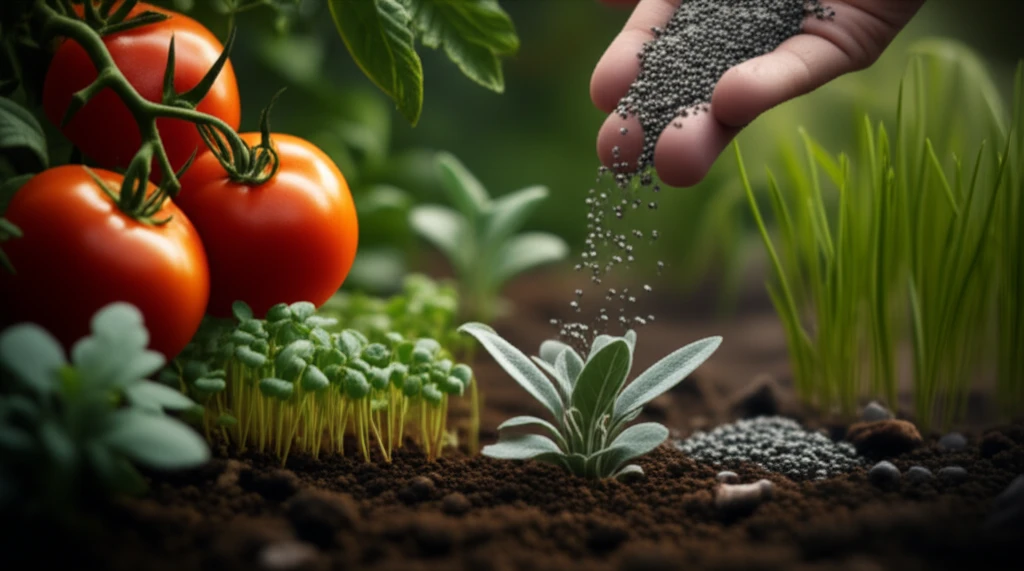
Sage Advice: Can This Herb Help You Grow a Healthier Garden?

"Unlocking the Secrets of Salvia Officinalis: Exploring Sage's Potential as a Natural Growth Regulator and Weed Suppressant in Your Garden"
For centuries, gardeners and farmers have sought natural methods to manage plant growth, turning to the inherent power of plants themselves. The concept of allelopathy – where one plant influences the growth of another through the release of chemical compounds – has opened exciting avenues for sustainable agriculture and gardening practices. Among the plants garnering attention for these abilities is sage (Salvia officinalis L.), a common herb known for its distinctive flavor and purported medicinal benefits.
Research suggests that sage possesses allelopathic properties, meaning it can affect the growth of surrounding plants. This raises an intriguing question: could dried sage leaves be used as a natural soil cover to regulate plant growth, potentially suppressing unwanted weeds or even enhancing the development of desired crops? Understanding sage's impact could offer a more environmentally friendly approach to plant management, reducing reliance on synthetic chemicals.
This article will explore the findings of a study investigating the allelopathic potential of dried sage leaves. We'll delve into how sage affects the growth of several common plants, including tomatoes, guinea grass, and chia, providing practical insights into whether sage could be a valuable addition to your gardening toolkit. Get ready to discover if sage is truly a 'sage' choice for a healthier, more balanced garden.
Sage as a Soil Cover: What the Research Reveals
A recent study investigated the impact of dried sage leaves used as a soil cover on the development of several plant species. Researchers at the Universidade Estadual do Oeste do Paraná, UNIOESTE, in Brazil, examined how different concentrations of sage affected chlorophyll levels, shoot length, and overall dry mass in tomatoes (Lycopersicon esculentum Mill.), guinea grass (Panicum maximum Jacq.), and chia (Salvia hispanica L.). The experiment involved transplanting seedlings into containers and applying varying amounts of ground, dried sage leaves to the soil surface. The results shed light on sage's potential as a natural growth regulator.
- Tomato Plants: The chlorophyll index of tomato plants was significantly inhibited when sage was applied at rates of 7.5 and 15 tons per hectare (t ha-1). Shoot length was reduced across all tested sage concentrations. The dry mass of tomato plants was also significantly reduced at the highest sage concentration (15 t ha-1).
- Guinea Grass: Similar to tomatoes, guinea grass chlorophyll levels were negatively impacted by sage at 7.5 and 15 t ha-1. Shoot length experienced some reduction at the highest sage concentration (15 t ha-1). The dry mass of guinea grass plants was reduced when sage was applied at both 7.5 and 15 t ha-1.
- Chia Plants: Interestingly, chia plants showed no significant negative effects from the sage soil cover. There was no noticeable impact on chlorophyll index, shoot length, or dry mass.
Should You Use Sage in Your Garden?
The research indicates that sage can influence plant growth through allelopathy. However, the effects are not universal. If you're considering using dried sage leaves as a soil cover, carefully consider what plants you're growing. Tomatoes and guinea grass, for example, may not thrive in close proximity to sage due to its growth-inhibiting effects.
On the other hand, if you're struggling with weeds, sage could offer a natural suppression method. Further research is needed to determine the optimal application rates and long-term effects, but the initial findings suggest that sage has potential as a sustainable weed control agent, especially with species that are not sensitive to it like Chia. It's also important to note that the specific compounds in sage and their concentrations can vary, which might influence the extent of its allelopathic effects.
Ultimately, the decision of whether to use sage in your garden depends on your specific goals and the plants you're cultivating. By understanding the potential interactions between sage and other species, you can make informed choices that promote a healthier and more balanced garden ecosystem. As with any gardening technique, experimentation and observation are key to unlocking the full potential of this versatile herb.