
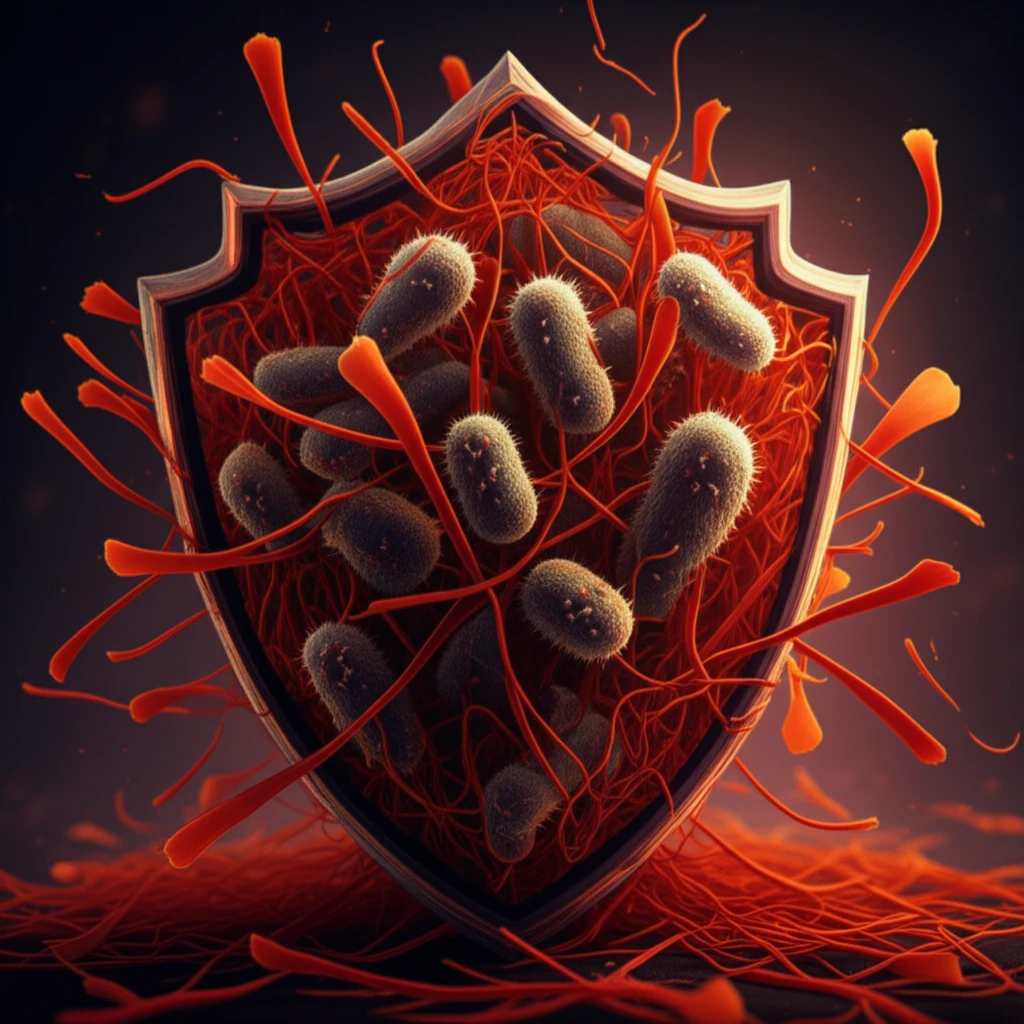
Saffron threads shield against bacteria

Saffron's Hidden Power: Can This Spice Fight Bacteria?

"Unlocking the antimicrobial secrets of saffron to revolutionize food preservation and natural medicine."


Saffron, derived from the stigmas of the Crocus sativus flower, isn't just a prized culinary ingredient. For centuries, it's been a staple in traditional medicine, lauded for its diverse pharmacological effects. Modern research is now beginning to validate these historical uses, revealing saffron's potential in everything from mood enhancement to cardiovascular health.

The high cost of saffron is attributed to its labor-intensive harvesting. But scientists are intensely interested in whether the spice's benefits justify the price tag. Prior studies hint at saffron's ability to combat bacteria. These studies suggest that active compounds like crocin and safranal may possess antimicrobial properties.

This article explores the findings of a recent study investigating the in vitro bactericidal activities of saffron extracts. We'll delve into how different saffron samples were tested against various bacteria strains, shedding light on its potential as a natural antimicrobial agent.

Saffron vs. Superbugs: The Science Behind the Spice's Antimicrobial Punch

Saffron threads shield against bacteria

Researchers obtained saffron samples from three regions in Iran: Torbat-e Heydarieh, Gonabad, and Khorasan. These samples underwent rigorous testing against common bacteria, including Escherichia coli, Enterococcus faecalis, and Staphylococcus aureus. These are key players in foodborne illnesses and hospital-acquired infections.

The study employed a modified well plate test to initially screen for antimicrobial activity. This method involves exposing bacteria to different concentrations of saffron extract and observing the extent of growth inhibition. Further, vitality reduction assays were conducted to measure the spice's ability to reduce bacterial populations over time.

  • Well Plate Test: Saffron extracts A and B (Torbat-e Heydarieh, Gonabad) inhibited S. aureus growth at 1:1 and 1:2 concentrations and E. faecalis at the highest concentration.
  • E. coli Resistance: No activity was detected against E. coli in any sample.
  • Vitality Reduction: Modest antibacterial activities were shown via the test tube analysis.
The results revealed that saffron extracts, particularly those from Torbat-e Heydarieh and Gonabad, exhibited notable antibacterial activity against S. aureus and E. faecalis. While E. coli proved more resistant, the overall findings suggest that saffron does possess antimicrobial properties.

Saffron: A Promising Path to Natural Antibacterial Solutions

This research underscores the potential of saffron as a natural source of antimicrobial agents. While the effects are moderate, they open doors for exploring saffron's role in food preservation, potentially reducing reliance on synthetic additives.

Further research is needed to isolate and identify the specific compounds responsible for saffron's antibacterial action and to assess potential synergistic effects. It's crucial to understand how saffron interacts with different food matrices and whether its antimicrobial activity is maintained under various conditions.

Despite limitations like flavor impact and dilution effects, saffron holds promise as a valuable tool in the fight against bacterial pathogens, offering a natural alternative with a rich history of medicinal use.

About this Article -

This article was crafted using a human-AI hybrid and collaborative approach. AI assisted our team with initial drafting, research insights, identifying key questions, and image generation. Our human editors guided topic selection, defined the angle, structured the content, ensured factual accuracy and relevance, refined the tone, and conducted thorough editing to deliver helpful, high-quality information.See our About page for more information.

This article is based on research published under:

DOI-LINK: 10.4081/mr.2018.7583, Alternate LINK

Title: In Vitro Bactericidal Activities Of Various Extracts Of Saffron (Crocus Sativus L.) Stigmas From Torbat-E Heydarieh, Gonabad And Khorasan, Iran

Subject: Microbiology (medical)

Journal: Microbiology Research

Publisher: MDPI AG

Authors: Beniamino T. Cenci-Goga, Renzo Torricelli, Yousef Hosseinzadeh Gonabad, Nicoletta Ferradini, Roberto Venanzoni, Paola Sechi, Maria Francesca Iulietto, Emidio Albertini

Published: 2018-06-22

Everything You Need To Know

1

What makes saffron potentially effective against bacteria, and how does its effectiveness vary?

Saffron's potential antibacterial effects are attributed to compounds like crocin and safranal found within the spice. Research indicates that these compounds may inhibit the growth of certain bacteria. However, the effectiveness can vary depending on the bacterial strain. For example, the study showed activity against Staphylococcus aureus and Enterococcus faecalis but not against Escherichia coli.

2

Which saffron samples were tested for antibacterial activity, and what methods were used to determine their effectiveness?

The study tested saffron samples from three regions in Iran: Torbat-e Heydarieh, Gonabad, and Khorasan. Extracts from Torbat-e Heydarieh and Gonabad showed antibacterial activity against Staphylococcus aureus and Enterococcus faecalis. The method used a well plate test to observe bacterial growth inhibition at different saffron extract concentrations, along with vitality reduction assays to measure the reduction in bacterial populations over time.

3

Does saffron eliminate bacteria, and what does research indicate about its potential as a natural antibacterial solution?

The research indicates that saffron demonstrates antibacterial properties, particularly against Staphylococcus aureus and Enterococcus faecalis. It suggests that saffron could potentially serve as a natural antimicrobial agent. However, its effectiveness varies; Escherichia coli showed resistance in the study. Further research is needed to explore the full scope of saffron's antibacterial capabilities and its potential applications in areas like food preservation.

4

What are the potential applications of saffron's antibacterial properties?

The study highlights saffron's potential as a natural antimicrobial agent, which could be valuable in food preservation, reducing the need for synthetic additives. Also, saffron's antimicrobial properties might be explored for use in alternative medicine, particularly in combating certain bacterial infections. However, it is worth noting that this research focused on in vitro studies, and further research is needed to determine how these effects translate to in vivo (living organism) applications.

5

Did the antibacterial research on saffron explore any antiviral or antifungal properties?

The study primarily focused on the in vitro antibacterial activities of saffron extracts against specific bacterial strains such as Escherichia coli, Enterococcus faecalis, and Staphylococcus aureus. It did not cover saffron's antiviral or antifungal properties. Further research could explore whether saffron exhibits activity against viruses, fungi, or other types of microorganisms, potentially broadening its applications in medicine and healthcare. Also, understanding the synergistic effects of saffron with other natural or synthetic antimicrobial agents could enhance its effectiveness.

Newsletter Subscribe

Subscribe to get the latest articles and insights directly in your inbox.