
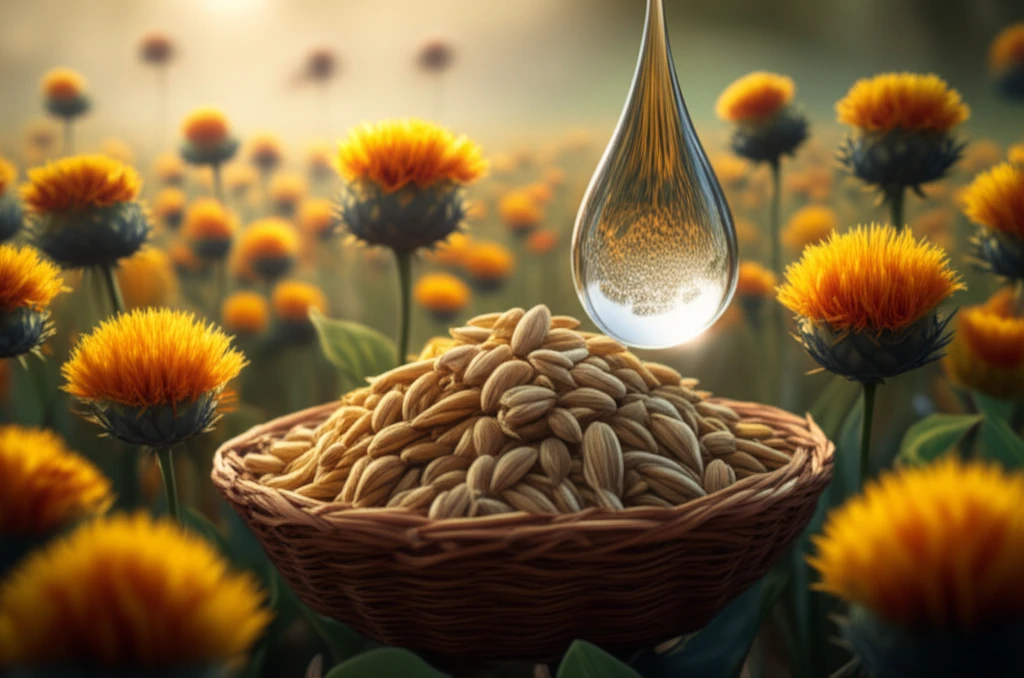
Golden safflower seeds being harvested in a sunlit field, symbolizing optimal conditions for seed vigor.

Safflower Secrets: How Timing Your Harvest Boosts Seed Vigor

"Unlock the potential of your safflower crop by understanding the critical role of harvest timing and irrigation in seed development."


For growers looking to maximize their yields, understanding the factors that influence seed vigor is crucial. Environmental stresses, particularly water availability, can significantly impact seed development and overall crop health. That's why optimizing every stage, from irrigation to harvest, is so important.

A recent study investigated the effects of different irrigation strategies and harvest timings on the seed vigor of various safflower cultivars. The goal was to pinpoint the optimal conditions for producing high-quality seeds, capable of withstanding environmental challenges and delivering superior performance.

This research offers valuable insights for safflower farmers, providing practical guidance on how to fine-tune their practices to achieve the best possible results. By understanding the delicate balance between water management and harvest timing, growers can unlock the full potential of their safflower crops.

The Irrigation Effect: Balancing Water for Better Seeds

Golden safflower seeds being harvested in a sunlit field, symbolizing optimal conditions for seed vigor.

The study focused on how different irrigation levels affected seed development in four safflower cultivars: Faraman, Goldasht, Sina, and Soffeh. Irrigation treatments were based on evaporation levels (70, 100, 130, and 160 mm), allowing researchers to observe the impact of varying water availability. Seeds were then harvested at seven different stages during development to assess vigor at each point.

Key findings revealed that seed mass and seedling vigor were heavily influenced by the amount of water the plants received. In general, reducing water availability led to decreased seed vigor, as measured by electrical conductivity of seed leachates and seedling dry mass. This means that maintaining adequate hydration is crucial for developing strong, healthy seeds.

  • Cultivar Differences: The Faraman cultivar consistently showed the highest seed and seedling mass across all irrigation treatments, while Sina had the lowest. This highlights the genetic variability among cultivars and their differing abilities to cope with water stress.
  • Optimal Harvest Time: Maximum seed mass and seedling dry mass, coupled with minimum electrical conductivity, were typically achieved 40-45 days after flowering. At this stage, seed moisture content was around 15-20%, ideal for direct mechanical harvesting and threshing.
  • Water Stress Impact: While early-stage seed mass was higher under water-stressed conditions (130 and 160 mm evaporation), later stages saw better development under well-watered conditions (70 mm evaporation). This suggests that a balanced water supply throughout the growing season is essential.
These findings emphasize the importance of carefully managing irrigation to ensure optimal seed development. While some water stress might be tolerable in the early stages, consistent hydration is crucial for maximizing seed vigor and overall yield. Monitoring evaporation levels and adjusting irrigation accordingly can help growers strike the right balance.

Timing is Everything: Hitting the Harvest Sweet Spot

Beyond irrigation, the study also underscored the significance of harvest timing. Harvesting seeds at the right stage of maturity is crucial for maximizing their vigor and ensuring successful germination. The research pinpointed the ideal harvest window as approximately 40-45 days after flowering, when seed moisture content reaches 15-20%. Harvesting too early or too late can compromise seed quality and reduce overall yield. By paying close attention to these key factors, safflower growers can significantly enhance the quality and productivity of their crops. Future research exploring the interactions between genetics, environment, and management practices will undoubtedly provide even more refined strategies for optimizing safflower production.

About this Article -

This article was crafted using a human-AI hybrid and collaborative approach. AI assisted our team with initial drafting, research insights, identifying key questions, and image generation. Our human editors guided topic selection, defined the angle, structured the content, ensured factual accuracy and relevance, refined the tone, and conducted thorough editing to deliver helpful, high-quality information.See our About page for more information.

Everything You Need To Know

1

How does irrigation influence the seed vigor of different safflower cultivars?

The study investigated the impact of varying irrigation levels (70, 100, 130, and 160 mm evaporation) on seed development in four safflower cultivars: Faraman, Goldasht, Sina, and Soffeh. The research revealed that seed mass and seedling vigor are significantly influenced by water availability. Reducing water led to decreased seed vigor, as measured by electrical conductivity of seed leachates and seedling dry mass. The Faraman cultivar exhibited the highest seed and seedling mass across all treatments, while Sina showed the lowest, highlighting genetic variability in coping with water stress. Maintaining adequate hydration, especially at later stages of development, is crucial for strong, healthy seeds.

2

What is the optimal harvest time for safflower seeds to maximize seed vigor, and why is this timing critical?

The optimal harvest time for safflower seeds is approximately 40-45 days after flowering, when seed moisture content reaches 15-20%. At this stage, seeds have achieved maximum seed mass and seedling dry mass, while electrical conductivity is minimized. Harvesting at this point ensures the highest seed vigor and is ideal for direct mechanical harvesting and threshing. Harvesting too early or too late can compromise seed quality and reduce overall yield.

3

How do different safflower cultivars respond to varying irrigation levels, and what are the implications for growers?

The study showed that the Faraman cultivar consistently produced the highest seed and seedling mass across all irrigation treatments, indicating a greater resilience to water stress compared to other cultivars like Sina, which had the lowest. This highlights the genetic variability among safflower cultivars and their differing abilities to cope with water stress. Growers should consider cultivar-specific irrigation strategies based on their genetic characteristics and water requirements. Understanding these differences can help growers optimize water management practices to achieve the best possible results for their chosen cultivar.

4

What specific water management strategies are recommended for safflower cultivation based on the research findings?

The research emphasizes the importance of carefully managing irrigation to ensure optimal seed development. While some water stress might be tolerable in the early stages of safflower growth, consistent hydration is crucial for maximizing seed vigor and overall yield. Monitoring evaporation levels and adjusting irrigation accordingly is recommended to strike the right balance. During the study, it was observed that early-stage seed mass could be higher under water-stressed conditions (130 and 160 mm evaporation), but later stages benefited from well-watered conditions (70 mm evaporation). This suggests a balanced approach to irrigation throughout the growing season.

5

How does the interplay between irrigation and harvest timing affect the overall quality and productivity of a safflower crop?

The research underscores that both irrigation and harvest timing are crucial factors for maximizing safflower crop quality and productivity. Optimal irrigation ensures that seeds develop with sufficient mass and vigor, as demonstrated by the study's focus on evaporation levels and their effects on seed characteristics across different cultivars like Faraman, Goldasht, Sina, and Soffeh. Simultaneously, harvesting at the precise window of 40-45 days after flowering, when seed moisture is at 15-20%, is vital. This timing yields the highest seed vigor, facilitating successful germination. These factors combined ensure a robust and productive yield. Thus, precision in irrigation and harvest practices is essential for unlocking the full potential of safflower crops.

Newsletter Subscribe

Subscribe to get the latest articles and insights directly in your inbox.