
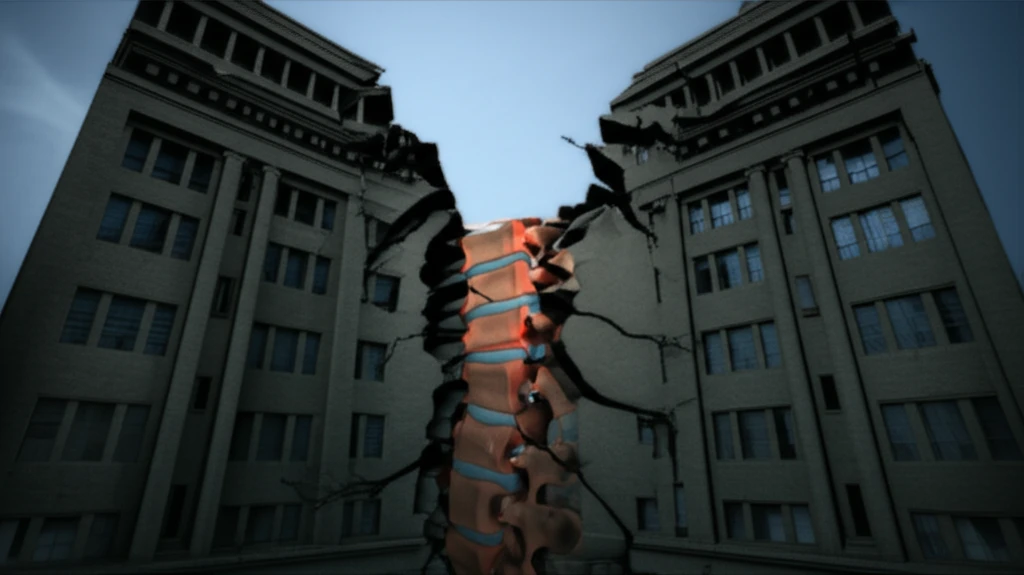
Sacral Insufficiency Fractures: Why They're Often Misdiagnosed and What You Need to Know

"Uncover the hidden causes of lower back pain, how sacral fractures mimic other conditions, and the latest approaches to accurate diagnosis and effective treatment."
Lower back pain is a widespread issue, and while many causes are readily identified, some remain elusive. Sacral insufficiency fractures (SIFs) are a significant but often overlooked cause of lower back pain, particularly in the elderly. These fractures occur when normal stress is applied to weakened bone, leading to tiny breaks that can cause significant discomfort.
Diagnosing SIFs can be challenging because they often mimic other conditions, such as bone metastases (cancer that has spread to the bones). Both SIFs and metastases can cause similar symptoms and appear alike on initial imaging tests. This diagnostic ambiguity can lead to delays in appropriate treatment and unnecessary anxiety for patients.
This article aims to shed light on the complexities of diagnosing SIFs, the importance of differentiating them from other conditions, and the available management strategies to ensure patients receive the correct care. By understanding the risk factors, diagnostic approaches, and treatment options, healthcare professionals and individuals alike can better navigate this often-misunderstood condition.
What are Sacral Insufficiency Fractures and Who is at Risk?
Sacral insufficiency fractures are stress fractures that occur in the sacrum, the triangular bone at the base of the spine. Unlike traumatic fractures caused by high-impact injuries, SIFs result from normal or minimal stress on weakened bone. Several factors can contribute to bone weakening, increasing the risk of SIFs:
- Osteoporosis: This condition, characterized by decreased bone density, is the most common risk factor for SIFs. Osteoporosis weakens the bones, making them more susceptible to fractures under normal stress.
- Age: Older adults are at higher risk due to the natural decline in bone density that occurs with aging.
- Radiation Therapy: Patients who have undergone radiation therapy to the pelvic region, particularly for cervical cancer, are at increased risk of SIFs. Radiation can damage bone tissue, making it more prone to fracture.
- Rheumatoid Arthritis: This autoimmune disease can cause chronic inflammation and bone loss, increasing the risk of SIFs.
- Other Medical Conditions: Conditions such as Paget's disease, renal osteodystrophy, and hyperparathyroidism can also weaken bones and increase the risk of SIFs.
- Pregnancy and Postpartum: Hormonal changes and increased stress on the pelvic bones during pregnancy and after childbirth can sometimes lead to SIFs.
The Path Forward: Ensuring Accurate Diagnosis and Effective Treatment
Sacral insufficiency fractures can be a challenging diagnostic puzzle, but with increased awareness and a comprehensive approach, misdiagnosis can be avoided. By considering SIFs in patients presenting with lower back pain, especially those with risk factors like osteoporosis or prior radiation therapy, healthcare professionals can ensure timely and appropriate management, leading to better outcomes and improved quality of life.