
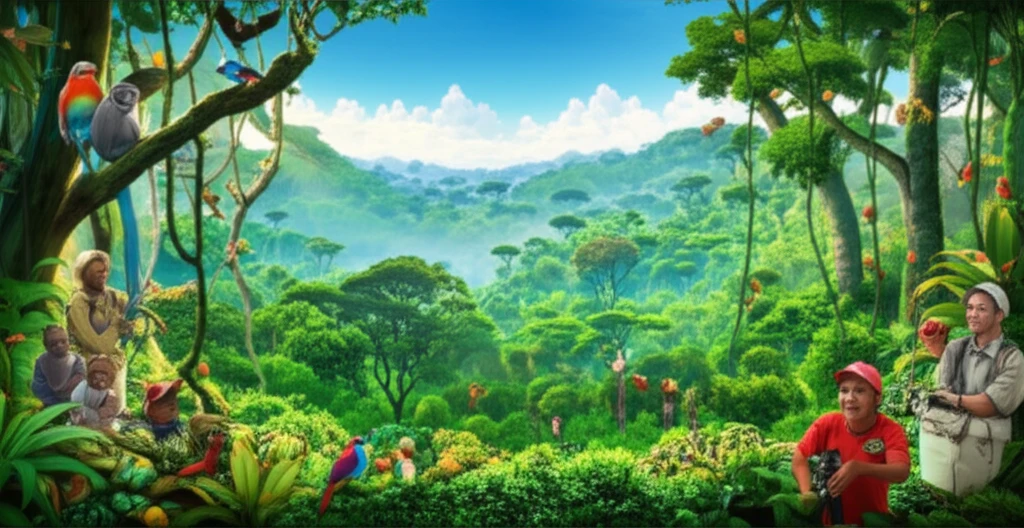
Nyungwe National Park ecotourism benefits

Rwanda's Ecotourism Success: How Revenue Sharing Drives Conservation

"Explore how Rwanda's Nyungwe National Park balances tourism, community development, and biodiversity protection through innovative revenue sharing."


Protected areas are vital for preserving biological diversity, but their success increasingly depends on engaging and benefiting local communities. Tourism emerges as a key strategy, offering sustainable economic advantages through wildlife attractions.

Ecotourism, since the 1980s, highlights sustainable practices that balance ecological integrity with community benefits. It aims to protect natural environments while supporting the economic needs of local populations, creating a mutually beneficial relationship.

This article delves into the ecotourism initiatives around Rwanda's Nyungwe National Park (NNP), examining how integrating conservation with local community development can alleviate poverty and safeguard biodiversity.

Nyungwe National Park: A Conservation Model

Nyungwe National Park ecotourism benefits

Nyungwe National Park, one of Africa’s largest high-altitude forests, spans 1,013 square kilometers. Since its establishment in 2005, and initial protection as a reserve in 1993, it has become a focal point for conservation efforts. The park's buffer zone, created in 1984, aims to reduce deforestation and minimize conflicts between wildlife and local residents.

A study was conducted in the two sectors that surround NNP – Kitabi and Bushekeri. Data was collected through household surveys of local leaders, farmers, cooperative members, and employees of conservation organizations to assess ecotourism's impact on the community and the park's biodiversity.

  • Identification of opportunities and challenges in ecotourism around NNP.
  • Assessment of community participation in ecotourism activities.
  • Evaluation of ecotourism's contribution to biodiversity conservation.
  • Analysis of how ecotourism projects reduce threats to biodiversity and illegal activities by alleviating rural poverty.
Ranger Based Monitoring (RBM) data was also reviewed from 2003 to 2013. The data provided insight into the frequency and types of illegal activities within the park, such as poaching, mining, and bamboo cutting. Information was gathered on tourist numbers to see how the number of tourists have increased since revenue sharing started.

Balancing Conservation and Community

Ecotourism can significantly boost conservation efforts by providing economic incentives and improving local livelihoods. For ecotourism to succeed, revenue sharing programs must be transparent and effectively managed, ensuring that local communities are motivated to protect natural resources. By integrating conservation education and enhancing community skills in sustainable practices, Rwanda can continue to set a strong example for ecotourism.

About this Article -

This article was crafted using a human-AI hybrid and collaborative approach. AI assisted our team with initial drafting, research insights, identifying key questions, and image generation. Our human editors guided topic selection, defined the angle, structured the content, ensured factual accuracy and relevance, refined the tone, and conducted thorough editing to deliver helpful, high-quality information.See our About page for more information.

This article is based on research published under:

DOI-LINK: 10.4172/2167-0269.1000348, Alternate LINK

Title: Contribution Of Ecotourism To The Conservation Of Nyungwe National Park In Rwanda

Subject: General Medicine

Journal: Journal of Tourism & Hospitality

Publisher: OMICS Publishing Group

Authors: Ange Imanishimwe, Venuste Nsengimana, Concorde Nsengumuremyi

Published: 2018-01-01

Everything You Need To Know

1

What exactly is ecotourism?

Ecotourism is a sustainable practice that balances ecological integrity with community benefits. Around Rwanda's Nyungwe National Park (NNP), it involves initiatives that integrate conservation with local community development, aimed at alleviating poverty and safeguarding biodiversity. It offers economic advantages through wildlife attractions, making protected areas vital for preserving biological diversity.

2

Why is Nyungwe National Park (NNP) important?

Nyungwe National Park (NNP) is significant because it's a focal point for conservation efforts, being one of Africa’s largest high-altitude forests, spanning 1,013 square kilometers. Established in 2005 (with initial protection as a reserve in 1993), it serves as a model for how to integrate conservation with local community development. The park's existence is vital for biodiversity and providing a habitat for wildlife.

3

Why are revenue sharing programs important in ecotourism?

Revenue sharing programs are important for ecotourism around Nyungwe National Park because they provide economic incentives for local communities to protect natural resources. Transparent and effectively managed revenue sharing ensures that local communities are motivated to protect the environment. When managed effectively, it alleviates rural poverty by providing community benefits, fostering a mutually beneficial relationship between conservation and the local population.

4

How do ecotourism projects help protect biodiversity?

Ecotourism projects can reduce threats to biodiversity and illegal activities by alleviating rural poverty and creating a link between conservation and community livelihoods. These projects help by providing economic incentives and improve community skills in sustainable practices. They encourage community participation and address challenges in ecotourism, contributing to a cycle of positive change.

5

What are the implications of integrating conservation with local community development?

The implications of integrating conservation with local community development are multifaceted. It aims to safeguard biodiversity, reduce deforestation (as seen with the Nyungwe National Park's buffer zone), and minimize conflicts between wildlife and local residents. It is crucial for making protected areas successful and for ensuring sustainable practices in the long term, providing economic benefits through wildlife attractions. This approach allows the local population to engage and benefit from the natural resources.

Newsletter Subscribe

Subscribe to get the latest articles and insights directly in your inbox.