
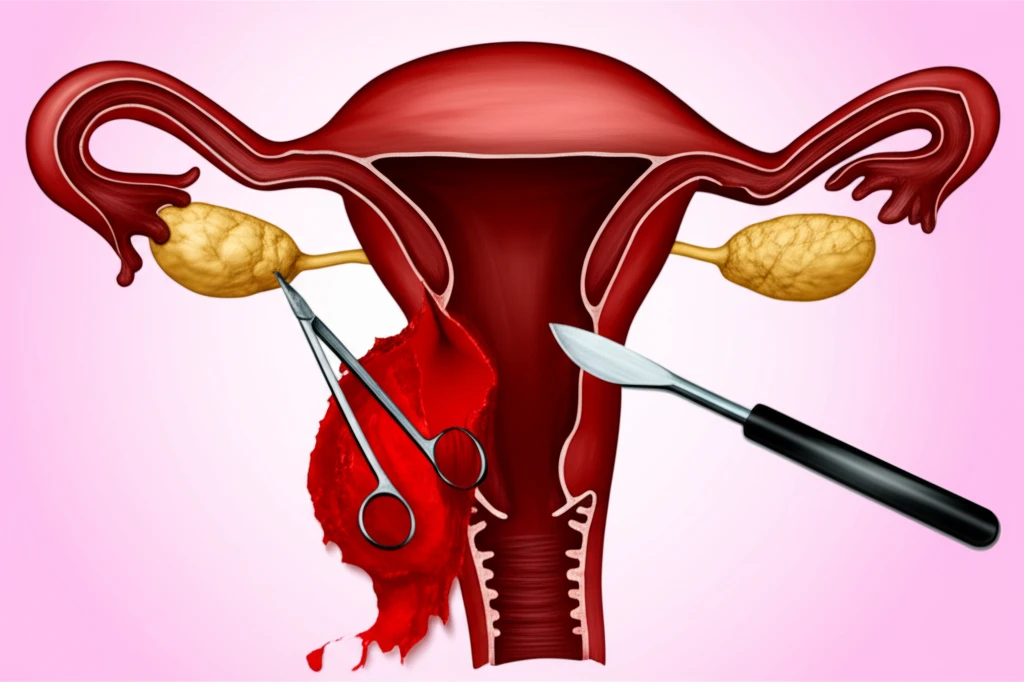
Illustration depicting a ruptured cornual pregnancy, highlighting the uterus and surrounding structures. The image includes symbolic elements of medical intervention.

Ruptured Pregnancy: Understanding the Risks, Diagnosis, and Treatment

"Exploring the complexities of cornual pregnancies and the importance of early detection."


Pregnancy is often seen as a time of joy and anticipation, but, unfortunately, not every pregnancy progresses as expected. In rare cases, a pregnancy can develop outside the uterus, a condition known as an ectopic pregnancy. One particularly rare and dangerous type of ectopic pregnancy is a cornual pregnancy, which occurs when the embryo implants in the cornua, the upper part of the uterus where the fallopian tubes connect.

Cornual pregnancies are uncommon, but they pose a significant risk because they can rupture, leading to severe internal bleeding. This article aims to shed light on this critical topic, providing essential information about the causes, symptoms, diagnosis, and treatment of ruptured cornual pregnancies. By understanding these aspects, individuals and healthcare providers can work together to ensure timely intervention and better outcomes.

The information presented here is for educational purposes and is not a substitute for professional medical advice. Always consult with a healthcare provider for any health concerns or before making any decisions related to your health or treatment.

What is a Cornual Pregnancy?

Illustration depicting a ruptured cornual pregnancy, highlighting the uterus and surrounding structures. The image includes symbolic elements of medical intervention.

A cornual pregnancy is a specific type of ectopic pregnancy where the fertilized egg implants in the cornua of the uterus. This area is the upper, horn-shaped part of the uterus, where the fallopian tubes connect. The cornua is not designed to accommodate a growing fetus, so as the pregnancy progresses, it can lead to life-threatening complications if not detected early.

Compared to other ectopic pregnancies, cornual pregnancies are less common. However, they carry a higher risk of uterine rupture due to the limited space and thinner muscular wall of the cornua. This rupture can cause severe internal bleeding, which necessitates immediate medical attention. Understanding the risk factors and symptoms is crucial for early detection and prompt intervention.

  • Location: The embryo implants in the cornual region of the uterus.
  • Rarity: Less common than other types of ectopic pregnancies.
  • Risk: High risk of uterine rupture and severe internal bleeding.
  • Symptoms: Abdominal pain, bleeding, and potentially life-threatening complications.
  • Detection: Requires careful assessment, including ultrasound and potentially laparoscopy.
Early diagnosis and intervention are essential in managing cornual pregnancies to minimize complications and ensure the best possible outcome for the patient. The goal is to prevent rupture and preserve the patient's health and reproductive potential, when possible.

Prioritizing Early Detection and Care

Ruptured cornual pregnancies are serious but manageable with prompt medical intervention. Being aware of the symptoms, seeking early medical care, and collaborating closely with healthcare providers are all crucial. This helps to reduce the risk of severe complications and improves the chances of a positive outcome. Remember to consult your healthcare provider for personalized medical advice.

About this Article -

This article was crafted using a human-AI hybrid and collaborative approach. AI assisted our team with initial drafting, research insights, identifying key questions, and image generation. Our human editors guided topic selection, defined the angle, structured the content, ensured factual accuracy and relevance, refined the tone, and conducted thorough editing to deliver helpful, high-quality information.See our About page for more information.

This article is based on research published under:

DOI-LINK: 10.1016/j.jogc.2017.11.038, Alternate LINK

Title: Rupturing Cornual Pregnancy Diagnosed At Laparoscopy

Subject: Obstetrics and Gynecology

Journal: Journal of Obstetrics and Gynaecology Canada

Publisher: Elsevier BV

Authors: Emily Stern, Melanie Chanda, Julie Thorne

Published: 2019-03-01

Everything You Need To Know

1

What exactly is a cornual pregnancy, and why is it considered dangerous?

A cornual pregnancy is a specific type of ectopic pregnancy where the fertilized egg implants in the cornua, which is the upper, horn-shaped part of the uterus where the fallopian tubes connect. It's dangerous because the cornua isn't designed to accommodate a growing fetus. As the pregnancy progresses, there's a high risk of uterine rupture and severe internal bleeding due to the thinner muscular wall in that area. This condition requires immediate medical attention to prevent life-threatening complications. The risk of rupture is higher than in other ectopic pregnancies, making early detection and intervention critical.

2

How is a cornual pregnancy different from other ectopic pregnancies, and what makes it more prone to rupture?

A cornual pregnancy differs from other ectopic pregnancies primarily in its location. It specifically implants in the cornua, the upper part of the uterus where the fallopian tubes connect. This location is significant because the cornua has a thinner muscular wall and limited space compared to the main body of the uterus. This anatomical difference makes cornual pregnancies more prone to uterine rupture as the pregnancy progresses, leading to severe internal bleeding. Other ectopic pregnancies may occur in the fallopian tubes or elsewhere, but the unique structure of the cornua increases the risk of rupture.

3

What are the key symptoms of a ruptured cornual pregnancy, and why is early detection so crucial?

The key symptoms of a ruptured cornual pregnancy include severe abdominal pain and internal bleeding, which can lead to life-threatening complications if not addressed promptly. Early detection is crucial because the rupture can cause significant blood loss and shock. Detecting a cornual pregnancy before it ruptures allows for interventions to prevent this catastrophic event. Diagnostic methods such as ultrasound and potentially laparoscopy are vital for early identification. The possibility of preserving the patient's health and reproductive potential is higher with timely intervention.

4

If a cornual pregnancy is detected early, what treatment options are typically considered to manage it?

When a cornual pregnancy is detected early, treatment options typically focus on preventing rupture and managing the ectopic pregnancy. Medical management with medications like methotrexate may be used to stop the growth of the ectopic pregnancy, especially if it is detected early and the patient is stable. Surgical options, such as laparoscopy or laparotomy, may be necessary to remove the ectopic pregnancy, particularly if the patient is experiencing pain or bleeding, or if the pregnancy is more advanced. The specific approach depends on various factors, including the size and location of the pregnancy, the patient's overall health, and her desire for future fertility. The goal is to resolve the pregnancy while minimizing the risk of complications and preserving reproductive potential when possible.

5

What role does ultrasound play in diagnosing a cornual pregnancy, and what other diagnostic methods might be necessary?

Ultrasound plays a crucial role in diagnosing a cornual pregnancy as it allows healthcare providers to visualize the location of the pregnancy and assess its development. However, diagnosis can be challenging, and additional diagnostic methods might be necessary to confirm the diagnosis. These may include laparoscopy, which involves inserting a camera into the abdomen to directly visualize the uterus and fallopian tubes. Monitoring hCG (human chorionic gonadotropin) levels is also important, as abnormal levels can indicate an ectopic pregnancy. A combination of these diagnostic tools helps ensure accurate and timely identification of a cornual pregnancy.

Newsletter Subscribe

Subscribe to get the latest articles and insights directly in your inbox.