
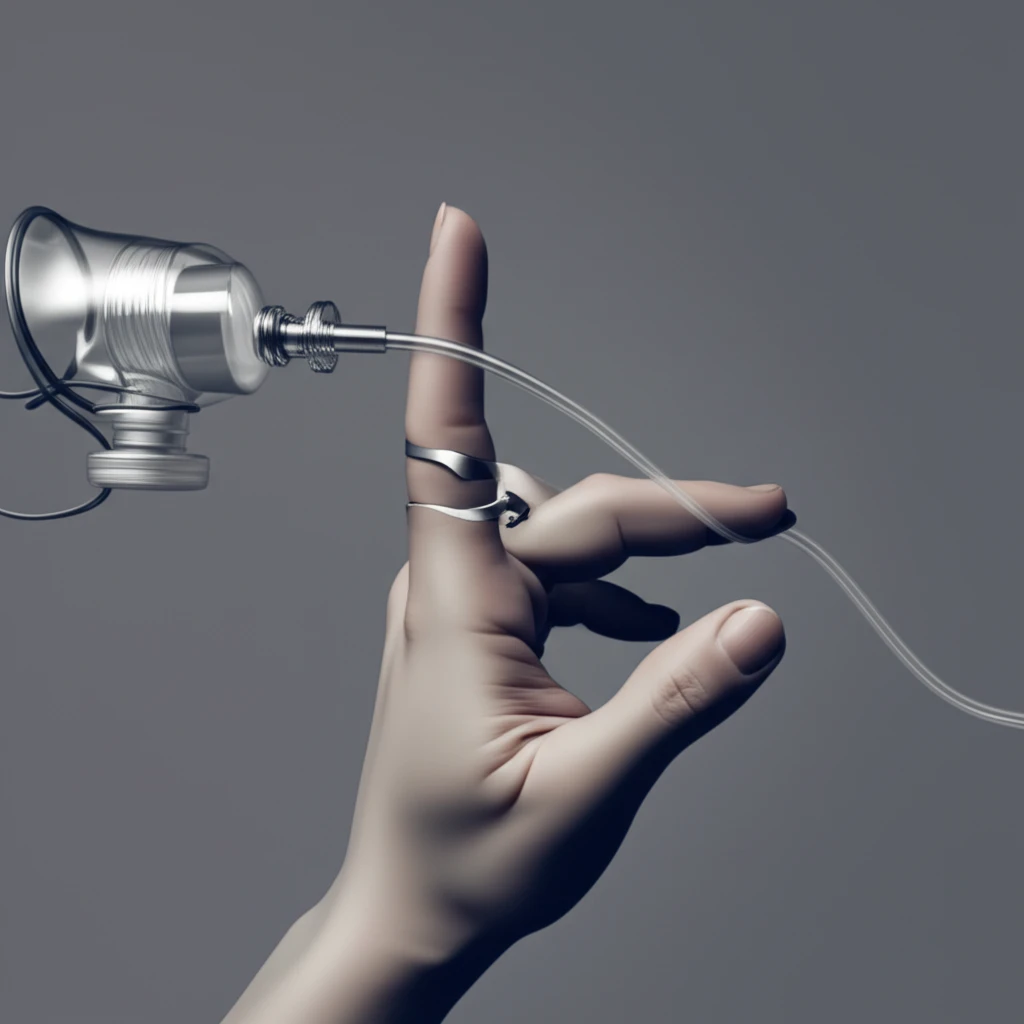
Illustration of oxygen mask strap removing stuck ring

Ring Rescue: The Oxygen Mask Trick That Could Save Your Finger

"A simple, low-cost method for safely removing stuck rings using readily available oxygen mask straps, especially useful in emergencies."


Getting a ring stuck on your finger can be more than just an annoyance; it can quickly become a medical concern if swelling occurs. Traditional methods might not always be effective or safe, especially in emergency situations.

Fortunately, a resourceful solution exists that utilizes a common medical supply: the oxygen mask. Oxygen mask straps offer a readily available, inexpensive, and surprisingly effective way to remove stuck rings without causing further harm.

This article explores how to use this simple technique, offering a step-by-step guide to safely removing rings using oxygen mask straps. This method is particularly useful for emergency responders, healthcare professionals, and anyone dealing with a stuck ring at home.

The Oxygen Mask Ring Removal Technique: A Step-by-Step Guide

Illustration of oxygen mask strap removing stuck ring

The beauty of this method lies in its simplicity and accessibility. Oxygen mask straps are designed to be elastic and easily manipulated, making them ideal for creating gentle compression around the affected finger. Here's how to do it:

Gather your materials: You'll need an oxygen mask strap (easily obtainable and costing around £0.34) and, optionally, a lubricant like soap or lotion.

  • Prepare the strap: Cut the strap from the oxygen mask.
  • Pass the strap: Gently slide the aglet (the plastic tip of the strap) under the ring. If necessary, use a lubricant to ease its passage.
  • Wrap and compress: Wind the strap tightly around the finger, working your way from the ring towards the fingertip. This compression helps to reduce swelling.
  • Pull and remove: Grip the end of the strap that extends beyond the ring and gently pull it, unwinding the strap as you go. This should gradually push the ring over the compressed area and off the finger.
Important considerations: If you encounter significant resistance or pain, stop immediately and seek professional medical assistance. This method is generally safe, but it's crucial to prioritize the individual's comfort and avoid causing further injury.

Empowering Quick Solutions and Informed Decisions

The oxygen mask ring removal technique offers a practical, accessible solution for a common problem. Its simplicity makes it an invaluable tool for first responders, healthcare providers, and individuals seeking a safe method to remove stuck rings at home.

While this method is generally safe and effective, it's crucial to remember that it's not a substitute for professional medical advice. If you experience persistent pain, swelling, or difficulty removing the ring, seek immediate medical attention.

By understanding and applying this technique, you can empower yourself to address a potentially urgent situation with confidence and minimize the risk of further injury. Always prioritize safety and seek professional help when needed.

About this Article -

This article was crafted using a human-AI hybrid and collaborative approach. AI assisted our team with initial drafting, research insights, identifying key questions, and image generation. Our human editors guided topic selection, defined the angle, structured the content, ensured factual accuracy and relevance, refined the tone, and conducted thorough editing to deliver helpful, high-quality information.See our About page for more information.

This article is based on research published under:

DOI-LINK: 10.1308/rcsann.2017.0062, Alternate LINK

Title: How To Remove A Ring Using An Oxygen Mask

Subject: General Medicine

Journal: The Annals of The Royal College of Surgeons of England

Publisher: Royal College of Surgeons of England

Authors: Tj Holme, A Mohan

Published: 2017-11-01

Everything You Need To Know

1

What is the Oxygen Mask Ring Removal Technique?

The **Oxygen Mask Ring Removal Technique** is a method for safely removing rings stuck on fingers using **oxygen mask straps**. It involves passing the **oxygen mask strap** under the ring, wrapping it around the finger to compress the area, and then pulling the strap to slide the ring off. This is particularly useful in emergency scenarios.

2

Why is the Oxygen Mask Ring Removal Technique important?

The significance of this technique is its practicality and accessibility. It provides a low-cost, readily available solution for a potentially serious problem: a stuck ring causing swelling and possible medical complications. The use of the **oxygen mask strap** circumvents the need for specialized tools or procedures, making it ideal for quick action by first responders, healthcare professionals, and even individuals at home.

3

What is the significance of using the Oxygen Mask Ring Removal Technique?

The method is important because it prevents further injury to the finger. If the ring is left in place and swelling occurs, it can restrict blood flow, leading to serious complications. This technique allows for the ring's removal without causing additional trauma, making it a safe and effective first response to a common issue.

4

How do you perform the Oxygen Mask Ring Removal Technique?

To perform the **Oxygen Mask Ring Removal Technique**, first gather the necessary materials, which include an **oxygen mask strap** and a lubricant, such as soap or lotion, if needed. Cut the **oxygen mask strap** from the oxygen mask. Then, slide the aglet of the strap under the ring. Next, wrap the strap tightly around the finger, working from the ring towards the fingertip. Finally, grip the end of the strap and gently pull it, unwinding the strap as you go to push the ring off.

5

What should you do if you encounter problems while using this technique?

If the method encounters significant resistance or pain, stop immediately and seek professional medical assistance. This is because continuing could cause further injury. While the **Oxygen Mask Ring Removal Technique** is generally safe, it's crucial to prioritize the individual's comfort and well-being throughout the process. Any signs of increased pain or difficulty should prompt seeking additional medical support.

Newsletter Subscribe

Subscribe to get the latest articles and insights directly in your inbox.