
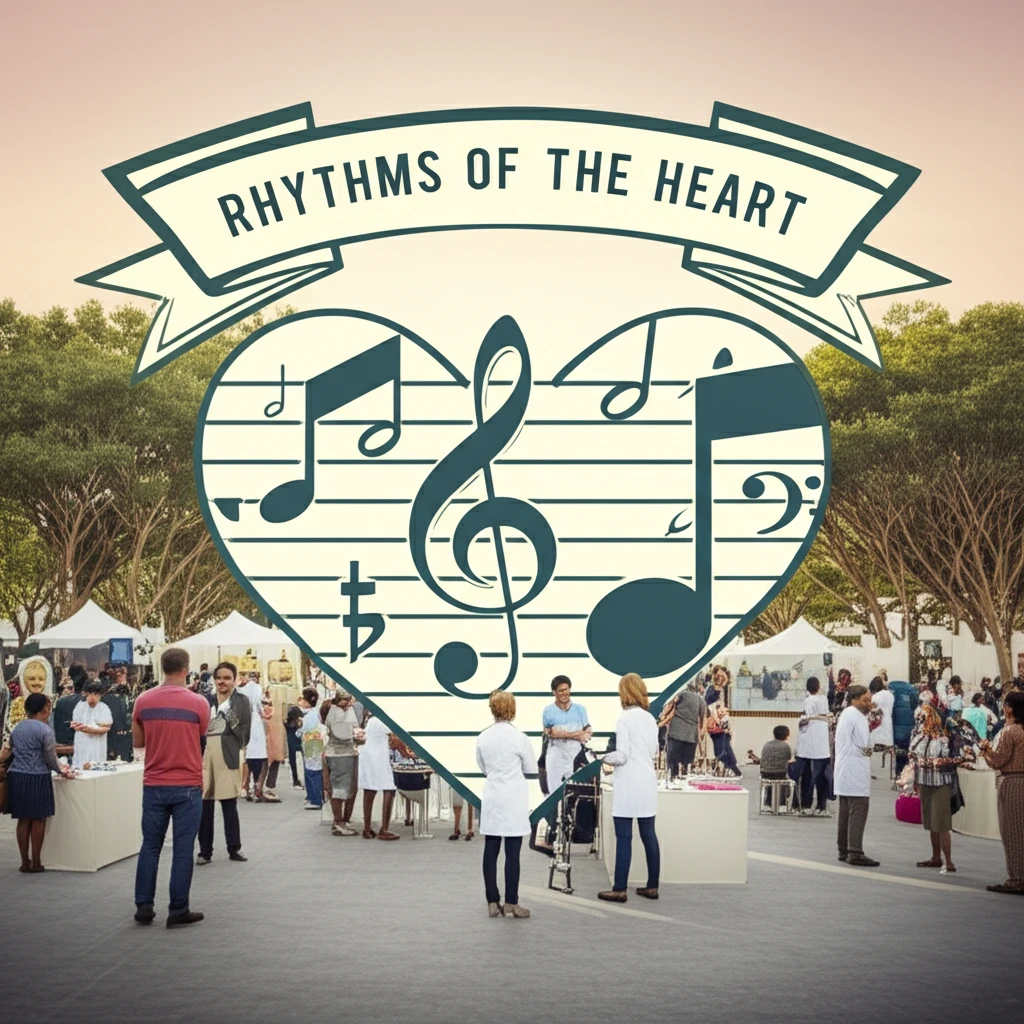
Illustration of the Rhythms of the Heart project, showing a heart-shaped musical note surrounded by community members.

Rhythms of the Heart: How Music and Community Unite to Boost Your Heart Health

"Discover how an innovative community project used the power of music and collaboration to spread life-saving knowledge about cardiovascular health."


In a world where heart health is constantly in the spotlight, finding new and engaging ways to educate the public is more important than ever. Cardiovascular disease (CVD) remains a leading cause of death in the United States, and traditional methods of health education often struggle to reach diverse communities. But what if the key to unlocking better heart health was as simple as tapping your foot to the beat?

This article dives into the fascinating 'Rhythms of the Heart' project, an interprofessional community health collaboration that successfully used music to educate and engage community members about cardiovascular health. By weaving together the talents of medical professionals, musicians, and educators, this innovative program created a powerful synergy that resonated with participants of all ages.

Join us as we explore the objectives, design, and remarkable results of 'Rhythms of the Heart.' Discover the innovative methods, the valuable insights gained, and how this project offers a fresh perspective on how to undertake community education and health screenings. Get ready to explore a harmonious blend of health and music.

Decoding the Beat: The 'Rhythms of the Heart' Project Unveiled

Illustration of the Rhythms of the Heart project, showing a heart-shaped musical note surrounded by community members.

The 'Rhythms of the Heart' project was conceived as a community outreach event, and was designed to provide education and health screenings to a diverse group of local residents. This initiative, brought to life on the campus of a private college in Central Florida, brought together a collaborative team of university faculty, undergraduate students, and community collaborators to share life-saving health information in a dynamic and engaging manner.

The event's objectives were clear: to tackle the leading cause of morbidity and mortality in the USA – cardiovascular health. The core focus was to provide education and health screenings to a diverse group of local residents. Through a community outreach event, participants had the opportunity to learn about various heart rhythms, key health behaviors, and key health factors to promote and preserve cardiovascular health.

  • Clinical Services: Including health screenings for blood pressure and body fat.
  • Informative Content: Offering essential information on smoking cessation, physical activity, weight management, and healthy diet alternatives.
  • Resource Provision: Supplying local community resources and educational materials to empower participants to take control of their heart health.
The innovative use of music was a central feature, with musical selections representing different heart rhythms. Nine musical selections were performed and information on the specific heartbeat reflected in the musical selection were provided to the audience. This innovative approach, pre-concert activities included a lecture and discussion with a cardiologist. Pre-concert also includes a sampling of nutritious snacks and healthy recipes, and blood pressure screening. The project engaged around 275 guests. The project delivered an enriching and memorable experience. Participants acknowledged it as 'smart and creative', 'cleverly conceived' and 'well thought out'.

The Beat Goes On: Continuing the Rhythm of Heart Health

The 'Rhythms of the Heart' project serves as a powerful reminder that innovative collaborations can transform community health education. By combining the universal language of music with critical health information, the project created a lasting impact on its participants. As we reflect on the success of this project, it's clear that the beat of community health continues to evolve. This project showcases the potential of the project and the power of combining healthcare knowledge and the universal language of music. By building on the positive outcomes of this initiative, community-based health outreach will continue to resonate, empower individuals, and create a healthier future for all.

About this Article -

This article was crafted using a human-AI hybrid and collaborative approach. AI assisted our team with initial drafting, research insights, identifying key questions, and image generation. Our human editors guided topic selection, defined the angle, structured the content, ensured factual accuracy and relevance, refined the tone, and conducted thorough editing to deliver helpful, high-quality information.See our About page for more information.

Everything You Need To Know

1

What exactly was the 'Rhythms of the Heart' project designed to achieve?

The 'Rhythms of the Heart' project was designed as a community outreach event to provide education and health screenings focused on cardiovascular health to a diverse group of local residents. It aimed to tackle cardiovascular disease, a leading cause of morbidity and mortality in the USA, by educating participants about heart rhythms, key health behaviors, and factors crucial for preserving cardiovascular health. The project combined health information with an engaging musical experience to promote awareness and encourage proactive health management.

2

How did the 'Rhythms of the Heart' project utilize music to educate people about cardiovascular health?

The 'Rhythms of the Heart' project innovatively used music by selecting nine musical pieces that represented different heart rhythms. During the event, these selections were performed, and information was provided to the audience regarding the specific heartbeat each piece reflected. This creative approach made learning about cardiovascular health more engaging and memorable, linking auditory experiences with educational content.

3

Beyond the musical performances, what other services and resources were offered during the 'Rhythms of the Heart' project?

In addition to the musical performances representing heart rhythms, the 'Rhythms of the Heart' project offered a range of clinical services and informative content. These included health screenings for blood pressure and body fat, essential information on smoking cessation, the importance of physical activity, strategies for weight management, and healthy diet alternatives. Participants were also provided with information about local community resources and educational materials to empower them to take control of their heart health.

4

Who collaborated to bring the 'Rhythms of the Heart' project to life, and where did it take place?

The 'Rhythms of the Heart' project was a collaborative effort involving university faculty, undergraduate students, and community collaborators. This interprofessional team worked together to design and implement the community outreach event. The event was held on the campus of a private college in Central Florida, providing a central and accessible location for local residents to participate.

5

What implications does the success of the 'Rhythms of the Heart' project have for future community health initiatives, and what key elements contributed to its positive reception?

The success of the 'Rhythms of the Heart' project demonstrates the potential of innovative collaborations in community health education. By combining music with critical health information, the project created a memorable and impactful learning experience. Its positive reception, as indicated by participants describing it as 'smart and creative,' 'cleverly conceived,' and 'well thought out,' suggests that integrating arts and culture with healthcare can enhance engagement and understanding. This approach can be a model for future initiatives aiming to promote health awareness and encourage proactive health behaviors within communities. Furthermore, interprofessional collaboration and the provision of accessible resources are essential components for impactful community-based health outreach.

Newsletter Subscribe

Subscribe to get the latest articles and insights directly in your inbox.