
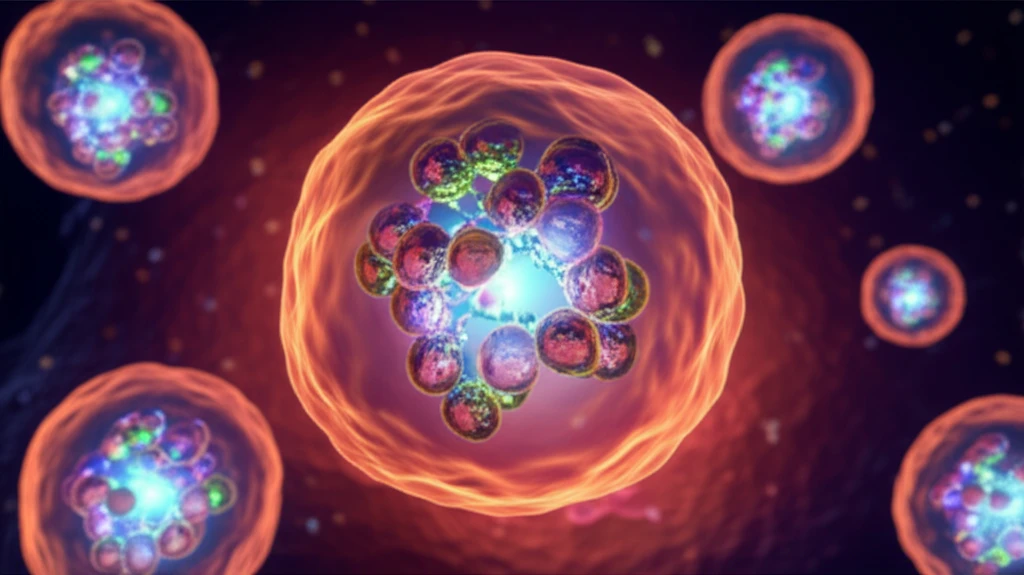
Rhenium Complexes: A New Frontier in Cancer Treatment?

"Scientists explore the potential of mono- and multinuclear rhenium complexes in fighting tumors, offering hope for more effective and targeted therapies."
For decades, platinum-based drugs like cisplatin have been a cornerstone of cancer treatment. However, their use is often limited by severe side effects and the development of drug resistance. This has spurred researchers to explore alternative metal-based compounds that can selectively target and destroy cancer cells while minimizing harm to healthy tissues.
Rhenium carbonyl complexes are emerging as promising candidates in this quest. These complexes have demonstrated a range of biological activities, including anticancer, antimalarial, and antitrypanosomal properties. What makes them particularly attractive is their ability to trigger programmed cell death (apoptosis) in cancer cells, potentially overcoming resistance mechanisms associated with traditional therapies.
Recent research delves into the synthesis and evaluation of mono- and multinuclear rhenium(I) tricarbonyl complexes as antiproliferative agents. The study investigates their effectiveness against various cancer cell lines and explores the underlying mechanisms by which they combat tumor growth.
How Rhenium Complexes Target and Destroy Cancer Cells
The study focuses on a series of synthesized rhenium(I) tricarbonyl complexes, evaluating their impact on epithelial carcinoma (A431), colon carcinoma (DLD-1), and ovarian cancer (A2780) cell lines. Researchers also assessed the complexes' effect on a healthy fibroblast cell line (BJ) to determine their selective toxicity.
- Inhibition of Fas Receptor: Rhenium complexes can inhibit the soluble form of the Fas receptor in malignant cells. This allows the Fas domain to receive apoptotic signals, triggering an extrinsic cell death pathway.
- Augmentation of Bax-α: The complexes increase the concentration of pro-apoptotic Bax-α, a protein that promotes cell death. The tetranuclear complex proves particularly effective at modulating Bax-α, leading to significant cell growth inhibition.
- Cell Death Mechanisms: Further investigation reveals that these complexes influence programmed cell death mechanisms (apoptosis) in vitro, suggesting a targeted approach to eliminating cancer cells.
The Future of Rhenium in Cancer Therapy
This research provides a compelling case for further exploration of rhenium complexes as anticancer agents. Their unique mechanisms of action, selective cytotoxicity, and ability to modulate key apoptotic pathways make them attractive candidates for developing more effective and targeted cancer therapies.
While the current study highlights promising in vitro results, further research is needed to evaluate the efficacy and safety of these complexes in preclinical and clinical settings. Understanding their pharmacokinetics, biodistribution, and potential long-term effects will be crucial for translating these findings into tangible benefits for cancer patients.
The investigation of rhenium complexes represents a significant step forward in the ongoing quest for innovative cancer treatments. By harnessing the power of metal-based chemistry, scientists are paving the way for a new generation of therapies that can overcome the limitations of traditional approaches and improve patient outcomes.