
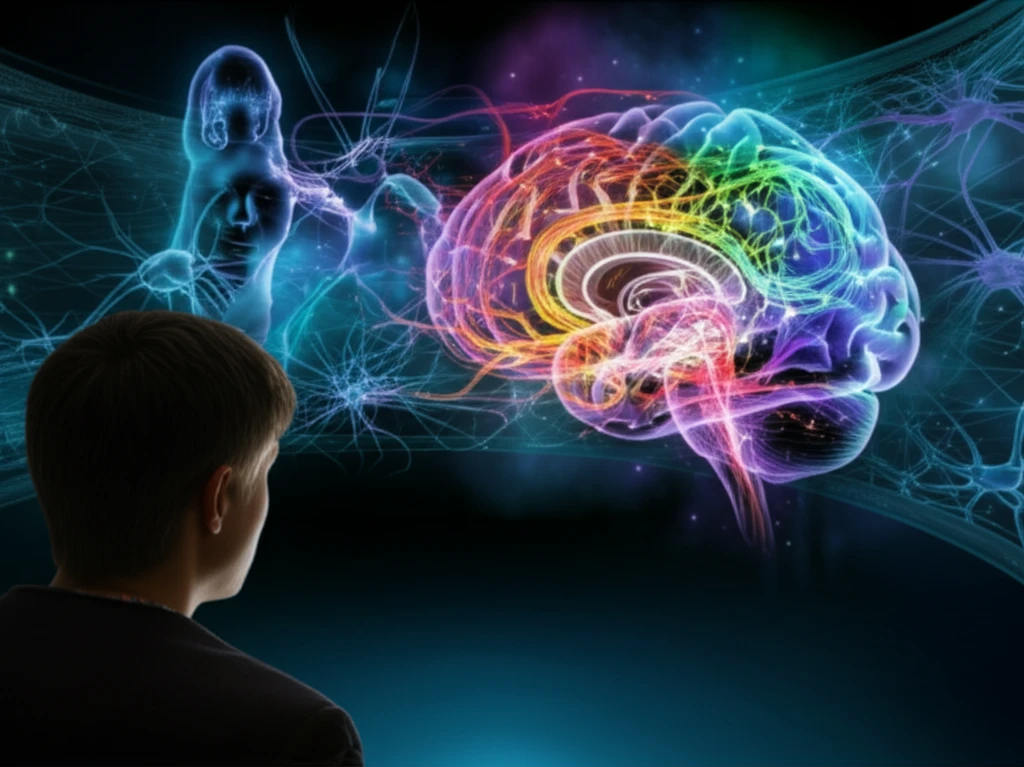
Illustration depicting fMRI neurofeedback, showing a person interacting with a brain image via a screen, symbolizing brain training and control.

Rewiring Your Brain: How fMRI Neurofeedback Can Unlock Your Mental Potential

"Explore the Cutting-Edge Science of fMRI Neurofeedback: From Anxiety Relief to Cognitive Enhancement, Discover the Revolutionary Techniques Reshaping Mental Wellness."


In a world increasingly focused on mental wellness, the quest for effective and personalized treatments has led researchers to explore the uncharted territories of the human brain. One of the most promising frontiers in this field is fMRI neurofeedback, a revolutionary technique that empowers individuals to consciously influence their brain activity in real-time.

Imagine a world where you could directly train your brain to alleviate anxiety, improve focus, or even enhance your cognitive abilities. This is the promise of fMRI neurofeedback, a non-invasive procedure that uses real-time functional magnetic resonance imaging (fMRI) to provide feedback on your brain activity. By learning to control specific brain regions, individuals can gain greater mastery over their mental states and behaviors.

This article delves into the science behind fMRI neurofeedback, exploring its applications, benefits, and potential limitations. We'll examine how it works, the conditions it's being used to treat, and the future possibilities of this groundbreaking technology. Get ready to discover how you can actively participate in rewiring your brain and unlocking your mental potential.

Decoding the Brain: How fMRI Neurofeedback Works

Illustration depicting fMRI neurofeedback, showing a person interacting with a brain image via a screen, symbolizing brain training and control.

fMRI neurofeedback is a sophisticated technique that uses advanced imaging technology to measure brain activity in real-time. During an fMRI session, a powerful magnetic field and radio waves are used to create detailed images of your brain. These images reveal changes in blood flow, which are used as a proxy for neural activity.

The process begins with identifying the specific brain region or network that is associated with a particular mental function or condition. The individual is then trained to regulate the activity of this target area. This is achieved by providing visual or auditory feedback based on the real-time fMRI data. When the individual's brain activity aligns with the desired pattern, they receive positive feedback, encouraging them to maintain that state. If the activity deviates, the feedback changes, prompting them to adjust their mental strategies.

  • Real-time Monitoring: fMRI scanners provide real-time information about brain activity, allowing for immediate feedback.
  • Targeted Training: Neurofeedback can be tailored to specific brain regions or networks associated with particular functions.
  • Personalized Approach: Training protocols can be customized to meet the individual needs of each participant.
  • Non-Invasive: fMRI neurofeedback is a non-invasive procedure, posing no direct risk to the brain.
Over time and through consistent practice, individuals learn to consciously control their brain activity, leading to lasting changes in their neural pathways and improved mental well-being. This process is akin to physical training, where repeated exercises strengthen specific muscles. In the case of fMRI neurofeedback, it's the brain itself that is being exercised and strengthened.

The Future of Brain Training: Embracing the Power of fMRI Neurofeedback

fMRI neurofeedback represents a significant leap forward in our ability to understand and influence the human brain. While the field is still evolving, the potential benefits of this technology are undeniable. As research continues to advance, we can expect to see even more innovative applications of fMRI neurofeedback, empowering individuals to take control of their mental health and unlock their full potential. The journey of rewiring your brain is just beginning, and the possibilities are limitless.

About this Article -

This article was crafted using a human-AI hybrid and collaborative approach. AI assisted our team with initial drafting, research insights, identifying key questions, and image generation. Our human editors guided topic selection, defined the angle, structured the content, ensured factual accuracy and relevance, refined the tone, and conducted thorough editing to deliver helpful, high-quality information.See our About page for more information.

Everything You Need To Know

1

What exactly is fMRI neurofeedback and how does it differ from other mental wellness techniques?

fMRI neurofeedback is a cutting-edge, non-invasive technique that uses real-time functional magnetic resonance imaging (fMRI) to provide individuals with feedback on their brain activity. This allows them to consciously influence specific brain regions and networks associated with various mental functions. Unlike other mental wellness techniques, fMRI neurofeedback offers direct, real-time insight into brain activity, enabling targeted training and personalized protocols that can lead to lasting changes in neural pathways. Other techniques rely on indirect methods or general approaches, whereas fMRI neurofeedback targets the brain directly.

2

How does fMRI neurofeedback work to provide real-time feedback on brain activity?

During an fMRI neurofeedback session, a powerful magnetic field and radio waves are used to create detailed images of your brain. These images reveal changes in blood flow, which serve as a proxy for neural activity. The fMRI scanner provides real-time data, allowing for immediate visual or auditory feedback. Individuals learn to regulate the activity of a target brain area. When their brain activity aligns with the desired pattern, they receive positive feedback, encouraging them to maintain that state. If the activity deviates, the feedback changes, prompting them to adjust their mental strategies and consciously control their brain activity over time through consistent practice.

3

What are some potential applications of fMRI neurofeedback, and how might it enhance cognitive performance?

fMRI neurofeedback is being explored for various applications, including anxiety relief, improving focus, and enhancing cognitive abilities. By targeting specific brain regions or networks associated with these functions, individuals can learn to consciously control their brain activity and improve their mental well-being. This targeted training can lead to lasting changes in neural pathways, resulting in enhanced cognitive performance. As research continues to advance, we can expect to see even more innovative applications of fMRI neurofeedback, such as treating depression, PTSD, and addiction.

4

Is fMRI neurofeedback a safe procedure?

fMRI neurofeedback is a non-invasive procedure, posing no direct risk to the brain. It does not involve any surgery or medication. The process relies on the use of real-time functional magnetic resonance imaging (fMRI), which measures brain activity through changes in blood flow. However, it is important to note that fMRI machines use strong magnetic fields, so individuals with certain metallic implants may not be eligible. A qualified healthcare professional should assess individual suitability before undergoing fMRI neurofeedback.

5

Can fMRI neurofeedback genuinely 'rewire' the brain, and what are the long-term implications of this?

Yes, fMRI neurofeedback can genuinely 'rewire' the brain by enabling individuals to consciously control their brain activity and create lasting changes in their neural pathways. This process is similar to physical training, where repeated exercises strengthen specific muscles. In the case of fMRI neurofeedback, it is the brain itself that is being exercised and strengthened. The long-term implications of this are significant, as individuals can gain greater mastery over their mental states and behaviors, improve their mental well-being, and enhance their cognitive abilities. As research continues to advance, we can expect to see even more profound and transformative effects of fMRI neurofeedback on the human brain.

Newsletter Subscribe

Subscribe to get the latest articles and insights directly in your inbox.