
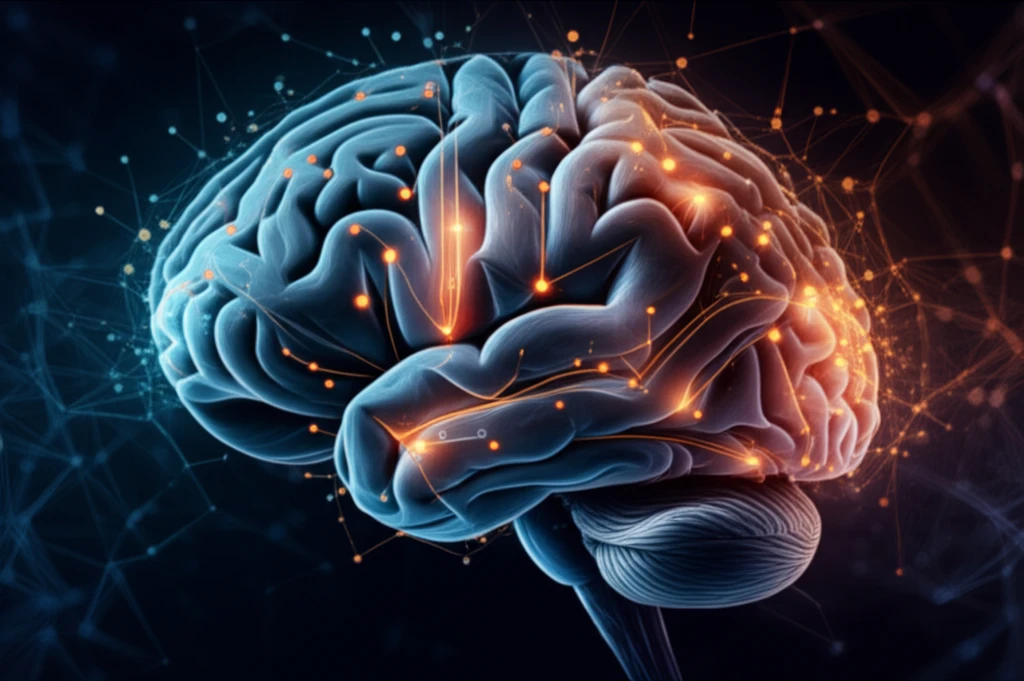
Brain scan with interconnected circuits, representing PTSD treatment breakthroughs

Rewiring the Brain: How Neuroimaging is Changing PTSD Treatment

"Unlock the mysteries of PTSD: Explore molecular neuroimaging techniques revealing pathways to innovative therapies and hope for recovery."


Post-Traumatic Stress Disorder (PTSD) can be a deeply debilitating condition, impacting not only memories but also mood, cognitive function, and overall well-being. Traditional approaches to understanding and treating PTSD have often focused on behavior and self-reporting, but now, cutting-edge tools are providing a window into the brain itself.

Molecular neuroimaging is revolutionizing our understanding of PTSD. It is allowing researchers to visualize and measure the biochemical processes that underlie the disorder. This opens up exciting possibilities for developing more effective and targeted treatments. This article explores how techniques like PET, SPECT, and MRS are helping to 'rewire' the PTSD brain.

This article will explore the groundbreaking ways that molecular neuroimaging is helping us understand and potentially treat PTSD. We'll break down the science, explore the key findings, and discuss what the future holds for this promising field.

Molecular Neuroimaging: Mapping the PTSD Brain

Brain scan with interconnected circuits, representing PTSD treatment breakthroughs

Molecular neuroimaging offers unprecedented insight into the living brain. Instead of relying solely on observing behavior, it allows scientists to directly visualize and quantify the complex chemical and metabolic processes that contribute to PTSD.

Here are some key molecular neuroimaging techniques in PTSD research:

  • Positron Emission Tomography (PET): Creates 3D maps of brain activity by tracking radioactive tracers. Highly sensitive, PET scans reveal details about metabolism and blood flow changes linked to PTSD.
  • Single Photon Emission Computed Tomography (SPECT): Similar to PET, but uses different tracers. SPECT is more accessible and offers valuable insights into cerebral perfusion and neuroreceptor density in PTSD.
  • Magnetic Resonance Spectroscopy (MRS): Measures the concentration of neurochemicals in the brain. MRS helps researchers understand the role of key metabolites like NAA, choline, GABA, and glutamate in PTSD.
These tools are not interchangeable, each offering a unique perspective on the complex neurobiology of PTSD. Scientists often combine these imaging modalities to get a more comprehensive understanding of the disorder.

Hope for the Future: Targeted Therapies and Personalized Treatment

Molecular neuroimaging is transforming our understanding of PTSD, moving beyond symptom management toward targeted interventions that address the root causes of the disorder. By visualizing the specific brain changes associated with PTSD, researchers can develop treatments that directly target those areas.

While challenges remain, the potential is enormous. Further research, including longitudinal and multimodal studies, will refine our understanding and pave the way for personalized treatment strategies that truly 'rewire' the brain and offer renewed hope for those living with PTSD.

The insights gained from molecular neuroimaging hold immense promise for revolutionizing PTSD treatment, offering a path towards more effective and personalized care.

About this Article -

This article was crafted using a human-AI hybrid and collaborative approach. AI assisted our team with initial drafting, research insights, identifying key questions, and image generation. Our human editors guided topic selection, defined the angle, structured the content, ensured factual accuracy and relevance, refined the tone, and conducted thorough editing to deliver helpful, high-quality information.See our About page for more information.

This article is based on research published under:

DOI-LINK: 10.5607/en.2016.25.6.277, Alternate LINK

Title: Molecular Neuroimaging In Posttraumatic Stress Disorder

Subject: Cellular and Molecular Neuroscience

Journal: Experimental Neurobiology

Publisher: The Korean Society for Brain and Neural Science

Authors: Jooyeon Jamie Im, Eun Namgung, Yejee Choi, Jung Yoon Kim, Sandy Jeong Rhie, Sujung Yoon

Published: 2016-12-31

Everything You Need To Know

1

What is Post-Traumatic Stress Disorder (PTSD)?

Post-Traumatic Stress Disorder (PTSD) is a mental health condition triggered by experiencing or witnessing a traumatic event. It profoundly impacts various aspects of life, including memories, mood, cognitive function, and overall well-being. The significance lies in its debilitating effects on individuals, making it crucial to understand its underlying mechanisms for effective treatment.

2

What is molecular neuroimaging and why is it important in the context of PTSD?

Molecular neuroimaging is a cutting-edge approach that allows researchers to visualize and measure the biochemical processes within the brain. Techniques like Positron Emission Tomography (PET), Single Photon Emission Computed Tomography (SPECT), and Magnetic Resonance Spectroscopy (MRS) are utilized. This is significant because it moves beyond observational methods, providing direct insight into the neurobiological underpinnings of PTSD, facilitating targeted treatments.

3

How does Positron Emission Tomography (PET) contribute to understanding PTSD?

Positron Emission Tomography (PET) uses radioactive tracers to create detailed 3D maps of brain activity. It is highly sensitive and reveals changes in metabolism and blood flow linked to PTSD. Its importance stems from its ability to provide insights into the specific brain regions and processes affected by PTSD. This opens avenues for developing therapies that can directly target these identified areas.

4

What is the role of Single Photon Emission Computed Tomography (SPECT) in PTSD research?

Single Photon Emission Computed Tomography (SPECT) is similar to PET, but uses different tracers, making it more accessible. It offers valuable insights into cerebral perfusion and neuroreceptor density in PTSD. This is important because it provides information that may differ from PET, therefore contributing to a more comprehensive understanding of PTSD's impact on brain function. It can help identify specific neurochemical imbalances.

5

How does Magnetic Resonance Spectroscopy (MRS) help us understand PTSD?

Magnetic Resonance Spectroscopy (MRS) measures the concentration of neurochemicals in the brain, providing crucial information on the role of metabolites like NAA, choline, GABA, and glutamate in PTSD. This is critical because these neurochemicals play key roles in brain function and their dysregulation is directly linked to PTSD symptoms. Understanding these roles enables the development of targeted interventions to restore neurochemical balance and alleviate symptoms.

Newsletter Subscribe

Subscribe to get the latest articles and insights directly in your inbox.