
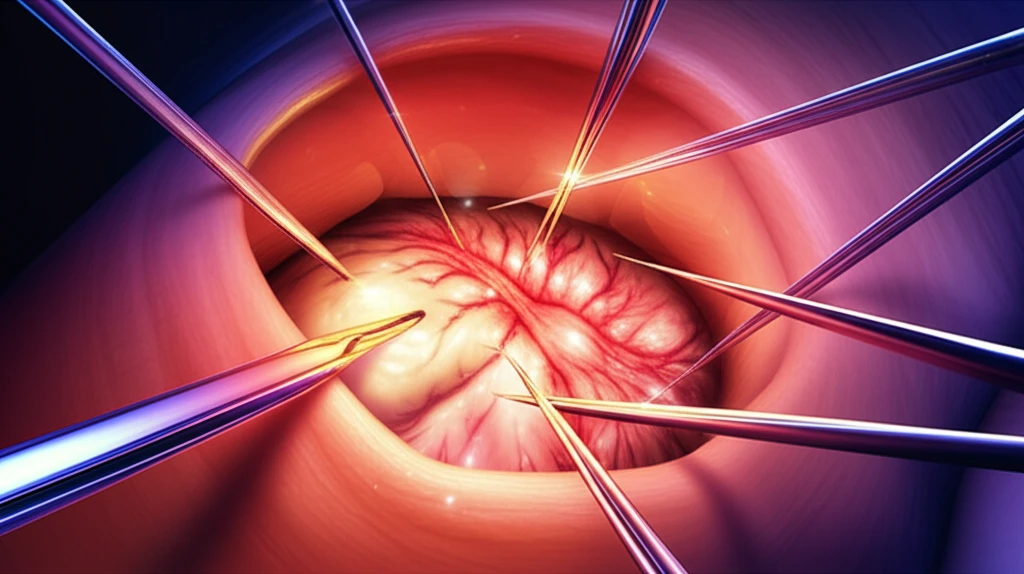
Digital illustration of rectovaginal fistula repair, highlighting surgical precision and hope.

Revolutionizing Recovery: The Innovative Surgical Solution for Rectovaginal Fistulas

"A groundbreaking technique offers new hope for women suffering from a rare but debilitating complication of rectal cancer treatment."


Rectovaginal fistulas, abnormal connections between the rectum and vagina, present a significant challenge for women, often resulting from complications following rectal cancer surgery. These fistulas can lead to distressing symptoms such as fecal incontinence and chronic infections, severely impacting a woman's physical and emotional well-being. Traditional treatments have varied, with outcomes sometimes unpredictable, creating a need for more effective and reliable solutions.

The medical community has been actively seeking innovative surgical techniques to address this difficult condition. Recent advancements offer new hope through an approach that merges established surgical principles with modern techniques. This involves a combination of identifying and treating the fistula, coupled with reinforcement of the repair to ensure long-term success.

This article delves into a groundbreaking surgical technique that has shown promising results. It explores the philosophy behind this innovative method, including the meticulous steps of the procedure, the expected outcomes, and its potential to significantly enhance the lives of those affected by rectovaginal fistulas. We aim to provide a comprehensive overview that empowers women to understand their options and make informed decisions about their care.

Unveiling the Innovative Surgical Approach: A Step-by-Step Guide

Digital illustration of rectovaginal fistula repair, highlighting surgical precision and hope.

The core of this innovative technique centers on a modified Martius graft combined with a LIFT (Ligation of Intersphincteric Fistula Tract) procedure-inspired strategy. This approach addresses the fistula directly while fortifying the repair site to prevent recurrence. The surgeon begins by carefully identifying the fistulous tract, a critical first step. This involves a thorough examination to map the exact pathway of the fistula, ensuring that all abnormal connections are precisely located.

The next phase involves ligating and dividing the fistulous tract, a crucial step to eliminate the abnormal connection. Following this, the posterior interposition of a modified Martius graft takes place. The Martius graft, derived from the labial fat pad, provides robust tissue to reinforce the repair. This acts as a cushion and support, promoting healing and reducing the risk of future complications. This advanced approach underscores the importance of a tailored and comprehensive strategy.

  • Precise identification and mapping of the fistulous tract.
  • Ligation and division of the tract to sever the abnormal connection.
  • Posterior interposition of a modified Martius graft for reinforcement.
  • Meticulous surgical technique to ensure optimal healing.
  • Careful post-operative management.
The surgical team then focuses on the intricate process of placing the modified Martius graft. This graft is meticulously positioned to cover and reinforce the repair site. The surgeon then carefully closes the incision, ensuring all layers of tissue are properly aligned. The entire procedure underscores a commitment to excellence, ensuring the patient's comfort and reducing the chance of complications. The recovery process is closely monitored to track progress and manage any potential issues promptly.

Empowering Women with Knowledge and Hope

This innovative surgical technique represents a significant step forward in the treatment of rectovaginal fistulas. By combining the principles of fistula identification and ligation with the robust reinforcement of a modified Martius graft, this approach offers new hope to women. This technique demonstrates the importance of continuous innovation, patient-centered care, and the ongoing pursuit of better outcomes. It's a powerful example of medical advancements that dramatically improve the lives of those affected.

About this Article -

This article was crafted using a human-AI hybrid and collaborative approach. AI assisted our team with initial drafting, research insights, identifying key questions, and image generation. Our human editors guided topic selection, defined the angle, structured the content, ensured factual accuracy and relevance, refined the tone, and conducted thorough editing to deliver helpful, high-quality information.See our About page for more information.

This article is based on research published under:

DOI-LINK: 10.1111/codi.13871, Alternate LINK

Title: Ligation And Interposition Of A Modified Martius Graft For Rectovaginal Fistula Repair After Low Anterior Resection For Rectal Cancer - A Video Vignette

Subject: Gastroenterology

Journal: Colorectal Disease

Publisher: Wiley

Authors: N. Uribe, Z. Balciscueta, M. C. Martin, M. Lopez, J. Tabet, I. Torrijo

Published: 2017-11-01

Everything You Need To Know

1

What are rectovaginal fistulas and why are they a significant concern for women after rectal cancer treatment?

Rectovaginal fistulas are abnormal connections that form between the rectum and the vagina. For women who have undergone rectal cancer surgery, these fistulas can emerge as a complication, leading to distressing symptoms such as fecal incontinence and chronic infections. These symptoms can severely affect a woman's physical and emotional well-being. Addressing rectovaginal fistulas requires specialized medical interventions, often involving surgical repair to restore normal function and alleviate associated discomfort. Without proper management, these fistulas can significantly diminish a patient's quality of life, making effective treatment options essential.

2

How does the innovative surgical technique using a modified Martius graft combined with a LIFT-inspired strategy work to treat rectovaginal fistulas?

The innovative surgical technique combines a modified Martius graft with a LIFT (Ligation of Intersphincteric Fistula Tract) procedure-inspired strategy. The process begins with precise identification and mapping of the fistulous tract to locate all abnormal connections. Following this, the fistulous tract is ligated and divided to sever the abnormal connection. The posterior interposition of a modified Martius graft, derived from the labial fat pad, then reinforces the repair by providing robust tissue support and promoting healing. This comprehensive approach aims to address the fistula directly while reducing the risk of recurrence, ensuring better long-term outcomes for patients.

3

What is a Martius graft, and why is it important in the surgical repair of rectovaginal fistulas?

A Martius graft is a tissue graft taken from the labial fat pad, which is used to reinforce surgical repairs, particularly in cases like rectovaginal fistulas. In this procedure, the modified Martius graft is positioned to cover and reinforce the repair site after the fistulous tract has been ligated and divided. The Martius graft acts as a cushion and provides support, promoting healing and reducing the risk of future complications. Its robust tissue helps to ensure that the repaired area remains intact, thus improving the overall success rate of the fistula repair. The interposition of the Martius graft is a critical component of the innovative surgical approach, contributing to its effectiveness in treating rectovaginal fistulas.

4

What are the key steps involved in the described surgical procedure for treating rectovaginal fistulas, and why is each step crucial?

The key steps in the surgical procedure include: 1. Precise identification and mapping of the fistulous tract to ensure all abnormal connections are located accurately. 2. Ligation and division of the tract to sever the abnormal connection between the rectum and vagina. 3. Posterior interposition of a modified Martius graft to reinforce the repair site with robust tissue. Each step is crucial: precise mapping ensures complete treatment, ligation eliminates the fistula, and the Martius graft provides support and promotes healing, reducing the risk of recurrence and improving long-term outcomes. Meticulous surgical technique and careful post-operative management are also essential for optimal healing and patient comfort.

5

How does this innovative surgical technique improve the quality of life for women suffering from rectovaginal fistulas, and what impact does it have on their overall well-being?

This innovative surgical technique significantly improves the quality of life for women suffering from rectovaginal fistulas by addressing the distressing symptoms such as fecal incontinence and chronic infections. By combining the principles of fistula identification and ligation with the robust reinforcement of a modified Martius graft, this approach offers new hope. The successful repair of the fistula restores normal function, alleviating physical discomfort and improving emotional well-being. This allows women to regain confidence and return to their daily activities without the burden of these debilitating symptoms. Ultimately, the technique represents a significant step forward in patient-centered care, leading to a better overall quality of life.

Newsletter Subscribe

Subscribe to get the latest articles and insights directly in your inbox.