
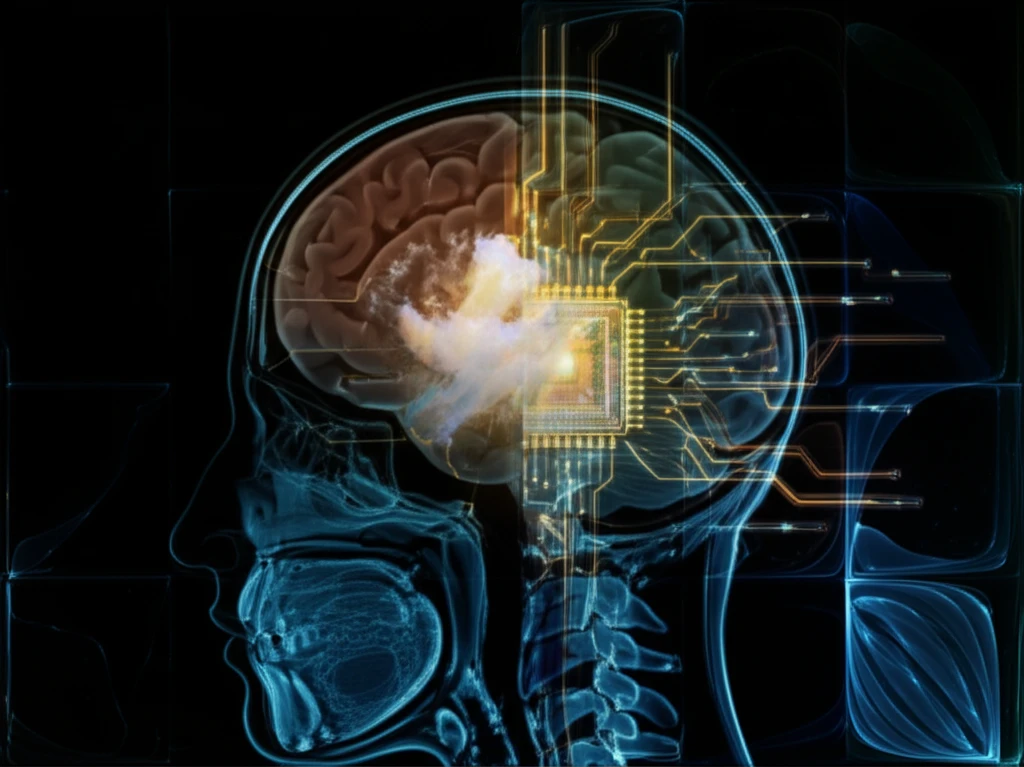
Revolutionizing Cancer Treatment: AI and Advanced Imaging

"Discover how AI and innovative imaging techniques are transforming cancer treatment, improving accuracy, and patient outcomes."
Cancer treatment is undergoing a revolutionary transformation, driven by advances in artificial intelligence (AI) and sophisticated imaging technologies. These innovations promise to enhance the accuracy, personalization, and effectiveness of cancer therapies, ultimately improving patient outcomes. This article delves into several cutting-edge studies presented at a recent oncology symposium, highlighting the impact of these technologies on various aspects of cancer care.
One of the focal points is the use of AI to refine dose calculations in radiation therapy. Traditional methods often involve time-consuming manual measurements, but AI algorithms can provide rapid and precise dose predictions, optimizing treatment plans. Furthermore, advanced imaging techniques like FDG-PET (Fluorodeoxyglucose Positron Emission Tomography) are being used to characterize tumor response and adapt treatment strategies accordingly.
This article will also cover recent progress in combining photodynamic therapy (PDT) with radiotherapy, utilizing novel approaches like Cerenkov-induced PDT to overcome the limitations of traditional light-based therapies. Additionally, we explore how single-isocenter dynamic conformal arc (SIDCA) techniques are improving the efficiency and accuracy of treating multiple brain metastases. By examining these pioneering studies, we gain insight into the future of cancer treatment and the potential to deliver more targeted and effective care.
Cancer's Growing Global Burden
The number of people living with a history of cancer in the United States continues to rise due to a growing and aging population alongside improvements in early detection and treatment that have extended survival. Approximately 40% of U.S. cancer patients receive radiation therapy as part of their treatment, underscoring its central role in oncology. Five-year survival rates vary dramatically by stage: localized cancers see approximately 66% five-year survival, compared to just 18% when disease has spread to distant sites. The global radiotherapy market was valued at $5.1 billion in 2022 and is projected to reach $13.0 billion by 2030, reflecting both the scale of demand and ongoing technological investment.
The Established Treatment Paradigm
Conventional cancer treatment has historically relied on three primary modalities: surgery, chemotherapy, and radiation therapy. While these approaches have significantly improved survival outcomes for many cancer types, each carries inherent limitations. Surgery may not be feasible for certain tumor locations or advanced-stage disease, chemotherapy often affects healthy cells alongside cancerous ones, and radiation therapy can cause damage to surrounding normal tissue. These constraints have driven the search for more precise and personalized treatment approaches that can improve efficacy while minimizing adverse effects on patients.
Centuries of Progress Against Cancer
The history of cancer research spans over 250 years of landmark discoveries, from the earliest written descriptions of tumors in ancient texts to the sophisticated molecular therapies used today. A pivotal moment came in 1895 with Wilhelm Röntgen's discovery of X-rays, which soon led to experiments showing that radiation exposure could produce therapeutic effects against cancerous tissue. This marked the beginning of radiation therapy as a treatment modality. Each subsequent milestone—from the development of chemotherapy agents to the advent of targeted therapies—has reflected a deepening understanding of cancer's biological complexity and a relentless pursuit of more effective treatments.
AI-Powered Precision: Revolutionizing Dose Calculation in Radiation Therapy
In radiation therapy, accurately calculating the radiation dose delivered to a tumor is crucial for effective treatment and minimizing damage to surrounding healthy tissues. Traditionally, this process involves time-consuming manual measurements using films or ion chambers. However, a groundbreaking study presented at a recent oncology symposium demonstrates the potential of artificial intelligence (AI) to revolutionize dose calculation, particularly for electron treatments with small and irregular fields.
- Enhanced Accuracy: The AI-powered method achieved an average relative absolute error of only 1.57% in predicting dose output factors, demonstrating superior accuracy compared to conventional methods.
- Time Savings: By automating dose calculation, the AI algorithms significantly reduce the time and effort required for treatment planning, allowing clinicians to focus on other critical aspects of patient care.
- Improved Treatment Efficacy: Accurate dose calculation ensures that the tumor receives the optimal radiation dose, maximizing treatment effectiveness and minimizing the risk of recurrence.
Emerging Frontiers in Cancer Research
Cancer research continues to advance at a rapid pace, with new findings emerging across multiple domains including immunotherapy, targeted molecular therapies, and precision medicine approaches. Recent investigations are exploring how artificial intelligence and advanced imaging technologies can enhance diagnostic accuracy and treatment planning. Researchers are increasingly focused on combination therapies that leverage the strengths of multiple treatment modalities to improve patient outcomes. While much of this work remains in early stages of clinical validation, the pace of discovery suggests that the treatment landscape will continue to evolve significantly in the coming years.
Limitations of Traditional Cancer Therapies
Despite their widespread use, traditional anti-cancer therapies face significant challenges that limit their effectiveness. Radiation therapy continues to grapple with precision issues and is inaccessible in some regions, while hormonal therapy frequently encounters resistance development and negatively impacts quality of life. A major concern across conventional treatments is the damage to normal tissue during and after therapy, with acute side effects including diarrhea, vomiting, and fatigue, alongside potential late adverse effects. These limitations highlight that ongoing efforts to improve and refine surgery, radiotherapy, chemotherapy, and hormonal therapy remain essential, even as newer approaches emerge.
Choosing the Right Treatment Path
Doctors consider multiple factors when recommending chemotherapy, radiation therapy, or both for cancer patients, including cancer type, stage, and how the tumor responds to each modality. For example, leukemia is often treated with chemotherapy, while early-stage prostate cancer may be treated with radiation therapy. Modern oncology has expanded beyond the traditional choice between surgery, chemotherapy, and radiation into a rapidly evolving ecosystem that includes precision medicine, immunotherapy, targeted therapy, antibody-drug conjugates, cellular therapies, and radiopharmaceuticals. This broader treatment landscape requires clinicians to carefully match therapeutic approaches to individual patient characteristics and tumor biology.
The Future of Cancer Therapy: Personalized, Precise, and Effective
The studies highlighted in this article represent a glimpse into the future of cancer therapy, where personalized, precise, and effective treatments are the norm. By harnessing the power of AI and innovative imaging techniques, clinicians can tailor treatment strategies to the unique characteristics of each patient's cancer, maximizing the chances of success and minimizing side effects. As research continues and these technologies become more widely adopted, the outlook for cancer patients will undoubtedly improve.
Integrating Innovation with Clinical Practice
The convergence of artificial intelligence, advanced imaging, and precision medicine is reshaping how clinicians approach cancer treatment. While traditional therapies remain foundational, emerging technologies offer the potential to enhance treatment accuracy, reduce side effects, and personalize care for each patient. The field is moving toward multimodal treatment strategies that combine established approaches with novel interventions, guided by increasingly sophisticated diagnostic and monitoring tools. As research continues to demonstrate the value of integrating these innovations, the oncology community faces both the opportunity and the responsibility to ensure that advances translate into meaningful improvements in patient outcomes across diverse populations.
The Next Era of Radiation Oncology
Future directions in radiobiology and clinical radiation oncology emphasize technologies with the potential to redefine treatment standards and promote equitable, effective cancer care globally. Trends presented at recent major conferences include radiomics, predictive models for tumor response, and the emerging application of radiation therapy for benign conditions alongside traditional cancer indications. The radiation oncology market continues to expand, encompassing a broad range of medical technologies, equipment, software, treatment systems, and services used to diagnose, plan, deliver, and monitor radiation-based treatment. These developments suggest that radiation oncology will play an increasingly central role in modern cancer care as both a primary treatment and adjuvant therapy.
Overcoming Barriers to Equitable Cancer Care
Despite remarkable advances in cancer treatment, significant systemic challenges persist in ensuring that innovations reach all patients who need them. Access to advanced therapies and cutting-edge technologies remains uneven across geographic regions and socioeconomic groups, creating disparities in outcomes. The complexity of modern treatment options requires substantial infrastructure, specialized expertise, and coordinated care systems that are not universally available. Addressing these broader challenges will be essential to realizing the full promise of AI and advanced imaging in revolutionizing cancer treatment for diverse patient populations worldwide.
Patient Experiences and Clinical Reality
Real-world data applications in oncology are proving valuable for evaluating patient characteristics and treatment effectiveness outside of controlled clinical trial settings. Clinical case studies reveal the complex decisions patients and physicians face, including situations where patients receive conflicting treatment recommendations from different doctors. These real-world experiences underscore the importance of personalized treatment planning and clear communication between healthcare providers and patients. Research evaluating the therapeutic efficacy and limitations of radiation therapy in specific contexts, such as breast cancer treatment, continues to inform clinical practice and guide evidence-based decision-making.