
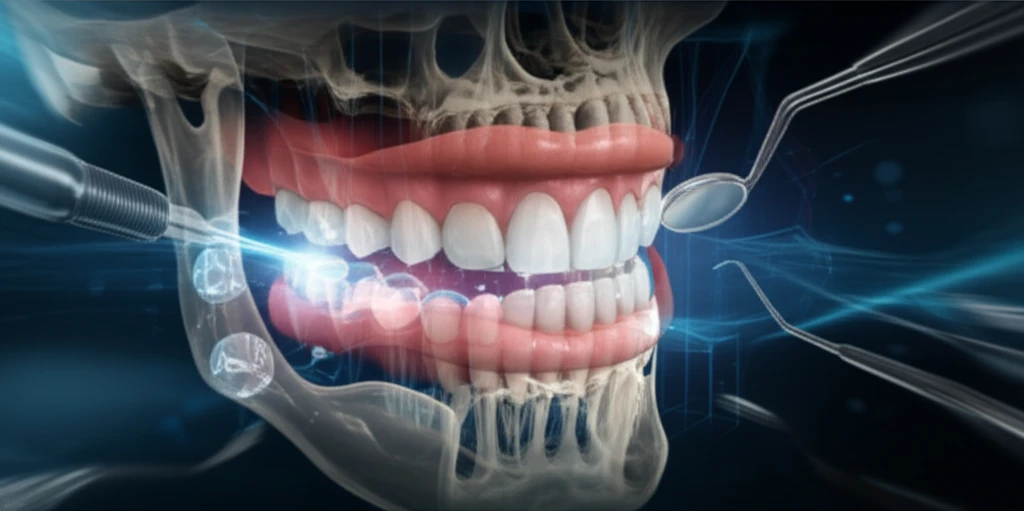
Illustration of a healthy smile, showcasing modern dental techniques used to treat gum disease and intrabony defects.

Reviving Your Smile: How Modern Dentistry Is Tackling Gum Disease and Bone Loss

"From Research to Reality: Understanding the Latest Treatments for Intrabony Defects and Achieving a Healthier, More Confident Smile"


It's time to rethink everything you thought you knew about gum disease. No longer a simple inconvenience, it's a serious issue that can lead to tooth loss, impacting not just your smile but your overall health. But here's the good news: modern dentistry is stepping up, armed with innovative treatments that are transforming the way we approach this common problem. This article delves into the promising world of these advancements, focusing on the latest research and practical applications to help you understand how you can achieve a healthier, more confident smile.

One of the biggest challenges in treating gum disease is addressing the bone loss that often accompanies it. Known as intrabony defects, these pockets of bone deterioration require specialized care. Fortunately, recent studies have focused on groundbreaking techniques, including the use of demineralized freeze-dried bone allografts (DFDBA) and other regenerative methods. This article will guide you through these advancements, offering a clear understanding of how they work and the potential benefits they offer.

Whether you're just starting to explore your options or have been struggling with gum disease for a while, this article is your resource. We'll translate the science behind these treatments into an easy-to-understand format, exploring the latest studies, practical applications, and what you can expect. By the end, you'll have a clearer picture of how modern dentistry is helping people reclaim their smiles and improve their oral health.

Unpacking Intrabony Defects: The Root of the Problem

Illustration of a healthy smile, showcasing modern dental techniques used to treat gum disease and intrabony defects.

Intrabony defects are essentially pockets or voids that form in the bone surrounding your teeth. They're a common consequence of advanced gum disease, where the infection erodes the bone that supports your teeth. These defects create areas where bacteria can thrive, making it harder for your body to heal and maintain healthy teeth. The severity of these defects can vary, but they all pose a threat to the long-term stability of your teeth.

To fully grasp the problem, it's essential to understand the anatomy involved. Your teeth are anchored in the jawbone, which is covered by the gums. When gum disease progresses, it inflames the gums and damages the bone. This process creates a space between the tooth and the bone, forming the intrabony defect. Left untreated, these defects can worsen, leading to tooth mobility and, eventually, tooth loss. Early detection and treatment are vital to prevent these outcomes.

  • Gum Disease: The primary culprit, causing inflammation and bone erosion.
  • Bacterial Infection: Thriving in the defects, hindering healing and worsening the condition.
  • Tooth Instability: Leading to tooth movement and, eventually, tooth loss if left untreated.
Identifying the source and mechanics of intrabony defects is the first move to effective treatment. Understanding these underlying elements allows dentists to develop and implement solutions to restore bone and protect teeth.

A Brighter, Healthier Smile: The Future of Gum Disease Treatment

The advancements in dental care, particularly in treating intrabony defects, are truly encouraging. With treatments like DFDBA and regenerative techniques, people now have more options than ever to combat gum disease and preserve their smiles. As research continues and technology evolves, we can expect even more sophisticated and effective methods to emerge. The key is staying informed, working closely with your dentist, and taking a proactive approach to your oral health. A healthy, confident smile is within reach, and the future of dental care looks brighter than ever.

About this Article -

This article was crafted using a human-AI hybrid and collaborative approach. AI assisted our team with initial drafting, research insights, identifying key questions, and image generation. Our human editors guided topic selection, defined the angle, structured the content, ensured factual accuracy and relevance, refined the tone, and conducted thorough editing to deliver helpful, high-quality information.See our About page for more information.

Everything You Need To Know

1

What are intrabony defects and why are they a concern in treating gum disease?

Intrabony defects are pockets of bone deterioration that form around teeth as a result of advanced gum disease. These defects create spaces where bacteria can thrive, hindering healing and threatening the long-term stability of teeth. They undermine the support structure of teeth, potentially leading to tooth mobility and eventual tooth loss if left untreated. Effective treatment strategies address these defects to restore bone and protect teeth.

2

How do demineralized freeze-dried bone allografts (DFDBA) help in treating bone loss due to gum disease?

Demineralized freeze-dried bone allografts (DFDBA) are used in regenerative dental procedures to restore bone lost due to gum disease. DFDBA involves transplanting bone material to the site of the intrabony defect, providing a scaffold for new bone growth. This process helps to fill the defect, restore support to the tooth, and improve overall oral health. The use of DFDBA is one of the modern dentistry approaches, offering a promising solution for those struggling with bone loss.

3

Besides DFDBA, what other regenerative techniques are being explored for treating intrabony defects?

While demineralized freeze-dried bone allografts (DFDBA) are a notable treatment, other regenerative methods are also being explored to treat intrabony defects. These techniques aim to stimulate bone regeneration and improve the overall outcome of gum disease treatment. The specific methods used can vary, but the goal is to encourage the body's natural healing processes to restore lost bone and support tooth stability. Further research and advancements in dental technology continue to bring new and effective regenerative options.

4

How does understanding the anatomy of teeth and gums help in addressing intrabony defects?

Understanding the anatomy of teeth and gums is essential in addressing intrabony defects because these defects occur in the bone surrounding the teeth, beneath the gums. When gum disease progresses, it inflames the gums and damages the supporting bone, creating pockets or voids. Knowing the structure and relationship between the teeth, gums, and bone allows dentists to target treatment effectively, aiming to restore bone support and prevent further deterioration. This knowledge is crucial for early detection and appropriate treatment strategies.

5

What is the relationship between gum disease and bacterial infection in the development of intrabony defects, and why is this significant for treatment?

Gum disease initiates a cycle of inflammation and bone erosion, which leads to the formation of intrabony defects, where bacterial infection thrives. The presence of bacteria within these defects hinders the natural healing process, worsening the condition and potentially leading to further bone loss and tooth instability. This cycle is significant for treatment because controlling the bacterial infection is crucial for effective healing. Treatment strategies often combine techniques to eliminate bacteria, reduce inflammation, and promote bone regeneration to address both the cause and the effect of intrabony defects.

Newsletter Subscribe

Subscribe to get the latest articles and insights directly in your inbox.