
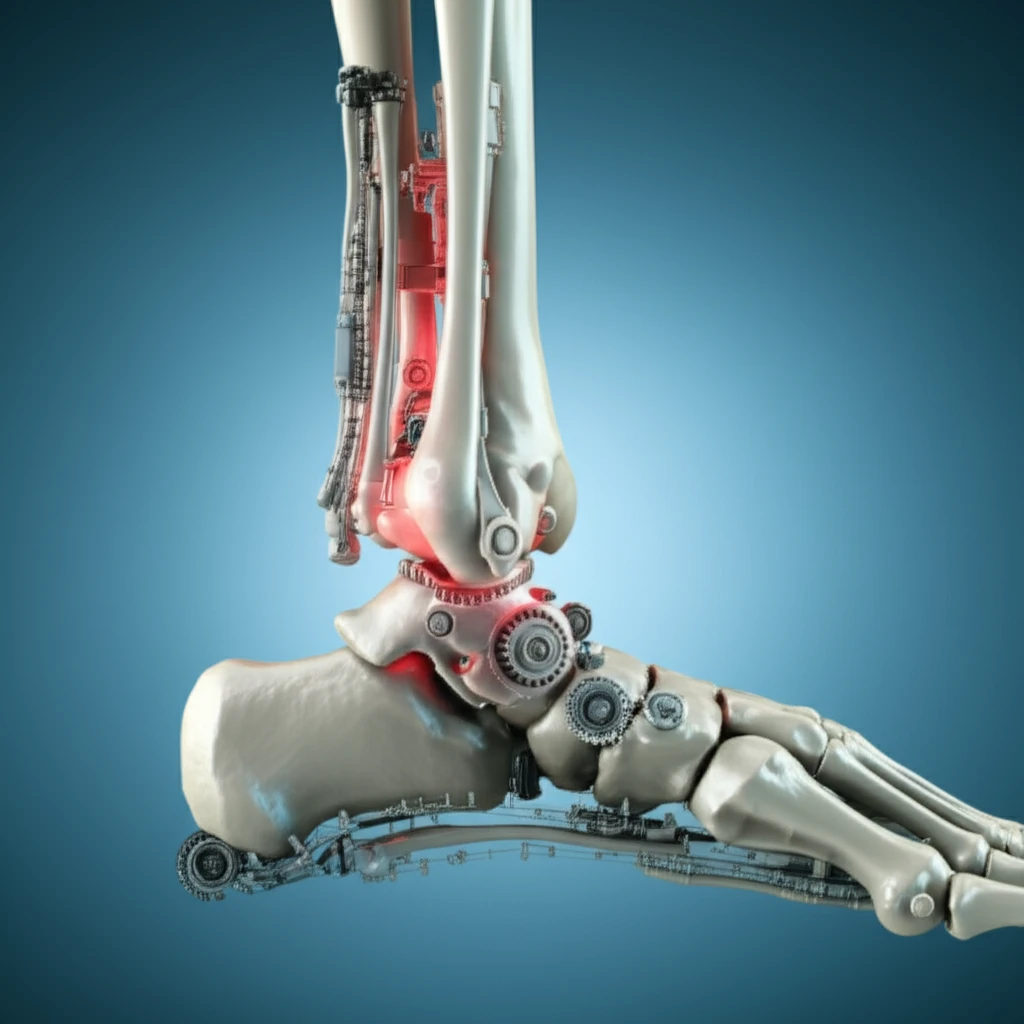
Revision Total Ankle Arthroplasty: What You Need to Know

"Navigating the complexities of revision total ankle arthroplasty (TAA) with expert insights and practical advice."
Total ankle arthroplasty (TAA) has evolved significantly over the past two decades, offering improved implant designs, materials, and surgical techniques that lead to better functional outcomes. However, like any joint replacement, it comes with complications that may require revision surgery. Knowing what to expect and how to prepare is key to a successful outcome.
Revision TAA, while less common than primary TAA, is a complex procedure that demands experienced surgeons and careful planning. It addresses issues ranging from implant loosening and infection to fractures and alignment problems. Understanding the principles and potential pitfalls of revision TAA can help patients and their families make informed decisions and manage expectations.
This article breaks down the key aspects of revision TAA, drawing from the latest research and expert insights. Whether you're exploring treatment options or seeking guidance on recovery, this resource aims to provide you with a clear and reassuring overview of the process.
Why Revision TAA Might Be Necessary
Several factors can lead to the need for revision TAA. Glazebrook and colleagues identified nine main complications in their literature review, which can be categorized from less to more severe. These include intraoperative fractures, postoperative fractures, and wound healing problems. Technical errors, subsidence (sinking of the implant), and postoperative fractures are considered medium-grade issues that can lead to failure.
- Intraoperative Fracture: Bone breaks during the initial surgery.
- Postoperative Fracture: Fractures occurring after the surgery.
- Wound Healing Problems: Issues with the surgical incision healing properly.
- Technical Error: Mistakes made during the surgical procedure.
- Subsidence: Sinking or settling of the implant over time.
- Deep Infection: Infection around the implant.
- Aseptic Loosening: Loosening of the implant without infection.
- Implant Failure: Breakdown or malfunction of the implant.
Taking the Next Steps
Understanding revision TAA empowers you to make informed decisions about your care. By recognizing potential complications, knowing the goals of revision surgery, and actively participating in your treatment plan, you can work towards a more stable, functional, and pain-free ankle. Remember to consult with your healthcare provider for personalized advice and to address any specific concerns you may have.