
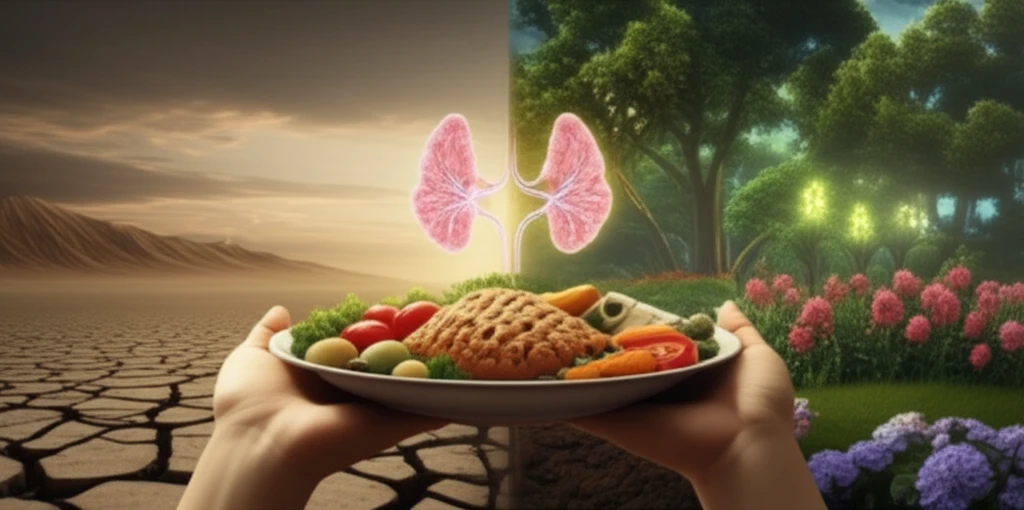
Surreal illustration of a landscape transforming from barren to lush as nutrition reverses malnutrition's effects on salivary glands.

Reversing Malnutrition: Can a Normal Diet Restore Salivary Gland Health?

"New research explores how switching back to a balanced diet can undo the damage of kwashiorkor on salivary glands, offering hope for improved oral health."


Saliva is essential for maintaining oral health, playing a crucial role in everything from lubricating the mouth and cleansing teeth to fighting bacteria and aiding digestion. When salivary glands don't function properly, it can lead to a host of problems, underscoring the importance of understanding what factors can disrupt their delicate balance.

Malnutrition, particularly kwashiorkor, a severe protein deficiency, has long been known to impair salivary secretion. Kwashiorkor not only affects overall health but also significantly impacts the function of salivary glands, leading to reduced saliva production and altered composition. Understanding the mechanisms behind this is crucial for developing effective interventions.

Recent research sheds light on the potential for recovery. A new study investigates whether returning to a normal diet after kwashiorkor can reverse the damage to salivary glands. By examining the impact of dietary changes on key factors like nitric oxide levels and aquaporin 5 expression, this research offers hope for restoring salivary function and improving oral health in those affected by malnutrition.

The Science of Saliva Recovery: How Diet Impacts Glandular Function

Surreal illustration of a landscape transforming from barren to lush as nutrition reverses malnutrition's effects on salivary glands.

The study, conducted on weaning rats, divided subjects into three groups: a control group with a standard diet, a kwashiorkor group fed a low-protein diet (2%), and a re-fed kwashiorkor group initially on the low-protein diet but later switched to a standard diet. Researchers then analyzed saliva and tissue samples to assess various parameters related to salivary gland function.

Key measurements included:

  • Total protein levels
  • Electrolyte concentrations
  • Amylase and IgA secretion rates
  • Leptin and ghrelin levels
  • Nitric oxide levels and expressions of Na+/K+-ATPase, muscarinic (M3) receptor, and aquaporin 5 in submandibular glands
The results revealed that rats re-fed with a normal diet experienced significant improvements in salivary function compared to the kwashiorkor group. This included reduced salivary lag-time and potassium levels, alongside increased flow rate, sodium, amylase, IgA secretion, and leptin levels. Notably, there was a significant increase in submandibular nitric oxide levels and aquaporin 5 expression in the re-fed group.

Restoring Oral Health: The Power of Nutrition

This study highlights the potential for reversing the damaging effects of malnutrition on salivary gland function through dietary intervention. By demonstrating that a normal diet can restore nitric oxide levels and aquaporin 5 expression, the research provides a promising avenue for improving oral health in individuals affected by kwashiorkor.

The findings underscore the critical role of adequate nutrition in maintaining overall health, particularly the health of salivary glands and their ability to produce saliva. Addressing malnutrition with appropriate dietary strategies can have a significant positive impact on oral health outcomes.

While this research offers valuable insights, further studies are needed to fully elucidate the mechanisms involved and to explore the long-term effects of dietary interventions on salivary gland function. Nonetheless, this study provides a foundation for future research and potential therapeutic strategies aimed at restoring oral health in individuals recovering from malnutrition.

About this Article -

This article was crafted using a human-AI hybrid and collaborative approach. AI assisted our team with initial drafting, research insights, identifying key questions, and image generation. Our human editors guided topic selection, defined the angle, structured the content, ensured factual accuracy and relevance, refined the tone, and conducted thorough editing to deliver helpful, high-quality information.See our About page for more information.

This article is based on research published under:

DOI-LINK: 10.1139/apnm-2018-0282, Alternate LINK

Title: Switching To Normal Diet Reverses Kwashiorkor-Induced Salivary Impairments Via Increased Nitric Oxide Level And Expression Of Aquaporin 5 In The Submandibular Glands Of Male Wistar Rats

Subject: Physiology (medical)

Journal: Applied Physiology, Nutrition, and Metabolism

Publisher: Canadian Science Publishing

Authors: Taye Jemilat Lasisi, Shehu Tijani Shittu, Akinola Rasak Alada

Published: 2019-04-01

Everything You Need To Know

1

How does kwashiorkor affect salivary glands and what are the consequences?

Kwashiorkor, a severe protein deficiency, significantly impairs salivary secretion by affecting the function of salivary glands. This leads to reduced saliva production and altered saliva composition, impacting oral health and digestion. The impaired function disrupts the delicate balance maintained by saliva, crucial for lubricating the mouth, cleansing teeth, and fighting bacteria.

2

What key measurements were analyzed in the study to assess salivary gland function?

The study examined total protein levels, electrolyte concentrations, amylase and IgA secretion rates, leptin and ghrelin levels, nitric oxide levels, and expressions of Na+/K+-ATPase, muscarinic (M3) receptor, and aquaporin 5 in submandibular glands. These measurements provided a comprehensive view of how dietary changes impact various aspects of salivary gland function.

3

According to this research, how does a normal diet help restore salivary gland function after kwashiorkor?

The research indicates that a normal diet can restore nitric oxide levels and aquaporin 5 expression in the submandibular glands of individuals previously affected by kwashiorkor. This restoration leads to improved salivary function, including increased saliva flow rate and improved electrolyte balance. This suggests that nutritional interventions can play a vital role in reversing the damage caused by malnutrition.

4

What specific improvements in salivary function were observed in the rats that were re-fed with a normal diet?

The study showed that rats re-fed with a normal diet experienced reduced salivary lag-time and potassium levels, along with increased flow rate, sodium, amylase, IgA secretion, and leptin levels. There was also a notable increase in submandibular nitric oxide levels and aquaporin 5 expression, indicating a significant recovery in salivary gland function.

5

Besides nitric oxide and aquaporin 5, what other factors related to salivary gland function could be explored in future research?

While this study focused on nitric oxide and aquaporin 5, future research could explore the long-term effects of malnutrition on the expression of Na+/K+-ATPase and muscarinic (M3) receptors within salivary glands. Further investigation into how other nutrients and dietary components influence salivary gland recovery could also enhance our understanding and improve therapeutic strategies for malnutrition-related salivary dysfunction. This would provide a more holistic view of salivary gland restoration.

Newsletter Subscribe

Subscribe to get the latest articles and insights directly in your inbox.