
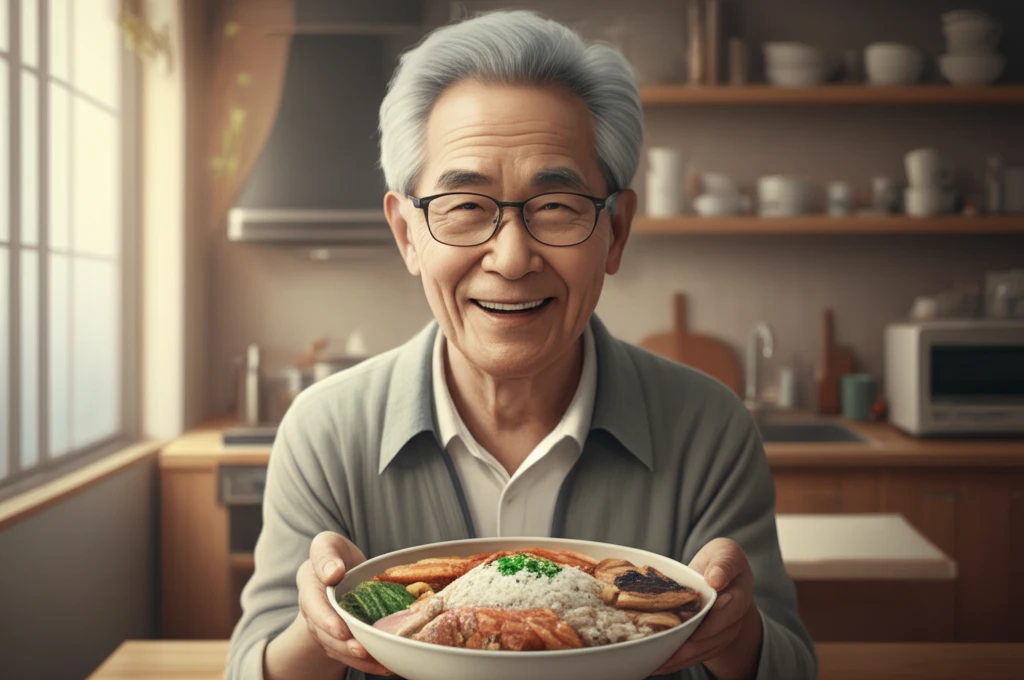
Korean Senior with Balanced Meal

Rethinking Portion Sizes: A Guide to Healthy Eating for Korean Seniors

"Discover how understanding appropriate portion sizes can significantly improve the health and well-being of older adults in Korea."


As we age, our nutritional needs evolve, making it crucial to understand what constitutes a healthy diet. For the elderly, maintaining a balanced intake is essential for preventing chronic diseases and promoting overall well-being. With an aging population, health awareness is growing as well as interest in nutritional values of food, particularly among elderly individuals.

One of the most effective ways to ensure adequate nutrition is by focusing on appropriate portion sizes. However, what exactly defines a 'portion size' can be confusing. While food composition tables provide detailed nutritional information, they often express values per 100 grams, requiring some calculation to match actual intake. The need for accessible and easy-to-understand information has led to the development of consumer-friendly resources.

In Korea, a recent study leveraging data from the Korea National Health and Nutrition Examination Survey (KNHANES IV-2) sheds light on the portion sizes of foods frequently consumed by Korean seniors. This article will explore the findings of this study, offering practical guidance on how to apply this knowledge to your daily diet.

Why Portion Size Matters for Senior Health

Korean Senior with Balanced Meal

Portion control is vital for several reasons, especially as we age. As metabolism slows down and physical activity often decreases, managing calorie intake becomes essential to prevent weight gain and related health issues. Moreover, understanding appropriate portion sizes helps ensure that we receive a balanced intake of essential nutrients, supporting overall health and preventing deficiencies.

The study we’re discussing collected data from 1,458 individuals aged 65 and over. Researchers analyzed the frequency with which certain foods were consumed and determined the median portion size for each item based on a single intake. Here's a breakdown of some key findings:

  • Cereals: The most frequently consumed item was well-polished rice, with a portion size of 75g.
  • Legumes: Dried black soybeans were commonly consumed, with a portion size of 6g.
  • Vegetables: Garlic was the most frequently consumed vegetable, with a small portion size of 5g.
  • Meats: Pork loin was a popular choice, with a portion size of 30g.
  • Fish and Shellfish: Dried and boiled large anchovy were frequently consumed, with a portion size of just 2g.
These figures provide a valuable baseline for understanding typical eating habits among Korean seniors. However, it's important to remember that individual needs may vary based on factors such as activity level, health conditions, and personal preferences.

Making Informed Choices for a Healthier Future

Understanding appropriate portion sizes is a crucial step toward promoting healthier eating habits for Korean seniors. By using the data from studies like KNHANES IV-2, individuals and their caregivers can make informed choices about food intake. This knowledge empowers you to plan balanced meals, prevent nutritional deficiencies, and manage overall health more effectively. Remember to consult with healthcare professionals or registered dietitians for personalized advice tailored to your unique needs and health conditions. With the right information and support, you can take proactive steps toward a healthier and more vibrant future.

About this Article -

This article was crafted using a human-AI hybrid and collaborative approach. AI assisted our team with initial drafting, research insights, identifying key questions, and image generation. Our human editors guided topic selection, defined the angle, structured the content, ensured factual accuracy and relevance, refined the tone, and conducted thorough editing to deliver helpful, high-quality information.See our About page for more information.

This article is based on research published under:

DOI-LINK: 10.4162/nrp.2011.5.6.553, Alternate LINK

Title: Portion Sizes Of Foods Frequently Consumed By The Korean Elderly: Data From Knhanes Iv-2

Subject: Nutrition and Dietetics

Journal: Nutrition Research and Practice

Publisher: The Korean Nutrition Society and The Korean Society of Community Nutrition

Authors: Sook-Bae Kim, Soon-Kyung Kim, Se-Na Kim, So-Young Kim, Young-Sook Cho, Mi-Hyun Kim

Published: 2011-01-01

Everything You Need To Know

1

What is the significance of portion control for the health of Korean seniors?

Portion control is critical for the health of Korean seniors because as we age, metabolism slows down and physical activity often decreases. Managing calorie intake becomes essential to prevent weight gain and related health issues. Moreover, understanding appropriate portion sizes helps ensure a balanced intake of essential nutrients, supporting overall health and preventing deficiencies. It is a proactive measure to prevent chronic diseases and promote overall well-being among the elderly population.

2

How does the KNHANES IV-2 study inform dietary choices for Korean seniors?

The KNHANES IV-2 study provides valuable data on the typical portion sizes of foods commonly consumed by Korean seniors. It offers insights into the frequency of consumption and median portion sizes for items such as cereals (e.g., well-polished rice at 75g), legumes (e.g., dried black soybeans at 6g), vegetables (e.g., garlic at 5g), meats (e.g., pork loin at 30g), and fish/shellfish (e.g., dried and boiled large anchovy at 2g). By leveraging this data, Korean seniors and their caregivers can make informed decisions about food intake, plan balanced meals, and prevent nutritional deficiencies.

3

What are some examples of portion sizes for commonly consumed foods among Korean seniors, according to the study?

The study provides specific examples of portion sizes for several food categories. For cereals, well-polished rice had a portion size of 75g. Dried black soybeans represented a 6g portion for legumes. Garlic, a commonly consumed vegetable, had a small portion size of 5g. Pork loin, from the meat category, was measured at 30g. Lastly, the frequently consumed dried and boiled large anchovy was found to have a portion size of just 2g. These measurements provide a baseline for understanding typical eating habits.

4

Why is understanding portion sizes more important for Korean seniors compared to younger adults?

Understanding portion sizes is particularly crucial for Korean seniors because of the physiological changes associated with aging. As people age, their metabolism slows down, and they often experience a decrease in physical activity. This means that seniors require fewer calories than younger adults to maintain a healthy weight. Consuming larger portions than necessary can lead to weight gain, increasing the risk of chronic diseases. Knowing and adhering to appropriate portion sizes helps Korean seniors manage their calorie intake effectively, ensuring they receive adequate nutrients without overeating.

5

Beyond the KNHANES IV-2 data, what other considerations should Korean seniors keep in mind when planning their meals?

While the KNHANES IV-2 data offers valuable insights, Korean seniors should consider individual needs, which may vary based on activity level, health conditions, and personal preferences. Consulting with healthcare professionals or registered dietitians for personalized advice tailored to unique needs and health conditions is recommended. Factors like existing health issues, such as diabetes or heart disease, will influence dietary requirements. Also, seniors should focus on creating balanced meals that include a variety of foods from different food groups to ensure a wide range of nutrients. It is essential to focus on overall health and well-being.

Newsletter Subscribe

Subscribe to get the latest articles and insights directly in your inbox.