
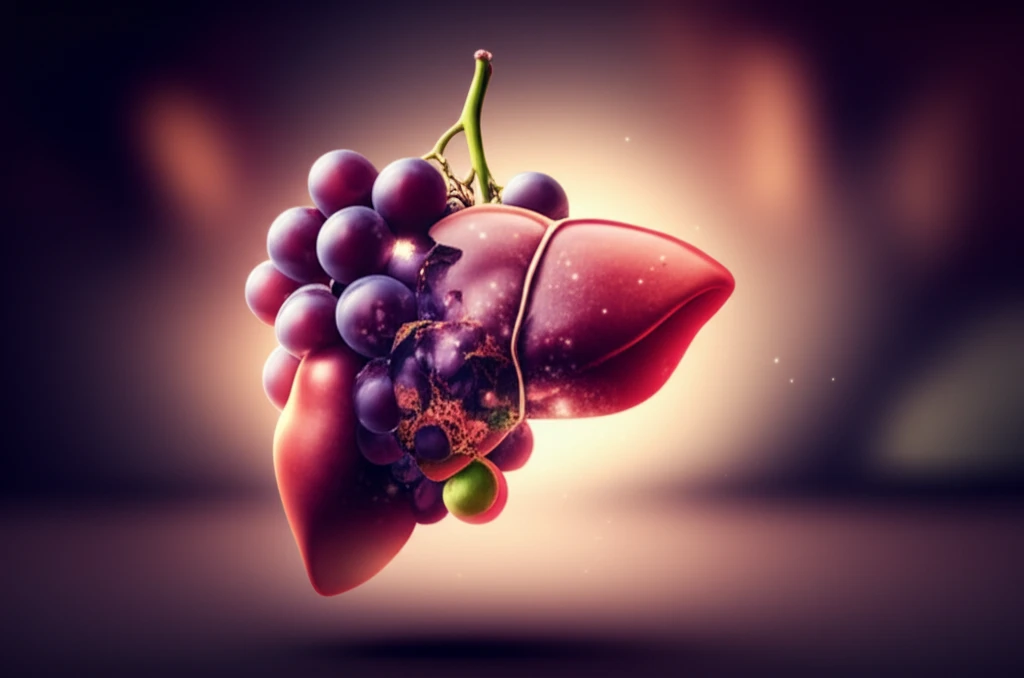
Grapes Transforming into a Healthy Liver

Resveratrol: Can This Grape Extract Really Help You Beat Obesity and Boost Liver Health?

"Discover the surprising potential of resveratrol, a natural compound found in grapes, to combat obesity and improve liver function. Learn what the latest research reveals about its effects on weight management and overall health."


Obesity, characterized by excessive body fat, arises from an imbalance between high caloric intake and insufficient energy expenditure. Globally, obesity rates have surged, affecting adults and increasingly impacting children and even pets. This escalating prevalence highlights obesity as a significant public health challenge.

Obesity can lead to significant health issues, including diabetes, cardiovascular problems, and hypertension. It is also associated with metabolic syndrome and nonalcoholic fatty liver disease (NAFLD), increasing the risk of hepatic fibrosis.

Resveratrol, a polyphenol found in grapes and red wine, has garnered attention for its potential health benefits. Known for its antioxidant, anti-inflammatory, and lipolytic properties, resveratrol may aid obese individuals and those with liver problems. This article explores how resveratrol affects liver function and lipid profiles, offering insights into its therapeutic possibilities.

Resveratrol and Its Effects on Liver Function

Grapes Transforming into a Healthy Liver

A study was conducted on female Wistar rats fed a high-fat diet to induce obesity. Sixty-four rats were divided into four groups: a control group (C), a control obese group (CO), a resveratrol group (R), and a resveratrol obese group (RO). The resveratrol groups received a daily dose of resveratrol for six weeks.

The study evaluated various parameters, including body weight, liver weight, lipid profiles, and liver enzyme levels. Histopathological analysis of the liver was also performed to assess the degree of steatosis (fatty liver).

  • Weight Management: Resveratrol did not induce weight loss or reduce the lipid profile.
  • Liver Enzymes: Resveratrol decreased levels of the liver enzymes aspartate aminotransferase (AST) and alkaline phosphatase (ALP).
  • Steatosis Reduction: Resveratrol reduced the incidence of steatosis in the resveratrol obese group (RO) compared to the control obese group (CO).
The findings suggest that resveratrol supplementation for six weeks can positively influence liver function in obese female rats by reducing hepatic steatosis and lowering AST and ALP levels. These results indicate a potential for resveratrol in managing liver health, although further research is needed to fully understand its mechanisms and long-term effects.

The Future of Resveratrol Research

While this study provides valuable insights, additional research is necessary to fully elucidate the effects of resveratrol on liver health and obesity. Future studies should explore long-term impacts, optimal dosages, and potential benefits in humans. Combining resveratrol supplementation with physical exercise may also offer enhanced results for both lean and obese individuals. As we continue to investigate this natural compound, we move closer to unlocking its full potential for improving metabolic health.

About this Article -

This article was crafted using a human-AI hybrid and collaborative approach. AI assisted our team with initial drafting, research insights, identifying key questions, and image generation. Our human editors guided topic selection, defined the angle, structured the content, ensured factual accuracy and relevance, refined the tone, and conducted thorough editing to deliver helpful, high-quality information.See our About page for more information.

This article is based on research published under:

DOI-LINK: 10.1590/1089-6891v17i332990, Alternate LINK

Title: Effects Of Resveratrol On Liver Function Of Obese Female Wistar Rats

Subject: General Veterinary

Journal: Ciência Animal Brasileira

Publisher: FapUNIFESP (SciELO)

Authors: Nádia Araújo Miguel, Silvia Franco Andrade, Gisele Nai, Cecília Braga Laposy, Felipe Franco Nascimento, Heloise Rangel Dinallo, Alessandra Melchert

Published: 2016-09-01

Everything You Need To Know

1

What is obesity and why is it a significant health concern?

Obesity is characterized by an excessive accumulation of body fat, which results from an imbalance between high caloric intake and insufficient energy expenditure. It's a significant public health challenge due to its rising global prevalence and its association with severe health issues like diabetes, cardiovascular problems, and hypertension. These conditions, along with metabolic syndrome and nonalcoholic fatty liver disease (NAFLD), significantly increase the risk of hepatic fibrosis. Therefore, understanding and addressing obesity is crucial for overall health.

2

What is Resveratrol and what potential benefits does it offer?

Resveratrol is a polyphenol found in grapes and red wine, known for its antioxidant, anti-inflammatory, and lipolytic properties. These properties suggest it could potentially benefit obese individuals and those with liver problems. The study explores how Resveratrol affects liver function and lipid profiles. The study used a controlled experiment on female Wistar rats, dividing them into control, control obese, Resveratrol, and Resveratrol obese groups to assess the effects of Resveratrol on weight management, liver enzymes, and steatosis reduction. The results are an important step in exploring the compound's potential therapeutic applications.

3

What were the key findings of the study on Resveratrol?

The study found that Resveratrol did not induce weight loss or reduce the lipid profile in the subjects. However, it did show a positive impact on liver health. Resveratrol decreased levels of liver enzymes, specifically aspartate aminotransferase (AST) and alkaline phosphatase (ALP). Additionally, Resveratrol reduced the incidence of steatosis (fatty liver) in the Resveratrol obese group compared to the control obese group. These findings suggest a positive influence on liver function in obese female rats.

4

What is steatosis and why is Resveratrol's impact on it significant?

Steatosis, or fatty liver, refers to the accumulation of fat within the liver cells. This condition is a key feature of nonalcoholic fatty liver disease (NAFLD), which is often linked to obesity and metabolic syndrome. Resveratrol's ability to reduce steatosis, as observed in the Resveratrol obese group, is significant because it indicates a potential for improving liver health and mitigating the progression of NAFLD. By reducing hepatic steatosis, Resveratrol may help prevent the development of hepatic fibrosis and improve overall liver function.

5

What are the next steps for Resveratrol research?

While the initial study provides encouraging results regarding the effects of Resveratrol on liver function, particularly in reducing steatosis and lowering liver enzyme levels, the full potential of Resveratrol remains under investigation. Future research should focus on long-term effects, optimal dosages, and the impact on human health. Combining Resveratrol supplementation with physical exercise might offer enhanced results. Further exploration will help understand the mechanisms and long-term effects of this natural compound, moving us closer to unlocking its full potential for improving metabolic health.

Newsletter Subscribe

Subscribe to get the latest articles and insights directly in your inbox.