
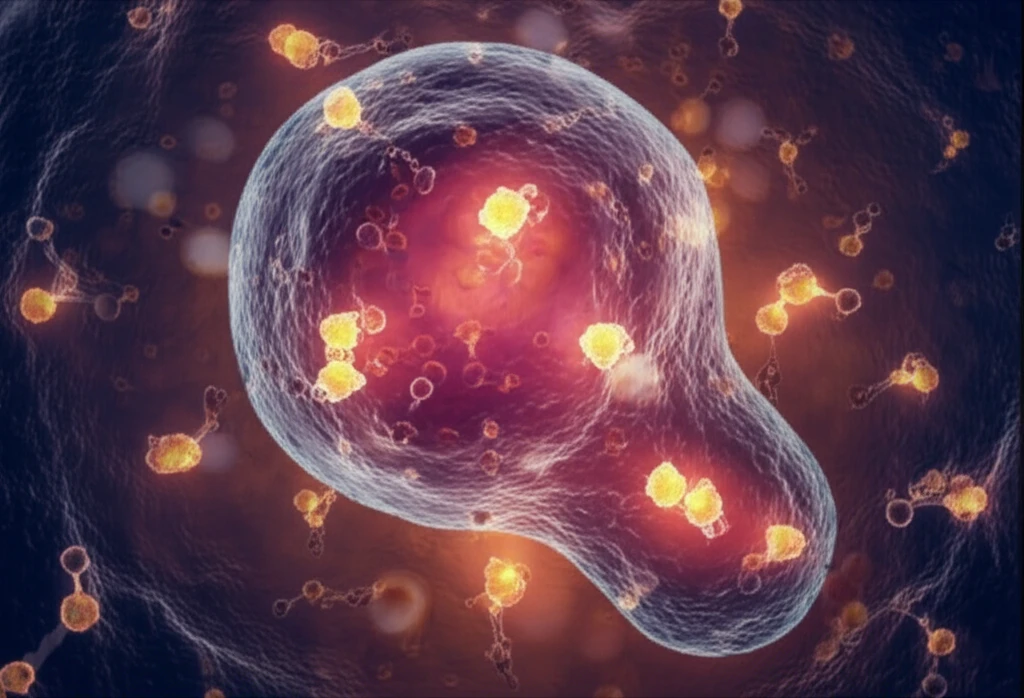
Illustration depicting resibufogenin attacking pancreatic cancer cells.

Resibufogenin: A Potential Breakthrough in Pancreatic Cancer Treatment?

"New Research Reveals How a Natural Compound Might Fight Back Against This Deadly Disease."


Pancreatic cancer is one of the deadliest forms of cancer, with a five-year survival rate that remains stubbornly low. The disease's aggressive nature and resistance to conventional treatments make it a formidable foe. Yet, a new study offers a glimmer of hope. Researchers have been investigating resibufogenin (RB), a compound derived from traditional Chinese medicine, and their findings are incredibly promising.

This research, published in the journal Cancer Science, uncovers a novel mechanism by which resibufogenin suppresses pancreatic cancer cell growth. The compound targets specific pathways within cancer cells, leading to cell death and reduced tumor growth. The implications of this study are significant, potentially paving the way for new, more effective treatments for this challenging disease.

This article delves into the specifics of the study, exploring the compound's effects and the underlying molecular mechanisms. We'll examine how resibufogenin works, its potential benefits, and what this means for the future of pancreatic cancer treatment. It is a promising step forward in the fight against a disease that desperately needs innovative solutions.

How Resibufogenin Fights Pancreatic Cancer: A Deep Dive

Illustration depicting resibufogenin attacking pancreatic cancer cells.

The study's findings are based on laboratory experiments using human pancreatic cancer cells and mouse models. The researchers discovered that resibufogenin effectively inhibits the growth and proliferation of these cancer cells. It achieves this by triggering a process called apoptosis, also known as programmed cell death. This is a crucial step in fighting cancer, as it eliminates the harmful cells without damaging surrounding healthy tissues.

Resibufogenin’s action involves multiple pathways within the cancer cells. One key aspect is its ability to suppress the activity of transforming growth factor-β-activated kinase 1 (TAK1). TAK1 is a protein that often promotes cancer cell survival and growth. The compound also disrupts the nuclear factor-κB (NF-κB) pathway, another critical player in cancer development. By inhibiting these pathways, resibufogenin can effectively shut down the mechanisms that allow cancer cells to thrive. Furthermore, the research indicates that the effect of RB is PKC (protein kinase C)-dependent.

  • Apoptosis Induction: Resibufogenin triggers programmed cell death in pancreatic cancer cells.
  • TAK1 Inhibition: It suppresses the activity of TAK1, a protein that promotes cancer cell growth.
  • NF-κB Pathway Disruption: Resibufogenin interferes with the NF-κB pathway, which is often overactive in cancer cells.
  • GSK-3 Activity Inhibition: Through protein kinase C (PKC), Resibufogenin inhibits the activity of GSK-3 (glycogen synthase kinase-3).
In addition to its effects on cancer cells in the laboratory, the study also demonstrated the compound's effectiveness in vivo. The researchers used mouse models with pancreatic cancer tumors to test resibufogenin's impact. The results were striking: mice treated with resibufogenin showed significantly reduced tumor growth compared to the control group. These findings suggest that resibufogenin could be a potent agent for fighting pancreatic cancer in humans, however, further research is needed.

The Road Ahead: What This Research Means for the Future

The discovery of resibufogenin's potential to combat pancreatic cancer is a significant advancement. This research provides a strong foundation for future studies and clinical trials. If further research confirms these findings, resibufogenin could become a vital tool in the fight against this devastating disease. As the scientific community continues to explore the potential of resibufogenin, there is renewed hope for patients and their families battling pancreatic cancer.

About this Article -

This article was crafted using a human-AI hybrid and collaborative approach. AI assisted our team with initial drafting, research insights, identifying key questions, and image generation. Our human editors guided topic selection, defined the angle, structured the content, ensured factual accuracy and relevance, refined the tone, and conducted thorough editing to deliver helpful, high-quality information.See our About page for more information.

Everything You Need To Know

1

What is resibufogenin, and why is it being researched for pancreatic cancer treatment?

Resibufogenin (RB) is a compound derived from traditional Chinese medicine. It's being researched because studies have shown it can suppress pancreatic cancer cell growth by targeting specific pathways within cancer cells, leading to cell death and reduced tumor growth. This offers a potential new approach to treating a disease known for its resistance to conventional treatments. While the research highlights promising results, other compounds and treatments exist that also show effectiveness. The novelty of resibufogenin lies in its unique mechanism of action and origin.

2

How does resibufogenin specifically work to fight pancreatic cancer at a cellular level?

Resibufogenin combats pancreatic cancer by triggering apoptosis (programmed cell death) in cancer cells. It also inhibits the activity of transforming growth factor-β-activated kinase 1 (TAK1), a protein promoting cancer cell survival and growth, and disrupts the nuclear factor-κB (NF-κB) pathway, which is crucial in cancer development. Furthermore, resibufogenin inhibits the activity of GSK-3 (glycogen synthase kinase-3) through protein kinase C (PKC). By targeting these pathways, resibufogenin effectively shuts down mechanisms that allow cancer cells to thrive. Understanding these mechanisms is crucial for developing targeted therapies.

3

What were the key findings of the study involving resibufogenin and pancreatic cancer?

The key findings revealed that resibufogenin effectively inhibits the growth and proliferation of pancreatic cancer cells by triggering apoptosis and interfering with vital pathways. In mouse models with pancreatic cancer tumors, treatment with resibufogenin significantly reduced tumor growth compared to a control group. These results suggest that resibufogenin could be a potent agent in fighting pancreatic cancer, warranting further investigation into the compound's applicability and possible uses.

4

What is the significance of resibufogenin inhibiting TAK1 and disrupting the NF-κB pathway in pancreatic cancer cells?

The inhibition of TAK1 and disruption of the NF-κB pathway by resibufogenin is significant because TAK1 promotes cancer cell survival and growth, and NF-κB is vital in cancer development. By suppressing TAK1 activity and interfering with the NF-κB pathway, resibufogenin effectively shuts down mechanisms that allow cancer cells to thrive. This dual action is a vital aspect of its potential as a treatment. Drugs targeting these pathways are actively being researched in oncology.

5

What are the next steps in researching resibufogenin as a potential treatment for pancreatic cancer, and what challenges might researchers face?

The next steps involve further studies and clinical trials to confirm the initial findings regarding resibufogenin's effectiveness against pancreatic cancer. Challenges include determining the optimal dosage, delivery method, and potential side effects in humans. Researchers also need to investigate potential drug interactions and resistance mechanisms. Another challenge is successfully transitioning from promising results in cell cultures and animal models to effective and safe treatments for human patients. The development and testing of cancer drugs is a long, expensive, and tightly regulated process.

Newsletter Subscribe

Subscribe to get the latest articles and insights directly in your inbox.