
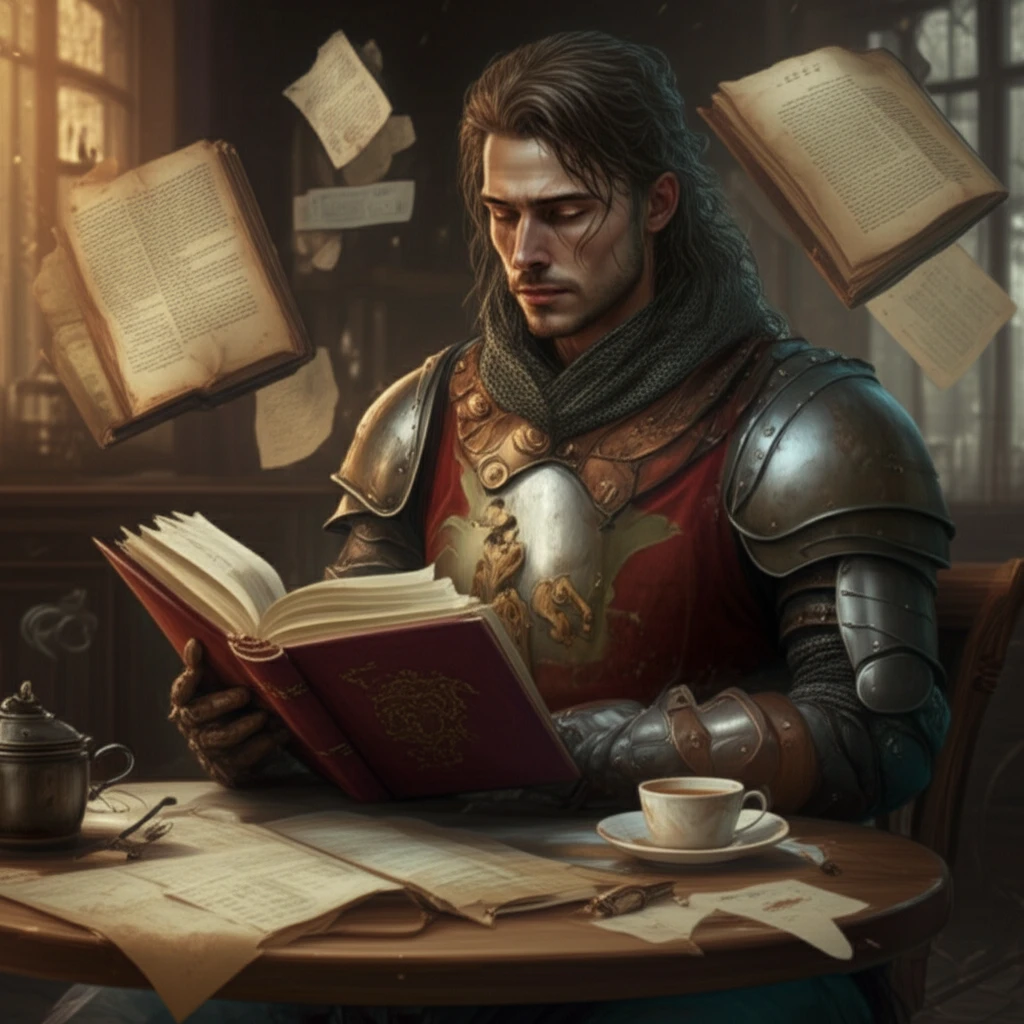
Medieval knight reading in a modern coffee shop.

Rediscovering the Middle Ages: Why Medieval Literature Still Matters Today

"A look at the life and legacy of Carleton W. Carroll and the enduring appeal of Arthurian romances in modern society."


In a world saturated with modern narratives, it's easy to overlook the rich tapestry of stories woven throughout history. Among these, medieval literature stands as a treasure trove of human experience, offering insights into morality, love, and the complexities of the human condition. Scholars like Carleton W. Carroll dedicated their lives to preserving and interpreting these texts, ensuring their continued relevance for future generations.

Carleton W. Carroll, a distinguished scholar of medieval literature, passed away in 2016, leaving behind a legacy of dedicated research and passionate teaching. Remembered for his approachable demeanor and engaging conversations, Carroll had a knack for making complex literary concepts accessible to all, whether discussing 'Erec et Enide,' medieval cats, or the ideals of the 'resolute knight.' His work serves as a bridge connecting the medieval world to our own, revealing the timeless themes that continue to resonate.

This article explores the life and work of Carleton W. Carroll, highlighting his contributions to the field of medieval studies. More broadly, it examines the enduring appeal of medieval literature, considering why these stories continue to captivate readers and offer valuable lessons in the 21st century. From Arthurian romances to philosophical treatises, we'll uncover the treasures that await those who delve into the world of the Middle Ages.

Why Study Medieval Literature? Unveiling Timeless Themes

Medieval knight reading in a modern coffee shop.

Medieval literature, often misunderstood as archaic and irrelevant, offers a wealth of insights into the human condition. These stories, penned centuries ago, grapple with themes that remain strikingly relevant today. Consider the following:

Exploring the medieval period provides a lens through which to view shifting societal norms and timeless human values. From tales of chivalry to philosophical debates, these stories offer a window into a world grappling with identity, faith, and societal change. Characters in medieval literature face dilemmas that mirror our own, making their struggles surprisingly relatable.

  • Moral and Ethical Dilemmas: Medieval narratives frequently explore questions of right and wrong, justice and mercy, challenging readers to consider their own moral compass.
  • The Enduring Power of Love: From courtly love to passionate devotion, medieval literature examines the many facets of love, from its most idealized forms to its most tragic consequences.
  • The Struggle for Identity: Knights, damsels, and common folk alike grapple with questions of identity and purpose, seeking to define themselves in a world filled with uncertainty.
  • Social and Political Commentary: Many medieval texts offer subtle critiques of social and political structures, challenging the status quo and advocating for change.
The themes explored in medieval literature are not confined to the dusty pages of history books. They resonate with contemporary audiences because they reflect the ongoing human experience. The battles fought, the loves lost, and the moral dilemmas faced by characters in medieval stories continue to echo in our own lives, offering guidance, inspiration, and a sense of connection to the past.

The Enduring Legacy of Medieval Stories

Carleton W. Carroll's dedication to medieval literature ensured that these timeless stories continue to inspire and inform. By studying the works that captivated him, we gain a deeper understanding of ourselves and the world around us. Whether through the chivalry of Arthurian knights or the philosophical musings of medieval scholars, the lessons of the Middle Ages remain as relevant and compelling as ever.

About this Article -

This article was crafted using a human-AI hybrid and collaborative approach. AI assisted our team with initial drafting, research insights, identifying key questions, and image generation. Our human editors guided topic selection, defined the angle, structured the content, ensured factual accuracy and relevance, refined the tone, and conducted thorough editing to deliver helpful, high-quality information.See our About page for more information.

Everything You Need To Know

1

Who was Carleton W. Carroll and what was his contribution to Medieval Studies?

Carleton W. Carroll was a distinguished scholar of medieval literature who dedicated his life to researching and teaching medieval texts. His contribution was making complex literary concepts accessible, bridging the gap between the medieval world and contemporary understanding. He is known for his knowledge of works like 'Erec et Enide' and for discussing topics from medieval cats to the ideals of the 'resolute knight'. His approachable demeanor and engaging conversations helped ensure the continued relevance of medieval literature.

2

Why should modern readers care about Medieval Literature?

Medieval literature explores timeless themes that remain strikingly relevant today. These stories offer insights into the human condition, grappling with morality, love, identity, and societal change. Characters in these narratives face dilemmas that mirror our own, exploring moral and ethical dilemmas, the enduring power of love in its many forms, and the struggle for identity. These texts also offer social and political commentary, challenging the status quo and advocating for change. Understanding these themes can offer guidance, inspiration, and a sense of connection to the past.

3

What are some of the recurring themes found within Medieval Literature?

Medieval literature frequently explores themes such as moral and ethical dilemmas, challenging readers to consider their own moral compass through questions of right and wrong, justice, and mercy. The literature also examines the enduring power of love, from courtly love to passionate devotion, and the struggle for identity, where characters grapple with questions of identity and purpose. Additionally, many texts offer social and political commentary, subtly critiquing social and political structures.

4

How do Arthurian romances fit into the broader context of Medieval Literature, and why are they still popular?

Arthurian romances are a significant part of medieval literature, embodying ideals of chivalry, courtly love, and the quest for honor. They are still popular because they present compelling characters and narratives that explore universal themes of good versus evil, loyalty, and the search for meaning. While the text does not explicitly detail all the nuances within Arthurian romances such as the grail quest, the exploration of magic, or the political intrigue often present, these elements contribute to the enduring appeal of these stories, allowing for modern interpretations and adaptations that resonate with contemporary audiences.

5

Beyond entertainment, what deeper value can be found in studying works like 'Erec et Enide' or understanding the concept of the 'resolute knight'?

Studying works like 'Erec et Enide' offers insights into the social values, moral codes, and philosophical ideas prevalent during the medieval period. Understanding the concept of the 'resolute knight' provides a lens through which to examine the ideals of chivalry, duty, and honor that shaped medieval society. While the text doesn't delve into specific philosophical underpinnings, these concepts often reflect a blend of Christian ethics and classical virtues, offering a rich understanding of the complex interplay between personal conduct and societal expectations. Exploring these aspects fosters a deeper understanding of historical context and the evolution of human values.

Newsletter Subscribe

Subscribe to get the latest articles and insights directly in your inbox.