
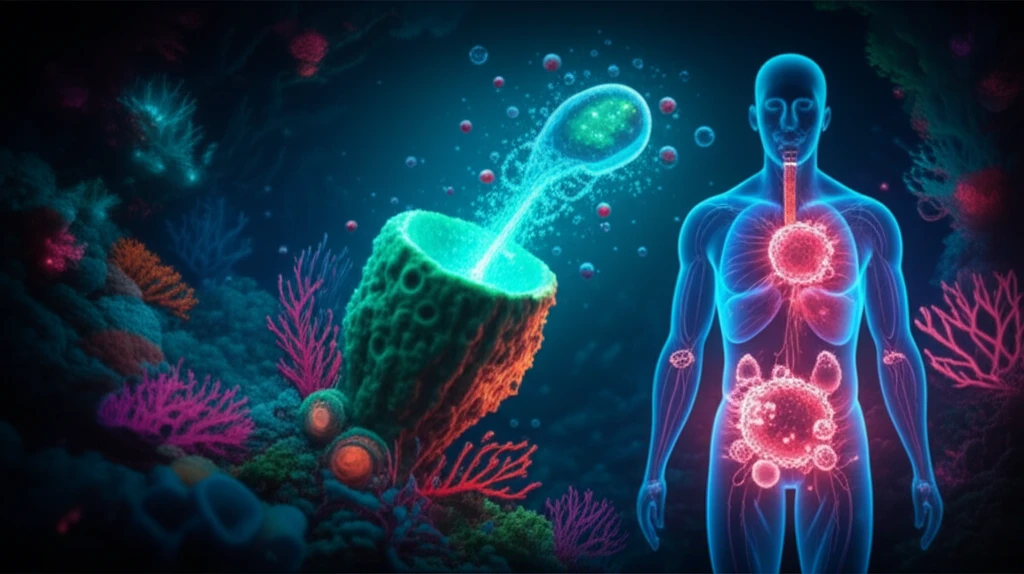
Red Sea Discovery: A New Hope for Cancer Treatment?

"Marine sponge-associated bacteria yields a novel cytotoxic peptide with potential against colon, cervical, and myeloma cancers."
For decades, researchers have been diving into the ocean's depths in search of the next big breakthrough in medicine. Marine environments, teeming with unique organisms, are a treasure trove of bioactive compounds with the potential to treat various diseases. Among these organisms, actinomycetes, a group of bacteria, have emerged as prolific producers of drugs, including those with antibacterial, antifungal, antiviral, and cytotoxic properties. In particular, the genus Nocardiopsis, found in marine sponges, has attracted attention for its diverse array of bioactive compounds.
Cancer remains one of the most pressing health challenges worldwide, driving scientists to explore innovative treatment strategies. One approach involves identifying new molecules with cytotoxic activity, particularly those with novel mechanisms of action. This pursuit has led researchers to explore marine-derived actinomycetes like Nocardiopsis sp. UR67, seeking new solutions from the sea's biodiversity.
This article delves into the discovery of a novel cyclic hexapeptide, nocardiotide A, isolated from Nocardiopsis sp. UR67, a bacterium associated with a marine sponge in the Red Sea. We'll explore its structure, cytotoxic activity against various cancer cell lines, and the potential implications for future cancer therapies.
Nocardiotide A: A Promising Cytotoxic Compound
Researchers extracted and purified several compounds from the Nocardiopsis sp. UR67 strain, including a new cyclic hexapeptide named nocardiotide A. Using advanced techniques like nuclear magnetic resonance (NMR) spectroscopy and high-resolution mass spectrometry, they determined the unique structure of this molecule. They also identified three known compounds – tryptophan, kynurenic acid and 4-amino-3-methoxy benzoic acid.
- Lucentamycin C (cytotoxic peptide)
- Kanglemycin M (immunosuppressant)
- 8-hydroxy-3-methoxy-1-methyl-anthraquinone-2-carboxylic acid
- Piericidin-C3 (antimicrobial, antitumor, insecticidal)
- Atramycin B (antitumor)
- Piericidin group antibiotic IT-143-B
- Lankacyclinol-A (antibiotic)
- Ansatrienin A (antifungal polyketide)
- Actinoramide B
- Polyoxypeptin A (apoptosis inducer)
The Ocean's Pharmacy: A Glimpse into Future Therapies
The discovery of nocardiotide A highlights the importance of marine environments as a source of novel bioactive compounds. Sponge-associated bacteria, like Nocardiopsis sp. UR67, represent a rich reservoir of potential drug candidates with promising pharmacological activities.
While further research is needed to fully understand the mechanisms of action and potential side effects of nocardiotide A, its cytotoxic activity against cancer cells offers a beacon of hope in the ongoing fight against cancer. This discovery encourages further exploration of marine-derived compounds for therapeutic applications.
As scientists continue to explore the ocean's vast biodiversity, we can anticipate the discovery of even more potent and selective compounds, ultimately leading to new and effective treatments for a wide range of diseases.