
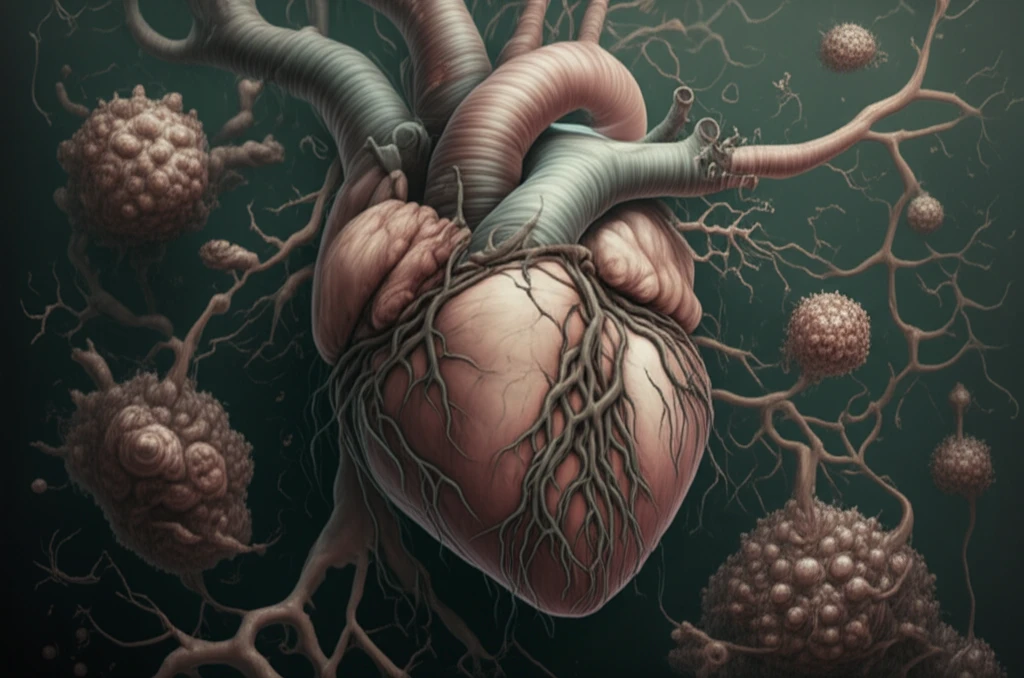
Illustration of a heart intertwined with tumor-like roots, symbolizing the connection between congenital heart disease and tumor development.

Rare Condition Alert: When Heart Disease Triggers Unexpected Tumors

"Discover the link between cyanotic congenital heart disease and the development of pheochromocytoma/paraganglioma in a groundbreaking case study."


Pheochromocytomas (PHEOs) and paragangliomas (PGLs) are rare tumors that develop from specific types of cells. PHEOs originate in the adrenal glands, while PGLs arise outside the adrenal glands. While most cases appear randomly, some are linked to inherited syndromes.

Cyanotic congenital heart disease (CHD) is a group of heart defects causing low oxygen levels in the blood, leading to a bluish skin tint. Although most cases are corrected in childhood, a small number of individuals live with chronic hypoxia (low oxygen).

Recent research is uncovering links between chronic hypoxia and tumor development, specifically PHEOs and PGLs. This article explores a fascinating case of a young woman with cyanotic CHD who developed multifocal PHEO/PGL, shedding light on the possible connection between these conditions.

The Unexpected Link: How Heart Conditions Can Trigger Tumor Growth

Illustration of a heart intertwined with tumor-like roots, symbolizing the connection between congenital heart disease and tumor development.

A recent study highlights the growing recognition of a link between cyanotic congenital heart disease (CHD) and the development of pheochromocytoma/paraganglioma (PHEO/PGL). Researchers presented the case of a 29-year-old woman with a history of complex, uncorrected cyanotic CHD who was found to have multiple PHEO/PGL tumors.

The patient's case was unique because:

  • She had no family history of PHEO/PGL.
  • Genetic testing for known PHEO/PGL-related genes came back negative.
  • She had been living with chronic hypoxia due to her uncorrected heart condition.
This case, along with others in medical literature, suggests that the chronic hypoxia experienced by individuals with cyanotic CHD might play a role in the development of these tumors. The tumors, in this case, were successfully removed through surgery, and the patient is doing well.

What Does This Mean for Patients with Cyanotic CHD?

This case highlights the importance of awareness. Patients with cyanotic CHD may have an elevated risk of developing PHEO/PGL, even without a family history or known genetic mutations.

The researchers suggest that chronic hypoxia, a hallmark of cyanotic CHD, might trigger cellular pathways that lead to tumor development. These pathways are similar to those seen in individuals with genetic mutations known to cause PHEO/PGL.

While more research is needed, this case underscores the need for careful monitoring and evaluation of patients with cyanotic CHD, especially if they experience symptoms suggestive of hormone-secreting tumors. Further investigation into the underlying mechanisms could lead to better prevention and treatment strategies.

About this Article -

This article was crafted using a human-AI hybrid and collaborative approach. AI assisted our team with initial drafting, research insights, identifying key questions, and image generation. Our human editors guided topic selection, defined the angle, structured the content, ensured factual accuracy and relevance, refined the tone, and conducted thorough editing to deliver helpful, high-quality information.See our About page for more information.

This article is based on research published under:

DOI-LINK: 10.1016/j.surg.2018.08.033, Alternate LINK

Title: Multifocal Pheochromocytoma-Paraganglioma In A 29-Year-Old Woman With Cyanotic Congenital Heart Disease

Subject: Surgery

Journal: Surgery

Publisher: Elsevier BV

Authors: Susan M. Wcislak, William S. King, Benjamin R. Waller, Natasha Goins, Paxton V. Dickson

Published: 2019-01-01

Everything You Need To Know

1

What exactly are pheochromocytomas and paragangliomas, and why should I be concerned about them?

Pheochromocytomas (PHEOs) are rare tumors that originate in the adrenal glands, while paragangliomas (PGLs) are similar tumors that develop outside the adrenal glands. Both PHEOs and PGLs can sometimes be linked to inherited genetic syndromes, but often they appear without any known cause or family history. They are significant because they can produce hormones like adrenaline, leading to high blood pressure and other serious health problems. Early diagnosis and treatment, usually through surgery, are essential to manage these conditions effectively.

2

What is cyanotic congenital heart disease, and how does it cause low oxygen levels?

Cyanotic congenital heart disease (CHD) refers to a group of heart defects present at birth that result in low oxygen levels in the blood. This leads to a bluish tint to the skin, known as cyanosis. While many cases of cyanotic CHD are corrected in childhood, some individuals live with the condition and experience chronic hypoxia, meaning their bodies consistently have lower than normal oxygen levels. This chronic hypoxia can have various long-term effects on the body, including potentially influencing the development of tumors like pheochromocytomas and paragangliomas.

3

How could a heart condition like cyanotic congenital heart disease possibly lead to the development of tumors like pheochromocytoma or paraganglioma?

The connection lies in the chronic hypoxia experienced by individuals with cyanotic congenital heart disease (CHD). Recent research suggests that prolonged low oxygen levels may create an environment that promotes the development of pheochromocytomas (PHEOs) and paragangliomas (PGLs). The exact mechanisms are still being investigated, but it's thought that hypoxia may trigger certain cellular changes that increase the risk of these tumors forming. This link is particularly notable because it suggests that even without a family history or genetic predisposition, individuals with cyanotic CHD may face an elevated risk of developing PHEO/PGL.

4

If I have cyanotic congenital heart disease, what does this potential link to pheochromocytoma/paraganglioma mean for my health and what precautions should I take?

This finding underscores the importance of increased vigilance among patients with cyanotic congenital heart disease (CHD). While the occurrence of pheochromocytomas (PHEOs) and paragangliomas (PGLs) is still rare, individuals with cyanotic CHD should be aware of this potential link. It suggests that unexplained symptoms such as high blood pressure, headaches, or palpitations should be promptly investigated by their healthcare providers. This awareness can lead to earlier detection and management of any potential tumors, ultimately improving patient outcomes. Regular checkups and open communication with doctors are essential for individuals with cyanotic CHD.

5

What are the limitations of current understanding, and what further research is needed to clarify the connection between cyanotic congenital heart disease and these types of tumors?

While the case highlights a potential link between cyanotic congenital heart disease (CHD) and pheochromocytoma/paraganglioma (PHEO/PGL) development, the specific biological mechanisms remain unclear. Further research is needed to fully understand how chronic hypoxia associated with cyanotic CHD may contribute to tumor formation. It is also important to investigate whether certain genetic or environmental factors may further influence this association. Understanding these underlying mechanisms could lead to improved screening strategies and targeted interventions for individuals with cyanotic CHD who may be at higher risk of developing PHEO/PGL.

Newsletter Subscribe

Subscribe to get the latest articles and insights directly in your inbox.